Why Your Duplicate Locations Are Cannibalizing Each Other
Why Your Duplicate Locations Are Cannibalizing Each Other
The air in the server room smells like ozone and peppermint tea, a scent that always accompanies the deep forensic work of map pack restoration. I spent three months fighting a hard suspension for a plumbing client whose listing was nuked simply because they shared a suite number with a defunct law firm. Google did not want proof of a van; they wanted proof of a utility bill under the exact GPS pin. This rigid adherence to spatial truth is why most multi-location strategies fail. When you have two pins competing for the same centroid, you are not doubling your chances. You are halving your authority. The algorithm views proximity as a zero sum game where mathematical weight is distributed based on unique, verified signals. If those signals overlap or conflict, the filter triggers, and your visibility vanishes into the digital ether.
The ghost in the GPS coordinates
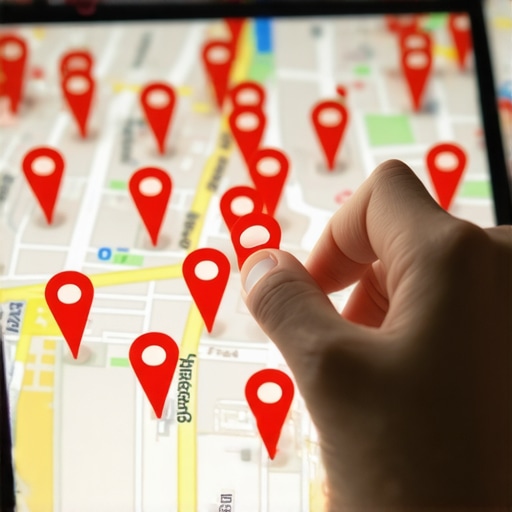
Duplicate locations create a conflict in the proximity beacon that forces the Google algorithm to filter one listing out of the Map Pack. This occurs when two profiles share similar categories, service areas, or proximity to a single centroid, leading to a massive drop in impressions. This spatial overlap is the primary reason for volatility. When you are escaping the duplicate location filter, you must understand that Google prioritizes the user experience over your expansion goals. If two of your pins are within a few hundred feet of each other, the algorithm sees them as redundant. It will choose the one with higher historical trust or more robust customer signals, suppressing the other entirely. This is often why why duplicate GMB profiles kill your trust with the local search engine. The logic is forensic. It tracks the specific latitude and longitude down to the sixth decimal point. If your business is caught in this proximity trap, no amount of keyword stuffing will save you. You are essentially fighting yourself for a single spot in the three pack.
The math of spatial cannibalization
Spatial cannibalization happens when the distance-weighted signal of one business location overlaps with another, causing the proximity radius to collapse. This mathematical conflict prevents both listings from ranking for high-intent local queries, effectively grounding your lead generation in that specific geographic area. The algorithm operates on a distance-decay function. The further a user is from the centroid, the harder it is to rank. However, when you introduce a second pin, you create a ripple in the data. This is where clearing out duplicate data becomes your most important task. Many agencies try to fix this by changing categories, but this often leads to why category shifts often lead to ranking volatility. You cannot trick the geometry of the map. The system is designed to show the most relevant, unique results. If you have two offices in the same zip code without distinct service offerings, the filter will view them as a single entity trying to game the system. This leads to a state where both pins perform worse than a single, well-optimized profile would have on its own.
“Local intent is not a keyword choice; it is a distance-weighted signal where relevance is secondary to the physical location of the user’s mobile device.” – Map Search Fundamental
Why your physical address is a liability
A physical address becomes a liability when it lacks unique utility data or shares space with other businesses that trigger the Google Maps filter. This lack of clear spatial distinction causes the profile to be viewed as a duplicate, leading to immediate ranking suppression. I have seen businesses lose everything because they used a shared office space. When you are fixing the profile stuck issue for shared office addresses, you are fighting against a system that values physical walls and unique entrances. Google looks at the architectural footprint. If five businesses are listed at the same suite number, the algorithm smells a lead gen farm. This is why fixing the profile filter is so complex. You must provide photographic evidence of permanent signage and separate utility connections. The ghost of an old business at your address can also cause issues. You might need to look at why old locations are haunting your current performance to see if a previous tenant is still hogging the spatial authority of that specific pin. It is a digital exorcism of sorts.
The three mile radius that determines your revenue
The three mile radius around your business is the primary battlefield for local search dominance and determines your overall call volume. If your duplicate locations are within this radius, they will cannibalize each other by competing for the same user intent signals. Proximity is the strongest ranking factor in the modern local algorithm. When you expand, you must ensure your locations are spaced far enough apart to capture different search clusters. If you are failing the proximity test, you will see your pins alternate in the rankings. One day Location A is in the pack; the next day it is Location B. This inconsistency is a clear sign of cannibalization. To combat this, you need a multi-location strategy that focuses on unique hyper-local content for each pin. Do not just copy and paste descriptions. Use different photos, mention different landmarks, and target specific neighborhood keywords. This creates a separate digital identity for each location, allowing them to coexist in the eyes of the AI. Use the GMB keyword finder to identify unique intent for each area.
Local Authority Reading List
- Managing Local SEO for 100 Locations Efficiently
- Consistent Local SEO Guide for Multi-Location Managers
- Toolkits for Managing Multiple Google Business Profiles
- How Multi-Location Businesses Handle Review Filtering
- Why Multi-Location Businesses Get Stuck in Map Filters
The forensic trace of service area polygons
Service area polygons define the geographic reach of a mobile business and must be carefully mapped to avoid overlapping with other company locations. Overlapping polygons trigger a duplicate filter that suppresses visibility for both service areas, leading to a total loss of lead flow. If you are a plumber or an electrician, your service area is your lifeline. However, if you set up two profiles and tell Google they both serve the same five zip codes, you are asking for trouble. This is the logic of impression recovery for mobile service pros. You need to carve up your territory with surgical precision. Location A handles the north side; Location B handles the south side. There should be no overlap in your defined service areas. This is why fixing your impressions after removing your address is so difficult. Without a physical pin, your polygon is the only spatial data Google has. If that data is a duplicate of another pin you own, the algorithm will filter the weaker profile. You must use toolkits for optimizing your service area to ensure you are not self-sabotaging.
“Local search relevance is secondary to the physical location of the user’s mobile device during the query execution.” – Vicinity Research Paper
The silent killer of map authority
Duplicate citations and inconsistent NAP data are the silent killers of map authority, creating a web of conflicting information that confuses the local algorithm. This confusion results in a lower trust score, making it impossible to rank in the competitive 3-Pack. Every time your business is mentioned online, it leaves a footprint. If you have multiple locations with similar names but slightly different addresses or phone numbers, Google struggles to reconcile the data. This is why duplicate citations are killing your speed. You need to perform a deep audit. Look for how citation spam cleanup restores authority. It is not just about getting new links; it is about cleaning up the old, conflicting ones. Inconsistent operating hours can also be a trigger. If you are fixing inconsistent hours, you are essentially telling Google that your business is reliable and currently open for customers. This signal is crucial for voice search and mobile queries. If the algorithm is not 100 percent sure you are open, it will show your competitor instead. Use a local SEO audit to find these hidden errors before they sink your rankings.
How to purge the duplicate phantom
Purging duplicate locations requires a methodical removal of conflicting profiles and a consolidation of all ranking signals into a single, high-authority listing. This process restores the trust score and allows the remaining profile to dominate its geographic centroid. The first step is identification. You need to know 3 signs your listing is trapped in the filter. Once you confirm the cannibalization, you must choose the primary listing. Then, follow the process for deleting permanently closed locations carefully. Do not just delete them from your dashboard; you must ensure they are marked as ‘Permanently Closed’ or ‘Moved’ on Google Maps itself. This preserves the historical data and prevents the ‘phantom’ pin from reappearing later. After the cleanup, you may need a guide to re-indexing your profile to jumpstart your rankings. Focus on why cleaning old local data is the fastest way to rank. By removing the competition you created for yourself, you allow the algorithm to focus all its ranking power on one spot. This is how you win the local war. You do not win by being everywhere at once; you win by being the most authoritative answer in one specific place at a time.