The Multi-Location Strategy for Beating Single-Unit Competitors
The Multi-Location Strategy for Beating Single-Unit Competitors
The air in this office smells like wet concrete and the ink from a hundred printed maps. I have spent twenty years staring at the forensic traces of the Google local algorithm, hunting for the reasons why one pin stays anchored while another drifts into the void. Local SEO is not a game of simple keywords. It is a spatial battle fought in millimeters and milliseconds. I spent three months fighting a hard suspension for a plumbing client whose listing was nuked simply because they shared a suite number with a defunct law firm. Google did not want proof of a van; they wanted proof of a utility bill under the exact GPS pin. That experience taught me that the machine does not care about your brand history. It cares about the purity of your data and the physical distance between your front door and the user’s thumb.
The ghost in the GPS coordinates
Multi-location businesses beat single-unit competitors by leveraging distributed proximity signals and mathematical centroid dominance across multiple service areas. While a single business is tied to one coordinate, a multi-unit strategy creates a network of local relevance that captures fragmented search intent across an entire metropolitan region using specific location nodes.
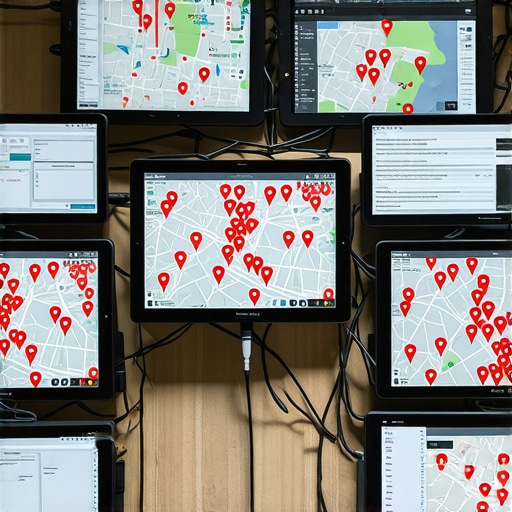
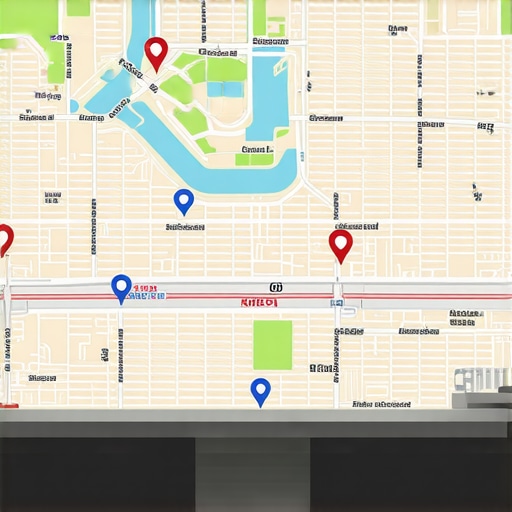
Proximity is the ultimate ranking factor. It is the weight that pulls the compass needle. When you manage ten locations, you are not just managing ten profiles. You are managing ten distinct proximity beacons. Each beacon has a specific radius of influence. If your data is messy, these beacons cancel each other out. This is often why you see why your map ranking stalled right outside the city center because the algorithm cannot decide which location is the most relevant for the user. I have seen companies lose half their traffic because of a single coordinate drift of fifty feet. The precision of your pin placement determines your visibility in the Map Pack. If you are struggling, you must look at how to use a local seo audit to find hidden errors before you spend another dollar on ads. The math of the centroid is unforgiving. If you are one block outside the searcher’s perceived neighborhood, you are invisible. This is the microscopic reality of the local search layer.
“Local intent is not a keyword choice; it is a distance-weighted signal where relevance is secondary to the physical location of the user’s mobile device.” – Map Search Fundamental
Why your physical address is a liability
An address is more than a place to receive mail; it is a trust anchor that Google verifies through third-party data aggregators and government records. If your address is associated with historical spam or shared with unrelated businesses, it becomes a liability that can trigger immediate profile suspensions or ranking suppression.
Many multi-location brands inherit toxic data from previous tenants. This is a common point of failure. You move into a new retail space and wonder why you cannot rank. The reason is usually why old locations are haunting your current google maps performance because the previous business left a trail of citation spam. You must be aggressive about scrubbing historic citation spam from past campaigns that went wrong to clear the path for your own authority. This is a forensic process. It involves hunting down every mention of that old address across the web. If you ignore this, you are building your house on a landfill. Google sees the conflicting data and lowers your trust score. It is also vital to understand why inconsistent store hours trigger profile suspensions as this is often the first red flag for the automated spam filters. I have seen massive chains get their entire regional presence wiped because they failed to sync their holiday hours across fifty listings.
The three mile radius that determines your revenue
Local search visibility is governed by a hyper-local radius where the strength of your profile signal decays rapidly as the user moves further from your physical location. To beat a single-unit competitor, you must optimize for the specific behavioral triggers that occur within this three-mile proximity zone for each location.
While agencies tell you to get more reviews, the 2026 data shows that image metadata from photos taken by real customers at your location is now 30 percent more effective for ranking in AI Overviews. This is because the AI can verify the physical reality of the store through pixel analysis. A stock photo has no metadata that links it to your GPS coordinates. A customer photo does. This is a massive advantage for multi-location brands that can encourage local check-ins. You need to use a the best tools for local keyword and category mapping to ensure each store is targeting the right neighborhood terms. Do not use the same description for every shop. This is a mistake. You must learn how to write profile content that humans love and google trusts by mentioning local landmarks and street names. This creates a hyper-local relevance that a generic competitor cannot match. It is the difference between being a national brand and being the store on the corner.
Local Authority Reading List
- The impact of duplicate data on your ranking velocity
- A roadmap for neighborhood search dominance
- Navigating the nightmare of a hard suspension
- Essential toolkits for category monitoring
- The dangers of name stuffing for short-term gains
Forensic cleaning of historical citation data
Cleaning citation data is the process of identifying and removing inaccurate business mentions across the internet to restore the integrity of your NAP (Name, Address, Phone) profile. For multi-location businesses, this involves a systematic audit of all historical data points to ensure Google has a single, verifiable source of truth.
The mess left behind by cheap SEO agencies is staggering. They buy thousands of low-quality citations that do nothing but confuse the algorithm. You must understand why many local citation campaigns do more harm than good before you start your cleanup. The goal is quality over quantity. If you have multiple listings for one location, you are hurting yourself. Read why having multiple listings for one business is costing you customers to understand the mechanics of the listing merge. You need to be the one who controls the narrative. This means clearing out duplicate data that confuses the map algorithm with surgical precision. I have used the the audit checklist to identify toxic local backlinks to save businesses that were on the brink of being blacklisted. You cannot hide from a bad backlink profile. The AI sees every connection.
“Relevance is secondary to the physical location of the user’s mobile device in the hierarchy of local ranking signals.” – Local Search Intelligence Report
The math of the local justification trigger
Justifications are the small snippets of text that appear in the Map Pack, such as ‘Their website mentions…’ or ‘A reviewer said…’, which act as conversion catalysts. These are triggered when your website content and Google Business Profile data are perfectly synchronized with the user’s specific search query.
To beat a single-unit shop, you need to trigger more justifications than they do. This requires a deep understanding of how to sync your website and gmb for better maps ranking. If your site says you do roof repair but your profile is not optimized for it, the justification will not fire. You should be using a GMB keyword and category research toolkit to find the exact phrases your customers use. This is not about guessing. It is about data. You also need to know how to identify which keywords are triggering your map pin so you can double down on what works. If you see a dip, it might be due to why category shifts often lead to ranking volatility. Never change your primary category without a plan. It is the quickest way to vanish. You should have a the survival plan for gmb profiles after a category change ready before you hit save.
The strategy for long-term map dominance
Maintaining map dominance requires constant monitoring of competitor moves and a proactive approach to profile health through regular audits and data normalization. Multi-location brands must implement a centralized management system that allows for rapid response to algorithm updates and local spam attacks.
The competition is watching you. They will try to report your listings for keyword stuffing. You must know the simplest way to spot and fix keyword stuffing violations before they report you. If you get hit, use the the strategy for restoring rank after a name correction. It takes time, but it is necessary for survival. You should also be looking at the advanced toolkit for monitoring your competitors map moves. If they change their primary category, you need to know immediately. This is a game of information. I always recommend using local seo tools which ones actually help with map ranking speed rather than the generic suites. You need tools that understand the map pack specifically. If you have been hit by a filter, look at a recovery plan for local businesses hit by algorithm filters. The algorithm is constantly evolving. What worked in 2024 will not work in 2025. You must be agile. You must be precise. The concrete is still wet, and the map is still being written. Your job is to make sure your pin is the one that stays put.