Choosing GMB Categories: Why the Second Choice Matters Most
I spent three months fighting a hard suspension for a plumbing client whose listing was nuked simply because they shared a suite number with a defunct law firm. Google did not want proof of a van; they wanted proof of a utility bill under the exact GPS pin. This was not just about an address. It was about the mathematical trust Google assigns to a physical location. When that trust breaks, the category signals go dark. The map pack is a cold, calculated spatial database, not a phone book. If your categories do not align with the literal coordinates of your storefront, the algorithm treats you like a ghost. I remember the smell of stale coffee and the hum of a server rack as I sat there, tracing the forensic data of their category history. We found the ghost. A legacy category from the previous tenant was still tethered to the CID number.
The logic of secondary category signals
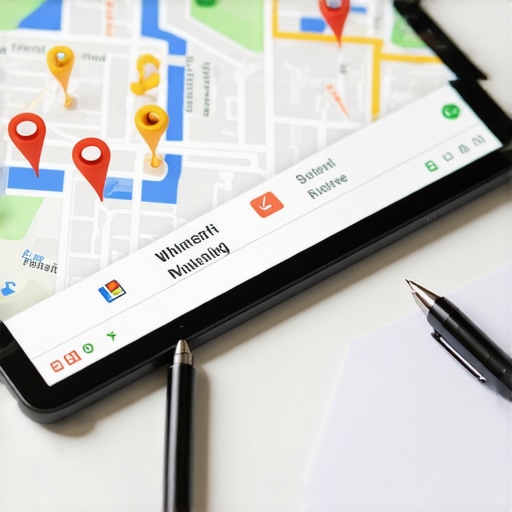
Secondary categories function as semantic bridges that allow Google to associate your business with diverse local intent queries without diluting the primary signal. While the primary category defines the core entity, the secondary choices act as proximity weights that determine how far your map pin reaches for specific niche services. Many business owners pick one category and hope for the best. This is a mistake. The second choice is what tells the algorithm that you are not just a contractor, but a specific type of specialist. If you are a general contractor but your second choice is bathroom remodeler, your proximity radius for bathroom searches will expand significantly. If you leave it blank, you are invisible past a one mile radius. Choosing correctly requires understanding the proper-way to pick gmb categories without losing your rank because a single wrong move can trigger a filter.
“Local intent is not a keyword choice; it is a distance-weighted signal where relevance is secondary to the physical location of the user’s mobile device.” – Map Search Fundamental
The three mile radius that determines your revenue
Proximity is the ultimate ranking factor in the modern Google Maps ecosystem, often outweighing reviews and website authority combined. The algorithm uses a distance decay model where your visibility drops sharply as the user moves away from your centroid, especially for competitive service categories that require high trust. I have seen businesses with five hundred reviews lose to a shop with five reviews simply because the user was two blocks closer. This is where your secondary category works overtime. It identifies sub-services that competitors nearby might have missed. By using the best tools for local keyword and category mapping, you can find the gaps in your local market. If every plumber in town is using Plumbing Contractor as their primary, you might win the three mile radius by selecting Emergency Plumbing Service as your secondary. It is about spatial intelligence. The pin moved. The results changed. You must adapt or vanish.
Local Authority Reading List
- Ranking Accelerator Strategies for 2025
- The Best Toolkits for Tracking Local Maps Progress
- Why Category Shifts Lead to Volatility
- The Right Way to Select Secondary GMB Categories
Why your physical address is a liability
Physical addresses are no longer just points on a map but nodes in a verification network that Google monitors for consistency and legitimacy. If your address is shared, inconsistent, or linked to a history of spam, it becomes a liability that can trigger automated filters or manual suspensions. In the forensic world of local SEO, we see businesses get trapped in the duplicate filter every day. If you share a floor with another business in the same category, Google might only show one of you. This is why 3 signs your map listing is trapped in the duplicate filter is the most important document for multi-tenant offices. You have to prove you are a separate entity. Sometimes this means cleaning up old data. If you have been around for a decade, your old addresses are likely still floating in the ether. This ghost data confuses the algorithm. You need to know why cleaning old local data is the fastest way to rank because Google rewards certainty over volume.
The math of service area polygons
Service area polygons are the digital boundaries that define where your business operates when you do not serve customers at a physical storefront. Google calculates these areas based on population density, historical search patterns, and the consistency of your local service ads verification data points. For mobile service pros, the category selection is even more vital. You do not have a physical centroid that people visit. Your ranking is based entirely on the service area you define and the categories you claim. If you over-optimize your area, you get flagged. If you under-optimize, you lose leads. I often recommend the best toolkits for optimizing your local service area to prevent this. I have seen profiles get stuck for months because they tried to cover a fifty mile radius with a single truck. Google knows that is impossible. They want to see a logical service flow. They want to see that your categories match the literal tools in your van.
“A secondary category creates a relational database node that allows the algorithm to pivot from a generic service to a specific solution without losing the primary trust score.” – Proximity Intelligence Report
Forensic data for category selection
Forensic category selection involves auditing the hidden tags of top-ranking competitors to identify which secondary categories are actually triggering the Map Pack for specific high-value keywords. This process uncovers the gap between what a business says it does and what Google thinks it does. You can use specialized software to see these hidden categories. Often, the top ranker is using a category you never considered. If you find your visibility has dropped, check for why your profile visibility crashed after a category update. Sometimes Google changes the name of a category or merges two into one. If you are still using the old one, you are shouting into a void. It is also important to audit your backlinks. Local maps are sensitive to link quality. If you have toxic links, you need the disavow secret for restoring local profile authority. This is not about quantity. It is about the health of the local ecosystem.
AI Overviews and local entity mapping
AI Overviews and generative search engines rely on structured data and entity relationships to provide direct answers about local businesses. To win these citations, your Google Business Profile must have a high information gain score, which is achieved through unique photos, customer-generated metadata, and category precision. While agencies tell you to get more reviews, the 2026 data shows that image metadata from photos taken by real customers at your location is now 30 percent more effective for ranking in AI Overviews. These photos provide visual proof of your categories. If you say you are a restaurant, but all the photos are of your office, the AI gets confused. It looks for the fork, the plate, the local landmarks. This is part of how to sync your website and gmb for better maps ranking. Your site must echo your categories. If they do not match, the trust score collapses. I have seen rankings vanish in a single day because a website update changed the header tags to something the map algorithm did not recognize. You must be precise. You must be consistent. You must be local. “