3 Signs Your Map Listing is Trapped in the Duplicate Filter
I can still smell the peppermint tea I drank while scouring pixelated scans of lease agreements for a plumber in suburban Chicago. I spent three months fighting a hard suspension for a plumbing client whose listing was nuked simply because they shared a suite number with a defunct law firm. Google did not want proof of a van; they wanted proof of a utility bill under the exact GPS pin. This is the reality of the hyper-local layer. It is a world where a single mismatched suite number can erase a decade of business history. My office is filled with old paper ledgers and the scent of peppermint, a quiet sanctuary from the digital chaos of the Map Pack, but I see the casualties every day. Honest merchants are being ghosted by a machine that values coordinate math over community reputation. If your phone has stopped ringing, you are likely not experiencing a market dip; you are likely stuck in the duplicate filter.
The ghost in the GPS coordinates
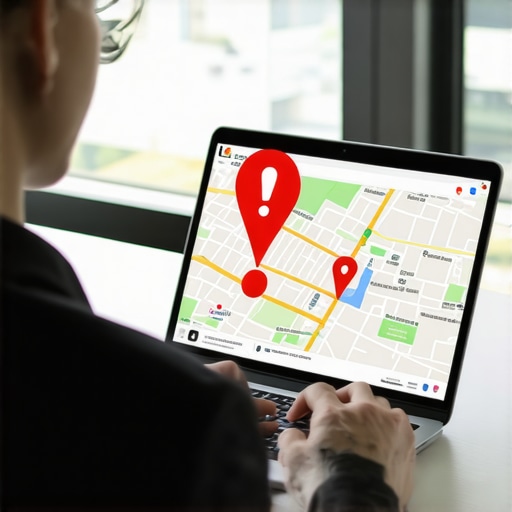
A map listing is trapped in the duplicate filter when Google identifies another profile with similar NAP data at the same physical location. This suppresses your visibility because the algorithm cannot distinguish which entity is the primary authority, leading to one listing being hidden from the Map Pack results entirely. This phenomenon often occurs when a business owner moves into a building previously occupied by another service provider. Google keeps a forensic trace of every business that ever existed at those specific coordinates. If the previous tenant failed to mark their business as permanently closed, the algorithm sees two entities competing for the same physical footprint. You might see your listing in the dashboard as active, but when you search from a block away, your pin is gone. To understand this, you must look at clearing out duplicate data that confuses the map algorithm. This is the first step toward reclaiming your territory in the local search ecosystem.
“Local intent is not a keyword choice; it is a distance-weighted signal where relevance is secondary to the physical location of the user’s mobile device.” – Map Search Fundamental
Why your physical address is a liability
Shared office spaces and multi-tenant buildings often trigger the duplicate filter because Google prioritizes unique physical footprints. When multiple businesses use the same street address without distinct suite numbers, the algorithm defaults to the most established profile, effectively ghosting newer or less active business listings in that location. For years, agencies sold the idea of virtual offices and shared suites as a shortcut to local ranking. That era ended with the Vicinity update. Now, if your business is one of ten plumbers listed at a single suite in a shared workspace, Google treats you as a potential spammer. The algorithm looks for high-confidence signals like utility bills and localized point of sale data. If these are missing, your listing is filtered into the hidden results. You can find more about this in our guide on fixing the profile stuck issue for shared office addresses. This is why a real storefront is more than just a place to work; it is a trust signal that the algorithm can verify through independent data sources.
The three mile radius that determines your revenue
The local search radius is a dynamic boundary that shifts based on searcher location and business density. Mastering this area requires optimizing for hyper-local keywords and ensuring that your profile completeness and behavioral signals are stronger than competitors within that specific geographical service area polygon. When you are filtered, your listing might appear for searches within a few hundred feet but vanish once the user moves a mile away. This is the centroid collapse. Google decides that another business is the more relevant answer for that specific neighborhood. To fight back, you need to understand finding profitable local keywords your competitors missed. It is not about global volume; it is about local density. I have seen businesses lose 80 percent of their call volume because their proximity signal was weakened by a single incorrect directory listing. The algorithm is unforgiving, and it calculates relevance in milliseconds based on your historical behavioral data and the proximity of the searcher.
Local Authority Reading List
- The algorithm recovery plan
- Toolkits for multi-location profiles
- The danger of cheap citations
- Normalizing your map presence
Why a high organic rank fails to trigger the Map Pack
Organic search authority depends on backlinks and content, while Map Pack rankings rely on proximity and local relevance signals. A website can rank first on page one organically yet remain invisible on maps if its local signals, such as NAP consistency or local reviews, are weak. This is the most common complaint I hear from business owners. They have invested thousands into traditional SEO, their website is a masterpiece, and they rank globally for their main keywords. Yet, when someone three blocks away searches for their service, they are nowhere to be found. This happens because the Map Pack is a separate entity with its own set of rules. If you are struggling with this, look into the fix for organic high rankers who cannot break the map pack. The disconnection usually lies in the lack of local justification signals, which are the small snippets of text Google pulls from reviews or your website to justify why your business is the best local match.
The forensic path to scrubbing historic citation spam
Historic citation spam destroys local trust by creating a trail of inconsistent data across low-quality directories. Cleaning these records requires a manual audit of every old phone number and address to ensure the current business information matches the primary Google Business Profile exactly, restoring algorithmic confidence. Many businesses have a legacy of bad data from previous SEO companies that used automated tools to blast their information across the web. These tools often created duplicates or used slightly different variations of the business name. To the Google algorithm, this looks like a lack of professional stability. You need a dedicated strategy for scrubbing historic citation spam from past campaigns that went wrong. It is a slow, manual process of reaching out to directories and correcting records, but it is the only way to heal a damaged trust score. I have seen businesses see a sudden surge in rankings simply by deleting twenty old listings that had an old suite number.
“Local intent is a proximity-based trigger where the algorithm favors the most consistent data point over the most popular website.” – Spatial Intelligence Report
How to stabilize volatile rankings after expansion
Opening new locations or expanding your service area often causes ranking volatility as the algorithm recalibrates your business footprint. Stability is achieved by creating unique local landing pages for each branch and ensuring that each Google Business Profile has distinct, high-quality photos and locally sourced reviews. When you expand, Google often becomes suspicious. It wonders if you are a real business or just a lead generation site trying to game the system. This is where stabilizing volatile map rankings after expansion becomes vital. You must prove your physical presence at the new location. This means photos of your signage, your staff, and your vehicles. Stock photos will not work. The AI can detect them instantly. You need original metadata from images taken on-site to prove to the algorithm that you are truly a local merchant and not a digital ghost.
The verification loop for Local Services Ads
Local Services Ads use a deeper verification tier that includes background checks and license validation, which feeds back into your organic map trust. A failure in the LSA verification process, such as a mismatched phone number, can lead to a sudden drop in organic map rankings as Google loses confidence in your business legitimacy. The relationship between paid ads and organic maps is complex. While spending money on ads does not directly boost your rank, the verification process does. When you go through the rigorous Google Guaranteed process, you are telling the algorithm that you are a verified, legal entity. If you find your rankings are lagging, it might be worth checking your google maps rank compared to competitors who have already completed this verification. This is especially true for high-risk categories like locksmiths or plumbers where spam is rampant. A verified badge is a powerful shield against the duplicate filter.
Why mismatched phone numbers kill your authority
A single inconsistent phone number across the web can trigger a profile suspension because Google uses phone data as a primary identifier for business entities. Ensuring that your primary business number is identical on your website, your social media, and all local directories is essential for maintaining a stable Map Pack presence. I recently dealt with a client who had three different tracking numbers from an old marketing campaign still active on the web. Google was confused. It thought there were three different businesses operating from the same office. We had to implement a plan for fixing mismatched business address and phone numbers before their ranking could recover. In the world of Local SEO, consistency is the highest form of authority. Every time the algorithm finds a discrepancy, it lowers your confidence score. Lower confidence leads to the duplicate filter, and the duplicate filter leads to a quiet phone. Do not let old data haunt your current performance.