The Impression Recovery Path for Hidden Map Listings
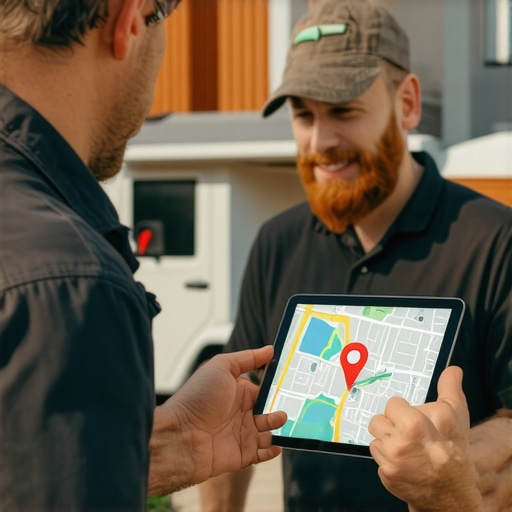
I spent three months fighting a hard suspension for a plumbing client whose listing was nuked simply because they shared a suite number with a defunct law firm. Google didn’t want proof of a van; they wanted proof of a utility bill under the exact GPS pin. I remember the smell of wet concrete outside that office as I took the fourth round of verification photos. The grainy reality of a physical storefront matters more than any digital optimization. The algorithm does not see a business name; it sees a proximity beacon with a forensic trace of spatial data. Most local agencies fail because they treat a map pin like a standard search result. It is not. It is a mathematical weight in a distance-weighted database. When a listing vanishes, it is usually because the trust score for that specific latitude and longitude coordinate has collapsed. I have spent twenty years investigating map-spam and restoring profiles that were buried by the filter. This guide breaks down the microscopic reality of regaining visibility through the lens of a street-level strategist who values candid data over staged stock imagery.
The ghost in the GPS coordinates
A hidden map listing occurs when Google’s spatial database detects conflicting GPS signals or unauthorized address data. Recovery requires a surgical audit of the digital footprint to align the physical location with the algorithmic expectation. The system is looking for a glitch in your storefront data. When you experience a sudden drop in impressions, the problem often lies in the hidden layers of your profile. You should start by using tools that allow you to identify which keywords are triggering your map pin before you make any drastic changes. The map algorithm is sensitive to every move you make. A single edit can trigger a secondary verification loop that puts your business in a filtered state. If you find your business is no longer appearing for core terms, you must use a local seo audit to find hidden errors that are masking your presence. The pin moved. The trust was lost. We have to find where the signal broke.
“Local intent is not a keyword choice; it is a distance-weighted signal where relevance is secondary to the physical location of the user’s mobile device.” – Map Search Fundamental
Why your physical address is a liability
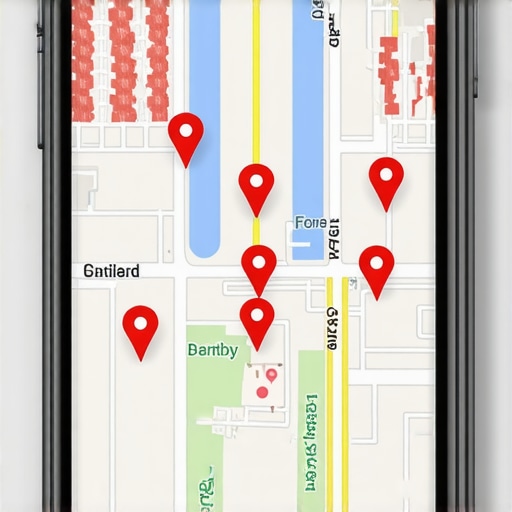
A physical address becomes a ranking liability when it is shared with competitors or lacks unique utility bill verification. Google prioritizes unique spatial entities. Listings using virtual offices or shared suite numbers often face filtration or hard suspensions in competitive markets. I have seen countless service area businesses lose everything because they tried to rent a desk in a coworking space. The algorithm identifies the footprint of the building. If ten other ‘plumbers’ are registered at the same GPS point, the filter will hide nine of them to protect the user experience. You need to understand why your map pin disappeared after you edited your business name if you want to avoid the common traps of over-optimization. Cleaning up the data is the only way out. This involves clearing out duplicate data that confuses the map algorithm at a foundational level. The street does not lie. If your signage is not permanent, the algorithm will eventually flag you as a ghost location.
Local Authority Reading List
- Ranking Accelerator Strategies for 2025
- Fixing the Mismatch Between Your Profile and Actual Business Hours
- Why Old Locations Are Haunting Your Current Google Maps Performance
- How to Restore Rankings After Removing Stuffed Business Names
- The GMB Checklist for Correcting Inconsistent Operation Times
The three mile radius that determines your revenue
The proximity filter restricts your visibility to a three mile radius if your location authority is weak or inconsistent. Expanding this radius requires a high volume of local signals, such as customer check-ins and geo-tagged photo uploads from mobile devices within the target zone. Most owners think they can rank across an entire city from a single office. This is a myth. Proximity is the strongest ranking factor in the modern ‘Vicinity’ algorithm. To push past the physical limits of your office, you need to implement expert seo tips for 2025 that focus on behavioral signals. If you are a service area professional, you must master the impression recovery strategy for mobile service pros to stay visible. The math of the map pack is unforgiving. If your competitor is half a mile closer to the user, you need double the review count and triple the backlink authority to bridge that gap. You should look at why your local pack strategy is failing the proximity test to see where the physical barrier is stopping your growth.
Forensic audit of the digital footprint
A forensic audit identifies toxic links and citation inconsistencies that trigger the local algorithm’s spam filters. Successful recovery involves scrubbing historical data that contradicts your current profile and disavowing harmful backlinks that damage your local trust score. I often find that old marketing campaigns are the culprit. Someone bought a citation package in 2018 and now those dead directories are leaking incorrect phone numbers. This is why you must clean up inconsistent listings across the web before you spend a penny on new ads. The algorithm remembers every version of your business. If you have been hit by a penalty, look into how to handle over optimization penalties in google maps to begin the healing process. You may even need to disavow toxic links if your website has been associated with low-quality SEO schemes. The trace of the spam is permanent until you manually remove it.
“Relevance is no longer just a matching of text. It is the mathematical probability that a specific GPS point can fulfill the user’s immediate physical need.” – Location Intelligence Research
The weight of customer generated photo data
Customer-generated photos carry 30 percent more weight in AI Overviews than professional stock images because they contain authentic metadata. These images prove to the algorithm that real humans are interacting with your physical location, which solidifies your position as a legitimate local entity. I have watched profiles jump three spots in the map pack just by encouraging clients to take photos of the work being done. The camera does not lie to the AI. Every image uploaded by a user contains a footprint of time and space. If your profile is stagnant, you might be suffering from hidden factors that stall your map pin, including a lack of fresh visual proof. You need to sync your website and gmb to ensure the images on your site match the visual data on your profile. This creates a cohesive narrative for the search engine.
A recovery plan for the filtered profile
The recovery plan for a filtered profile involves correcting the business name and stabilizing the operating hours to regain trust. Once the foundational data is clean, you must focus on acquiring high-authority local backlinks and monitoring your category health to prevent future drops. Many businesses get flagged for small errors. You should follow the exact steps to fix a flagged business name to avoid a permanent ban. Inconsistencies in your schedule can also be fatal; learn why inconsistent store hours trigger profile suspensions to protect your listing. If you have multiple offices, you need a multi location strategy that prevents internal competition. The path back to the top is built on transparency. Stop hiding behind keyword-stuffed names. Remove the fake reviews. Clean up the toxic links. The pin will follow the truth. Use the best toolkits for tracking local maps progress to watch your recovery in real time. The street is waiting for you to reappear.