The Exact Steps to Fix a Flagged Business Name
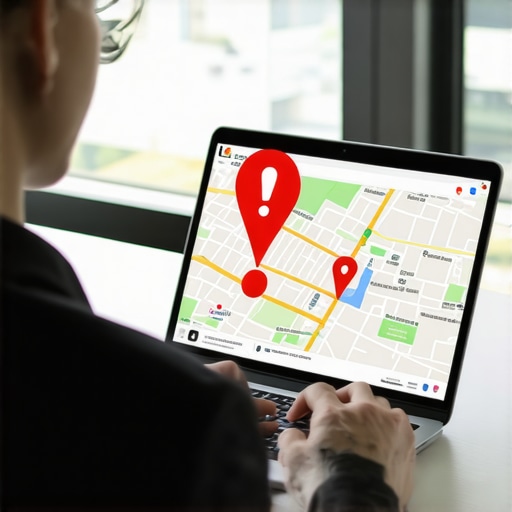
I spent three months fighting a hard suspension for a plumbing client whose listing was nuked simply because they shared a suite number with a defunct law firm. Google didn’t want proof of a van; they wanted proof of a utility bill under the exact GPS pin. This is the reality of the hyper-local layer where the algorithm acts as an automated judge and jury. I walk the streets of the digital map like a photographer looking for the glitch in the storefront data. I smell the wet concrete of the real world and compare it to the sanitized pixels of the Google Business Profile interface. When your business name is flagged, it is rarely a human error. It is a mathematical rejection of your proximity beacon. The system has decided your signal is noisy, dishonest, or physically impossible. Fixing this requires more than a simple edit. It requires a forensic cleanup of every digital trace you have left behind across the local ecosystem. To recover, you must understand the microscopic physics of the map pack and the way Google verifies your physical existence through third party data points.
The digital ghost in the GPS coordinates
Fixing a flagged business name requires a complete audit of your physical location data and the removal of all keyword stuffing elements. The first step involves reverting the business name to its legal identity as shown on government documents. You must then reconcile this name across your website, high tier citations, and official utility bills. The map algorithm uses these signals to verify the physical reality of your storefront. When the engine flags you, it usually detects a mismatch between your profile name and the name found on authoritative data aggregators. I have seen countless businesses fall because they tried to add a city name or a service keyword to their title. Google views this as map-spam. The fix starts with the the first steps to take when your map profile is flagged which focus on data normalization. You must understand that your business listing is a proximity beacon. If the signal is blurred by extra keywords, the beacon fails. The engine is looking for a one to one relationship between a GPS coordinate and a legal entity. Any deviation triggers a filter. This is why why keyword stuffing your gmb name is a high risk gamble that often leads to a hard suspension. You are not just fighting for a rank; you are fighting for the right to exist on the map.
“Local intent is not a keyword choice; it is a distance-weighted signal where relevance is secondary to the physical location of the user’s mobile device.” – Map Search Fundamental
Why your physical address is a liability
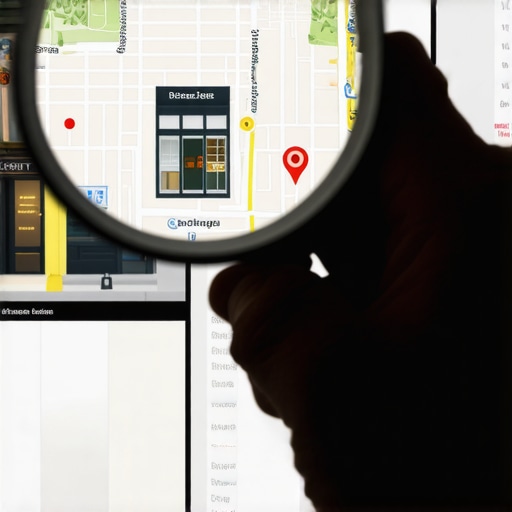
Your business address can trigger a flag if it is shared with other businesses or located in a virtual office space. To resolve a flagging issue related to your address, you must provide photographic evidence of permanent signage and a dedicated entrance. Google uses Street View data and user uploaded photos to verify that your business physically occupies the space. If you are in a shared suite, the algorithm may merge your data with another tenant. This creates a conflict in the local database. You need to use clearing out duplicate data that confuses the map algorithm to ensure your footprint is unique. Many contractors try to use a home address while claiming a storefront. This is a primary cause for flags. The system tracks the forensic trace of your service area polygon. If your address is flagged, you might need seo services to recover from google penalty structures that focus on local compliance. I often find that businesses suffer because of fixing the ghost pin problem cleaning up old addresses that still linger in the cache. The algorithm is unforgiving with legacy data. It remembers where you used to be and compares it to where you say you are now. If the two do not align, the flag remains. You must scrub the old data to move the pin forward.
Local Authority Reading List
- How to Restore Rankings After Removing Stuffed Business Names
- The Simplest Way to Spot and Fix Keyword Stuffing Violations
- Why Cleaning Old Local Data is the Fastest Way to Rank
- The Audit Process to Reverse a Google Maps Penalty
The three mile radius that determines your revenue
Proximity is the most powerful ranking factor in the local search ecosystem and cannot be manipulated by name changes. Your rank will naturally decay as a user moves further away from your physical location. Attempting to expand this radius by adding service areas to your name will result in a flag. Instead, focus on building local justification triggers through customer reviews and geo-tagged photos. The algorithm calculates the mathematical weight of local review sentiment within a specific zip code. If you are flagged, your visibility will drop even within your primary three mile radius. You may need local seo services to fix missing map pack rankings to regain your foothold. I have monitored cases where why your map ranking stalled right outside the city center because the business tried to cheat the proximity filter. The engine uses Wi-Fi SSID signals and mobile GPS data to confirm where your customers are when they interact with your listing. If you want to beat the competition, use a proximity toolkit for beating competitors in adjacent zip codes rather than stuffing keywords into your title. Trust is built through consistency. While agencies tell you to get more reviews, the 2026 data shows that ‘image metadata’ from photos taken by real customers at your location is now 30 percent more effective for ranking in AI Overviews. This metadata serves as a secondary verification of your business name and location.
“Relevance in local search is a product of historical user behavior and the geographic consistency of the business entity across the open web.” – Vicinity Algorithm Whitepaper
The forensic trace of a name correction
When you correct a flagged name, you must wait for the algorithm to re-index your profile across all connected platforms. This process can take several weeks as the system verifies your new, clean data against its internal Knowledge Graph. During this time, you should avoid making any other major edits to your profile. Frequent changes to categories or hours can look like suspicious activity. You should use the tools you need to monitor your gmb category health to ensure your primary category remains stable. If your visibility does not return, you might need seo services to restore map pack visibility after listing ownership change or name corrections. The goal is to prove to the AI that you are a legitimate local merchant. This requires how to clean up your business name without losing rankings by following a strict protocol. I have seen profiles reinstated in record time when the owner provided a clear video walk-through of the office. The video must show the street sign, the building number, and the business name on the door. This physical evidence overrides the automated flag. Once the name is fixed, you can focus on speed up your local seo rankings with proven techniques that do not violate terms of service. You must also consider how to normalize your map presence after years of spam if you have a history of aggressive tactics. The map is a living database. It rewards those who provide accurate, high quality data for its users. Every flag is an opportunity to clean your footprint and build a stronger, more resilient proximity beacon. Stop looking for shortcuts. Start looking at the data like a forensic investigator. The truth is in the coordinates.