How to Win High-Value Plumbing Leads Outside Your Primary Zip Code
How to Win High-Value Plumbing Leads Outside Your Primary Zip Code
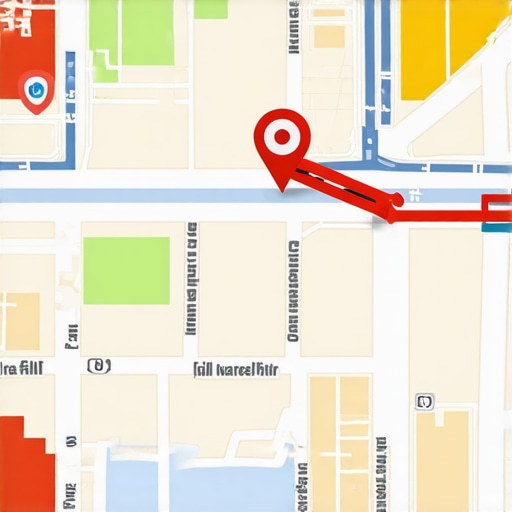
As a plumbing contractor in a major American city, you’ve likely experienced the “3-mile radius” frustration. You’ve spent years building a reputation, your Google Business Profile is polished, and you dominate searches in your immediate neighborhood. But the moment a potential customer searches for a plumber just five miles away – in a high-value zip code where you know the water heaters are failing and the pipes are aging – your business is nowhere to be found. You’ve hit the dreaded “Pin Stall.”
Many contractors view ranking outside their primary zip code as “chasing a unicorn.” They believe that Google’s proximity filter is an unbreakable barrier. However, in my experience providing google business profile seo for plumbing companies in the most competitive markets, I’ve seen that this barrier is porous. Winning high-value leads in neighboring territories isn’t about luck; it’s about signal depth. To scale your plumbing business, you must move beyond basic optimization and start engineering the geographical relevance that Google demands. This guide will break down the exact tactical framework I use to help plumbers expand their map reach and dominate entire metropolitan areas.
Understanding the Proximity vs. Relevance Battle
The Google Map Pack algorithm is governed by three primary pillars: Proximity, Prominence, and Relevance. For years, Proximity has been the undisputed king. Google wants to show the user the closest possible solution to their problem. If a homeowner has a burst pipe, Google assumes the plumber two blocks away is a better choice than the one ten miles away. This is Why Your Map Ranking Hits a Wall at the Three-Mile Mark.
However, Proximity is a “soft” factor when compared to Relevance and Prominence. If Google cannot find a highly relevant or prominent plumber nearby, it will expand the search radius. Your goal is to make your business so relevant to the target zip code that Google feels compelled to show your listing, even if you aren’t the closest option. This is the battle of “stretching” your reach. To do this, you need to understand “Map Lag” – the delay between your optimization efforts and the algorithm’s recognition of your expanded service area. As Patrick McFadden often notes, successfully broadening your ranking coverage typically requires a sustained effort of over a year working with a dedicated marketing partner to overcome this algorithmic inertia.
Optimizing Your GBP for Maximum Service Area Reach
The foundation of your expansion strategy lies within your Google Business Profile (GBP) settings. For plumbing contractors, there is often a debate between maintaining a physical office address and operating as a Service Area Business (SAB). While having a physical office in each target city is the “gold standard” for google business profile seo, it isn’t always feasible. If you are an SAB, you must be surgical with your service area settings.
First, ensure your primary category is “Plumber.” But don’t stop there. Secondary categories are where you capture high-intent, high-value leads. If you want to win leads in a wealthy suburb ten miles away, you need to rank for “water heater repair,” “drain cleaning,” and “emergency plumber.” Using local seo software like SEO Viper Tools allows you to perform a google business profile optimization audit. This tool helps you see which categories your competitors in those distant zip codes are using to steal your leads. By mirroring and then exceeding their category depth, you begin to build the relevance necessary to bridge the proximity gap.
Remember, your service area should not be a “spray and pray” list of every town in a 50-mile radius. Google rewards precision. Select the specific zip codes or cities where you actually want the work. This focus helps Google’s AI understand your service boundaries more clearly, reducing the “noise” that can lead to a ranking plateau.
The “Signal Depth” Strategy: Moving Beyond Citations
Standard citations (Yelp, Yellow Pages, Angie’s List) are the “ante” to get into the game. They are no longer a competitive advantage. To rank higher on google maps in a zip code where you don’t have a physical office, you need “Signal Depth.” This refers to the volume and quality of unstructured mentions that tie your brand to a specific geography.
Research consistently shows that local mentions in community blogs, local news sites, or even sponsorships of neighborhood Little League teams move the needle more than a generic directory listing. These are known as unstructured citations. When a local neighborhood association website mentions your plumbing company as a trusted provider for their specific subdivision, it sends a powerful geo-signal to Google. This is Why Unstructured Mentions Move the Needle More Than Generic Directory Citations. To manage this at scale, many top-tier firms use local seo tools to track where their brand is being mentioned and to identify new local PR opportunities that can anchor their presence in target expansion zones.
Building High-Converting City Landing Pages
If your website only has a “Contact Us” page and a “Services” page, you will never rank in neighboring cities. You need dedicated City Landing Pages. However, there is a right way and a wrong way to do this. Most plumbers fall into the trap of creating “doorway pages” – thin, repetitive content where only the city name is changed. Google’s helpful content updates are designed to nukes these pages from the search results.
To win, each city page must be a unique resource. If you are targeting a city known for having hard water issues, your page should discuss how hard water affects the specific plumbing fixtures common in those homes. Mention local landmarks, such as the historic district or a well-known park, to provide geo-context. Include testimonials specifically from customers in that city. This avoids The City Landing Page Mistake That’s Ghosting Your Local Traffic. These pages serve as the “landing pads” for your google maps ranking service. When Google sees a highly relevant, geo-specific page on your site that matches a user’s local search intent, it increases the likelihood of your GBP appearing in the Map Pack for that location.
Leveraging Review Velocity and Geo-Specific Social Proof
Reviews are the lifeblood of the plumbing industry, but not all reviews are created equal. To expand your reach, you must focus on “Review Velocity” and geographical intent. Google doesn’t just look at the star rating; it looks at the location of the reviewer at the time the review is posted and the keywords used within the review text.
This is a tactical goldmine. Encourage your technicians to ask for reviews while they are still at the job site in your *target* zip code. When a customer in that high-value neighborhood posts a review saying, “Best plumber in [City Name], they fixed my leaking water heater in an hour,” while their phone’s GPS confirms they are in that city, Google receives a massive relevance signal. This is The Hidden Review Signal That Actually Moves Your Map Ranking. By consistently generating reviews from the specific areas where you want to grow, you are effectively telling Google’s algorithm that your business is a local authority in that zone, regardless of where your office is located. Utilizing local seo automation tools can help streamline this process, ensuring your team never misses an opportunity to capture these critical geo-signals.
Advanced Local Schema and Technical SEO for 2026
As we move toward the 2026 algorithm shifts, the way Google processes local data is becoming more sophisticated. We are seeing a move toward “Node Syncing” and “Signal Beaconing.” In simple terms, Google is looking for a web of interconnected data points that prove your business’s existence and activity in a specific area. This is why you need to implement advanced LocalBusiness Schema on your website.
Your Schema should utilize the `areaServed` property to explicitly define the cities and zip codes you cover. But don’t stop there. Use `hasMap` to link to your GBP and `geo` coordinates to provide exact data points. This technical layer of google business profile seo ensures that there is no ambiguity in Google’s understanding of your service territory. For those looking to stay ahead of the curve, I recommend reading 7 Google Business Profile Tips for Surviving the 2026 Algorithm Shift. The plumbers who win in the next three years will be those who treat their website’s code as a direct communication channel with Google’s AI, providing structured data that “beacons” their relevance across city lines.
Monitoring and Scaling with Local SEO Tools
You cannot manage a multi-zip code expansion strategy using gut feeling. You need data. This is where a google maps rank tracker becomes indispensable. Standard SEO tools often give you a single ranking number for a whole city, but that’s useless for a plumber. You need a grid-based view that shows you exactly where your ranking drops off. If you rank #1 at your shop but #12 just four miles away, you’ve identified a “dead zone.”
By using local seo tools like SEO Viper Tools, you can visualize these dead zones and adjust your strategy accordingly. Perhaps you need more reviews from that specific neighborhood, or maybe your city landing page needs more localized content. A professional google maps ranking service will use this data to automate signal generation – sending the right “pings” to the algorithm to keep your visibility high. Whether it’s through gmb ranking service tactics or google business profile ranking adjustments, scaling requires a move from manual updates to data-driven automation. Don’t let “Pin Stall” dictate your revenue; use the right local seo agency or software to push your boundaries.
Conclusion: Moving from NAP to Signal Depth
Winning high-value plumbing leads outside your primary zip code is no longer about simple “NAP consistency” (Name, Address, Phone Number). In today’s hyper-competitive landscape, especially in large American cities, you must transition to a “Signal Depth” strategy. This means building a digital footprint so dense and so geographically relevant that Google cannot ignore you, even when a competitor is technically closer to the searcher.
From optimizing your service area business settings and leveraging google business profile seo to creating high-converting city landing pages and mastering review velocity, every action you take must be designed to stretch your relevance. It takes time, and as we’ve discussed, you may face “Map Lag,” but the reward is a consistent stream of high-value leads from the neighborhoods that matter most to your bottom line. Don’t let your map pin stall. If you’re ready to dominate the large American cities and scale your plumbing business beyond its current borders, let’s talk. Audit your current reach, identify your dead zones, and start building the signal depth required to win. Contact us today to start your journey toward total map pack domination.