Beyond Directories: The Local Links That Actually Move Your Map Pin
Beyond Directories: The Local Links That Actually Move Your Map Pin
If you are still obsessing over your citation count as the primary driver of your local rankings, you are playing a game that ended years ago. In 2026, the local search landscape has shifted beneath our feet. According to recent data from PPC Land, Google local pack ads have surged by a staggering 733% over the last few months, squeezing organic real estate tighter than ever. To rank google business profile assets in this hyper-competitive environment, you cannot rely on the “entry fee” tactics of the past.
I see it every day in my consulting practice: business owners and agencies come to me frustrated because they’ve built 50, 100, or even 200 citations on random directories, yet their map pin remains buried on page three. They’ve hit the “Citation Plateau.” The reality is that in 2026, generic NAP (Name, Address, Phone) consistency is no longer a competitive advantage – it’s a baseline requirement. If you want to dominate the 3-Pack, you need to look beyond the directory and start building links that carry real geographical and contextual weight.
The Citation Myth: Why Your NAP List Isn’t Moving the Needle
For a decade, the mantra of local SEO was “citations, citations, citations.” While having your business information listed on major aggregators and niche directories is necessary for establishing foundational trust, it is rarely the reason a business jumps from position #7 to position #1. Google’s algorithm has evolved significantly, now evaluating over 200 ranking signals according to a 2026 TechBusinessNews report. Among these signals, the weight of a basic directory link has diminished in favor of more complex trust indicators.
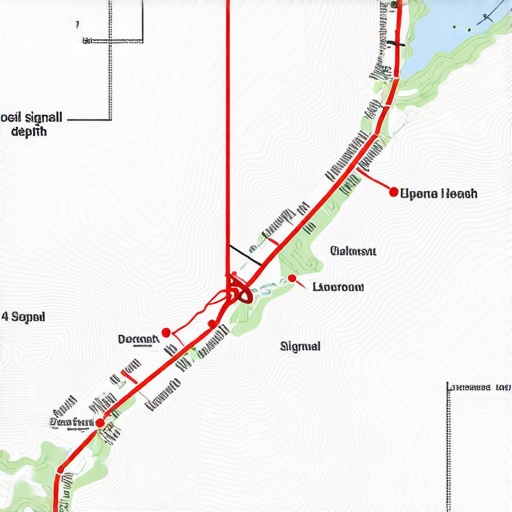
When you use google business profile seo strategies that only focus on directories, you are missing the “Signal Depth” that modern search engines crave. Google knows that anyone can buy a citation package. What Google wants to see is evidence that your business is an integral part of the local community. If your only links come from sites like “BusinessListingsXYZ.com,” you aren’t providing any proof of local prominence. This is one of the 3 Specific Reasons Your Google Business Profile Isn’t Ranking in the Local Pack. To truly compete, you need to invest in google business profile optimization that prioritizes quality and local relevance over sheer volume.
In 2026, the algorithm prioritizes “User Path Density.” This means Google is looking at how users move from a referring site to your profile. A directory link rarely generates actual human traffic. A link from a local neighborhood blog, however, sends a “warm” signal that a real person in your specific city is interested in your services. That is a signal that moves the needle.
Geo-Relevance vs. Domain Authority: The Local Link Hierarchy
One of the biggest mistakes I see SEOs make is chasing high Domain Authority (DA) links at the expense of geo targeted seo relevance. In the world of organic search, a DA 70 guest post on a national tech blog is gold. In the world of Google Maps, that link is often less valuable than a DA 15 link from your local Little League team or a neighborhood association.
This is the essence of Hyperlocal SEO. Google’s local algorithm operates on a “Proximity, Relevance, and Prominence” framework. While high DA links might help your prominence, they do nothing for your proximity or local relevance. A link from a entity physically located within 5 miles of your business address provides a “Geo-Signal” that no national publication can replicate. This is why understanding The Specific Backlink Types That Actually Push You Into the Three-Pack is critical for any serious local seo strategy.
Think of it this way: if you are a plumber in Austin, Texas, a link from the “Austin Homeowners Association” tells Google exactly where you operate and who you serve. A link from a “General Plumbing Tips” blog based in New York tells Google you know about pipes, but it doesn’t confirm you are the best choice for a customer on 6th Street. To improve google maps ranking, you must satisfy the algorithm’s hunger for geographical confirmation.
3 High-Impact Link Types That Force a Map Rank Boost
If you want to break through the noise and secure your spot in the 3-Pack, you need to shift your focus to these three high-impact link categories. These are the links that demonstrate true local authority and “Signal Depth.”
Unstructured Mentions & Local PR
An unstructured mention is a reference to your business name, address, or phone number on a website that isn’t a directory. Think of a news article, a blog post, or a local “Best Of” list. In 2026, Google’s ability to parse natural language is so advanced that a mention in a local news story – even if it doesn’t include a clickable backlink – acts as a massive trust signal. These mentions are harder to fake and carry more weight because they represent editorial validation. This is Why Unstructured Mentions Move the Needle More Than Generic Directory Citations. When a local journalist writes about your community involvement, Google notes the entity association between your business and the city, strengthening your local map pack seo.
Local Sponsorships and Community Hubs
This is the “secret sauce” of local seo backlinks. Sponsoring a local 5k run, a high school football team, or a charity gala often earns you a link from a “.org” or a highly relevant local domain. These sites are “Community Hubs.” They are trusted by the local population and, by extension, by Google. These links are incredibly difficult for competitors to replicate through automated tools. They require actual community engagement. To scale this, many agencies use specialized local seo tools to identify sponsorship opportunities that competitors have overlooked. By securing these “moat-building” links, you create a barrier to entry that keeps your map pin stable even when the algorithm shifts.
Niche-Specific Authority Links
If you are a specialized professional – a contractor, a lawyer, or a medical provider – links from industry-specific associations are vital. However, the 2026 twist is the local chapter link. Instead of just getting a link from the national Bar Association, aim for the “County Bar Association.” These links combine niche relevance with geo-relevance, creating a powerful double-whammy for your ranking. This is a core component of any sophisticated google maps ranking service. When Google sees that you are recognized by both your industry peers and your local geographic peers, your “Prominence” score skyrockets.
Technical Integration: Connecting Links to Your GBP
Getting the link is only half the battle. You must ensure that Google can clearly connect that link juice to your Google Business Profile. This is where technical integration and google business profile optimization come into play. You need to “bridge” the signals between your website and your GBP.
One of the most effective ways to do this is through strategic Map Embeds. However, you must be careful. I’ve documented The Map Embed Error That Destroys Your Proximity Relevance Signals, which usually involves embedding a static map rather than a dynamic, CID-linked map. A proper embed confirms your coordinates and links your website’s authority directly to your map pin.
Furthermore, your on-site Schema markup must be flawless. Using LocalBusiness Schema to explicitly link your social profiles and your GBP URL (using the “sameAs” attribute) helps Google’s Knowledge Graph connect the dots. Implementing The Specific Schema Fixes That Help Google Trust Your Service Area ensures that the authority you gain from your local links is correctly attributed to the right geographic regions. Without this technical bridge, your link-building efforts are like pouring water into a leaky bucket.
The 2026 Shift: Interaction Logs and Signal Acceleration
As we move deeper into 2026, the definition of a “link” is expanding. Google is increasingly looking at “Interaction Logs” – the trail of data left by users as they interact with your brand across the web. It’s no longer just about the link itself; it’s about the *traffic* and *engagement* that the link facilitates. If a local link sends ten people to your website, and those ten people then click your phone number or request directions on your GBP, Google views that link as highly authoritative.
This is what I call “Signal Acceleration.” You aren’t just waiting for a crawler to find a link; you are actively driving user behavior that confirms your relevance. If you find your rankings are stagnant despite having good links, you might be experiencing “Map Pin Lag.” Learning How This 2026 Ranking Accelerator Fixes Map Pin Lag Fast can help you jumpstart those engagement signals. You can also leverage advanced platforms to rank higher on google maps by simulating or encouraging real-world user paths that the algorithm now prioritizes. In 2026, a link without traffic is a ghost; a link with engagement is a powerhouse.
To stay ahead, you should also review 7 Google Business Profile Tips for Surviving the 2026 Algorithm Shift. The key takeaway is that the algorithm is becoming more “human.” It wants to see that your business is a living, breathing part of the local ecosystem, not just a set of coordinates in a database.
Conclusion: Building a Moat Around Your Local Rankings
The days of “set it and forget it” local SEO are over. Citations are the floor – they keep you in the game – but high-impact local links are the ceiling. By focusing on geo-relevance, unstructured mentions, and community hubs, you are doing more than just “optimizing”; you are building a competitive moat that is incredibly difficult for your rivals to cross.
In 2026, the winners in the Google Map Pack will be those who treat their local seo strategy as a PR and community engagement effort rather than a technical checklist. If you are ready to stop guessing and start growing, I recommend you perform a comprehensive Google Business Profile Audit to see where your link profile stands. Or, if you want to fast-track your results, look into a professional google maps ranking service that understands the nuances of the 2026 algorithm. Don’t let your business be a victim of the Citation Plateau. Move your map pin by moving your community.
For more advanced strategies, check out my guide on How to Accelerate GBP Ranking: Expert SEO Tips for 2025 and beyond. The map is yours for the taking – if you have the right signals.