Why Most Roofer Marketing Plans Fail the Proximity Test
Why Most Roofer Marketing Plans Fail the Proximity Test
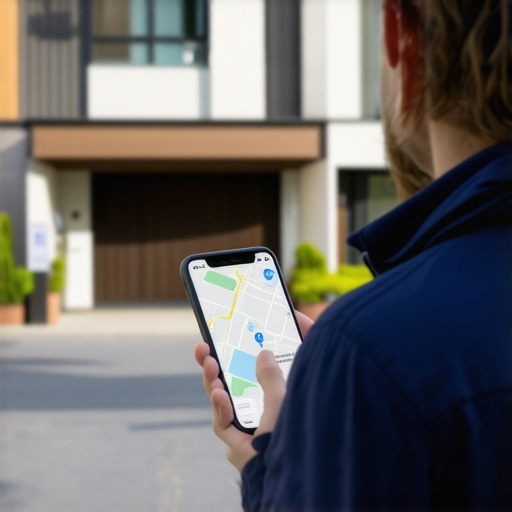
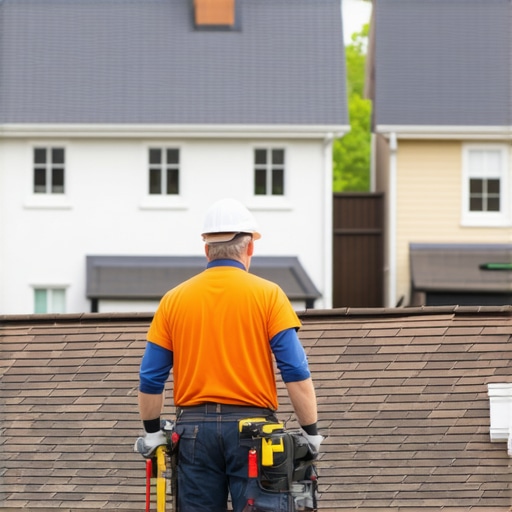
Imagine this: Your roofing company has the best crew in the tri-state area. You use premium architectural shingles, your safety record is spotless, and your pricing is competitive. Yet, a homeowner just three miles away from your office – someone actively searching for an emergency roof repair after a hailstorm – cannot find you on their smartphone. Instead, they see a competitor from the next town over who has half your experience and a fraction of your reviews.
This is the “Invisible Roofer” syndrome, and it is the primary reason most roofer marketing plans fail. In the modern landscape of local seo for roofers, having a high-quality website is no longer enough. The battle for leads has shifted from the traditional organic search results to the Google Map Pack. If you aren’t appearing in those top three spots, you are effectively invisible to 46% of all Google users who have local intent. To dominate your market, you must master google business profile seo and understand the technical nuances of the “Proximity Test.”
The hard truth is that most marketing agencies treat SEO as a global or national game. They focus on broad keywords and backlink counts while ignoring the hyper-local proximity filters Google uses to determine who gets the phone calls. This guide will break down why your current strategy might be hitting a wall and how to rebuild it for 2025 and beyond. For a deeper dive into speed, check out our guide on How to Accelerate GBP Ranking: Expert SEO Tips for 2025.
II. The “Three-Mile Wall”: Understanding the Proximity Filter
Google’s local algorithm is built on three pillars: Proximity, Relevance, and Prominence. While most roofers focus heavily on relevance (keywords) and prominence (reviews and links), they often neglect the most restrictive factor: Proximity. This is the “Three-Mile Wall.”
Proximity is the distance between the searcher and the business location. In the early days of google business profile seo, you could rank across an entire metropolitan area with a single verified address. Today, the algorithm is much more granular. Google’s goal is to provide the most convenient solution to the user. Consequently, a roofer often finds they rank #1 when standing in their own office parking lot, but their visibility drops off a cliff the moment they cross a major highway or enter a neighboring zip code.
Research indicates that for highly competitive service industries like roofing, map rankings often hit a hard wall at the three-mile mark. This happens because Google’s “centroid” (the center point of a search area) shifts as the user moves. If your profile isn’t optimized to project authority beyond your physical front door, you lose those leads. To overcome this, you need to use advanced google business profile seo techniques that signal to Google that your “Service Area” is actually being serviced.
Furthermore, technical issues like “signal lag” can impact your visibility. Signal lag occurs when Google’s local nodes have inconsistent data about your business’s recent activity. If your digital footprint is static, Google assumes your proximity is limited. You can learn more about this phenomenon in our article on Why Your Map Ranking Hits a Wall at the Three-Mile Mark.
III. The Virtual Office Trap & Video Verification
In an attempt to “beat” the proximity filter, many roofing companies have fallen into the “Virtual Office Trap.” The logic seems sound: if Google only shows businesses within three miles, why not rent five virtual offices across the city? For years, this worked. Roofers used “ghost pins” to appear as if they had physical locations in every major suburb.
However, as we move into 2026, Google has declared war on these tactics. The algorithm now uses sophisticated AI to detect non-physical locations. We are seeing a massive purge of profiles associated with co-working spaces, UPS stores, and residential addresses that don’t match the business’s actual operations. If you are caught gaming the system, your entire google business profile optimization effort could be erased overnight via a hard suspension.
Google is now frequently requiring Video Verification. They want to see your branded trucks, your equipment, and your staff in a physical workspace. If you are a mobile-heavy business, you must correctly configure your profile as a “Service Area Business” (SAB). Instead of trying to fake a physical presence, the fix is to build real local authority. This involves proving to Google that while your office is in Location A, your trucks are consistently in Locations B, C, and D. Failing to handle this transition properly is a recipe for disaster. See our breakdown on how to Fix 2026 Ghost Pins: A Maps Ranking Boost Trick for Speed.
IV. Signal Depth: Beyond Basic Citations
One of the biggest myths in local seo for roofers is that “more citations = higher rankings.” Many agencies will sell you a package of 200 directory listings on obscure websites and tell you that you’re optimized. In the current era of search, basic citations are merely the “entry fee.” They don’t move the needle anymore because they lack Signal Depth.
In 2026, Google’s algorithm has evolved to look for “Node Syncing.” This means the search engine isn’t just looking for your name, address, and phone number (NAP) on a directory; it’s looking for Interaction Logs and Device Pings. This is a highly technical aspect of the “Mesh” update. Google tracks the movement of mobile devices associated with your business. If your “crew” (devices that frequently interact with your business profile or are logged into your Google Workspace) are never actually at the job sites you claim to serve, your proximity signals remain weak.
To truly rank higher on google maps, you need to create a dense web of signals. This involves:
- Interaction Logs: Encouraging users to not just look at your profile, but to click “Directions,” “Call,” or “Message.” High interaction rates tell Google your business is a high-authority node.
- Device Connectivity: Ensuring your field staff are using apps that sync with your business’s digital ecosystem while on-site.
- Geospatial Data: Uploading photos to your GBP that contain EXIF data (GPS coordinates) of the actual job site.
Using professional local seo tools can help you track these deeper signals and ensure your “Node Syncing” is consistent across the web. Without this depth, your profile is just a flat image in a 3D search world. Read more about The Signal Density Fix That Moves Your Business Profile Instantly.
V. Hyperlocal Content & The “Service Area” Strategy
Most roofers have a “Services” page that lists things like “Roof Repair,” “Siding,” and “Gutters.” While this is necessary for google business profile seo, it does nothing to help you pass the proximity test in a town ten miles away. To expand your reach, you must pivot to a hyperlocal content strategy.
This means creating dedicated landing pages for every major neighborhood or suburb you serve. These shouldn’t be “cookie-cutter” pages where you just swap out the city name. Google’s AI can spot that from a mile away. Instead, these pages need to include:
- Local Case Studies: Mention specific projects completed in that neighborhood (e.g., “New Shingle Roof in Deer Creek Estates”).
- Neighborhood-Specific Reviews: Embed reviews from customers who live in that specific zip code.
- Local Schema Markup: Use technical code to tell Google exactly which geographic coordinates this page is relevant to.
A common mistake during this process is the “Map Embed Error.” Many roofers simply embed a static map of their office on every page. This actually reinforces the “Three-Mile Wall” because it tells Google your relevance is tied strictly to your office location. Instead, you should embed maps that show the specific service area or recent project locations. For professional assistance with this, a google maps ranking service can help you implement dynamic maps that boost your local relevance. Don’t let a technical oversight ruin your hard work; learn more about The Map Embed Error That Destroys Your Proximity Relevance Signals.
VI. Review Velocity and Geo-Tagged Social Proof
We all know reviews are important, but most roofers focus on the quantity of reviews rather than the quality of the signal. If you have 500 reviews but 90% of them come from people located within two miles of your office, Google will not expand your proximity. To rank higher on google maps in a new territory, you need reviews from that territory.
This is known as Geo-Tagged Social Proof. When a customer leaves a review, Google often knows their general location based on their account history and device GPS. If you start getting a cluster of five-star reviews from a suburb where you previously had no visibility, Google’s algorithm takes notice. It views these reviews as a “proximity boost.” It’s a signal that your business is active and trusted in that specific area.
Actionable Tip: Don’t just ask for a review. Ask the customer to mention their neighborhood or city in the review. “The team did a great job on our roof in [Neighborhood Name]!” This text, combined with the user’s location data, creates a powerful signal that moves the needle. This is part of The Hidden Review Signal That Actually Moves Your Map Ranking.
VII. Conclusion & Call to Action
Passing the proximity test is the difference between a roofing business that struggles for every lead and one that has a phone ringing off the hook. In 2025 and 2026, local seo for roofers is no longer about broad keywords; it is about signal-dense local SEO. You must prove to Google, through technical node syncing, hyperlocal content, and geo-specific social proof, that your authority extends beyond your office walls.
If your marketing plan is currently failing the proximity test, it’s time to stop doing “general SEO” and start focusing on the Map Pack. Audit your visibility across different zip codes. Are you hitting the Three-Mile Wall? Are your signals deep enough to survive the next algorithm update?
The transition from a traditional roofer marketing plan to a proximity-focused strategy is technical and demanding, but the rewards are massive. By optimizing your Google Business Profile with precision, you can reclaim the “invisible” leads in your backyard and outperform competitors who are still stuck in the old way of doing things. For a complete step-by-step guide on dominating your local market, check out our Maps Ranking Boost Blueprint: Outperform Competitors in 2025.
To get the tools you need to monitor your proximity and outrank the competition, explore the suite of local seo tools available at SEO Viper. Don’t let your business be limited by a three-mile radius – break through the wall today.