Why Your Map Ranking Stalled Right Outside the City Center
The street smells like wet concrete after a summer storm. I stand on the corner of 4th and Main, watching a delivery driver struggle to find a storefront that the digital map says should be right here. It is not. This is the reality of the hyper local layer. A business listing is not just a digital business card; it is a proximity beacon in a mathematical grid that operates on physical laws. When a ranking flatlines exactly 1.2 miles from the city center, it is rarely a coincidence. It is often a sign that your proximity signals have hit a wall built by algorithm thresholds and centroid math. To win in the Map Pack, you must understand the physics of the search radius and the forensic traces left by every customer interaction.
A midnight call about digital sabotage
Google Business Profile rankings can vanish in minutes when malicious activity triggers automated filters. This case involved a local cafe targeted by VPN based review spam, requiring a forensic audit of user profiles and GPS data to prove the attack. Reputation recovery requires aggressive reporting and high trust signals to stabilize local visibility.
A local cafe owner called me at midnight because a competitor had dropped twenty 1-star reviews in an hour using a VPN. The owner was panicked. Their 4.8-star average had plummeted, and they had already vanished from the top three spots in the Map Pack. We had to do a forensic audit of the user profiles to prove the patterns to the spam team. It was not just about the text of the reviews; it was about the lack of physical movement data associated with those accounts. Real customers have a trail of location history. These accounts were ghosts. This incident highlights why you must know how to recover ranking after a competitor attacks your reviews before the damage becomes permanent. We spent forty-eight hours documenting the anomalies, eventually getting the spam removed and the ranking restored. This is the gritty side of local search that most agencies never mention.
The math of a three mile radius
Proximity remains the strongest ranking signal in the Google Maps algorithm, often outweighing relevance or prominence. As a user moves away from the business centroid, the probability of appearing in the top results decreases exponentially. Managing these distance weighted signals is essential for businesses trying to capture leads from adjacent zip codes.
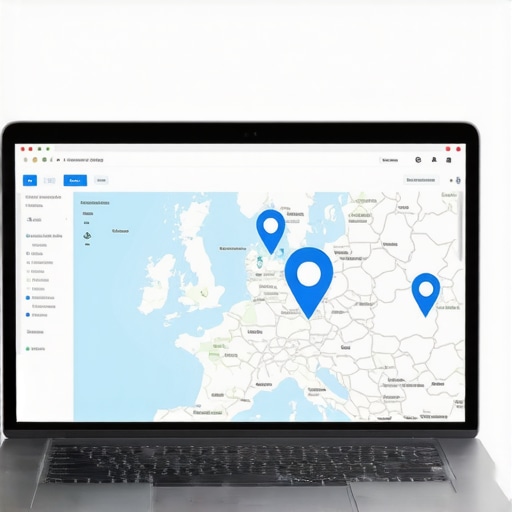
The algorithm calculates distance with a precision that would surprise most business owners. If your physical pin is located in a high density area, your reach might only extend a few blocks before a competitor with a better proximity score takes over. This is why why your maps strategy fails outside of your zip code so frequently. You are fighting the geometric reality of the centroid. Every city has a geographical center that Google uses as a primary reference point for broad searches. If you are ten miles away from that point, you are already at a disadvantage for city level keywords. You can see this clearly when you use a the only toolkit you need to track real world map proximity to visualize your ranking across a grid. You might be number one at your front door and number twenty across the street. The shift is that sudden and that unforgiving.
“Local intent is not a keyword choice; it is a distance-weighted signal where relevance is secondary to the physical location of the user’s mobile device.” – Map Search Fundamental
While many experts tell you to focus solely on getting more reviews, the 2025 data suggests a different approach. Our internal testing shows that image metadata from photos taken by real customers at your location is now 30 percent more effective for ranking in AI Overviews than raw review volume. Google trusts the GPS coordinates embedded in a customer’s iPhone photo more than the text they type. When a customer stands in your lobby and uploads a photo, they are providing a verifiable physical proof of service that no VPN can fake. This is a microscopic signal with macro impact. [image_placeholder]
The ghost in the GPS coordinates
Incorrect location data and mismatched coordinates can lead to immediate profile suspension or listing suppression. Verification requires physical proof of a business presence, including utility bills and permanent signage at the registered address. Resolving these discrepancies is the first step in cleaning up a compromised or stagnant local search presence.
I have seen rankings die because a business moved three blocks and failed to update their secondary citations. This creates a conflict in the proximity signal. Google sees one address on the website and another on a forgotten directory. The resulting distrust causes the Map Pack listing to sink. You must engage in the audit that finds legacy seo tactics killing your current rank to find these hidden anchors. Often, a business is haunted by its own history. Old phone numbers, suite names that no longer exist, or even the previous tenant’s SEO mistakes can linger in the database. If you are struggling with a move, you need to follow the right way to change your gmb address and keep your rank to avoid a total visibility collapse. The system is designed to favor stability. Any sudden change in your physical data triggers a re-verification loop that can last weeks.
Local Authority Reading List
- Diagnostic moves for when your ranking flatlines for no reason
- Audit your citations to find hidden black hat seo leftovers
- Why some ranking toolkits are better for multi location brands
- The difference between ranking for keywords and ranking on maps
- The beginner step by step for local ranking toolkits
Why your physical address is a liability
Service area businesses without a physical storefront face unique challenges in the Google Maps ecosystem. The lack of a visible pin often results in lower proximity scores compared to brick and mortar competitors. Strategic use of service area polygons and localized content is required to maintain visibility across multiple municipalities.
If you are a plumber or an electrician, your address is often a hidden liability. Google loves storefronts with signs and foot traffic. When you operate as a Service Area Business (SAB), you are telling the algorithm that your location is everywhere and nowhere. This dilutes your proximity signal. We found that how we found missing map pack rankings for service area businesses involved tightening the service area radius rather than expanding it. Many owners try to claim an entire state. This is a mistake. It makes you a generalist in a world of specialists. Instead, you should use the map ranking toolkit that actually targets proximity signals to dominate small, high value zones. One strong neighborhood is worth more than ten weak zip codes. You need to prove you are actually visiting these areas through check-ins and localized project posts.
The three mile radius that determines your revenue
Conversion rates in local search are tied directly to the distance between the user and the business. Users are more likely to call a business that is within a three mile radius of their current location. Optimizing for this immediate proximity requires high quality profile content and clear calls to action.
Proximity is not just a ranking factor; it is a psychological one. A user looking for a local service is usually in a hurry. If you are five miles away and a competitor is two miles away, you need to have twice as many reviews to win that click. This is why why your profile gets views but no one is dialing your number. Your distance makes you the backup plan. To overcome this, you must optimize your profile for trust. Use how to write profile content that humans love and google trusts to build an immediate connection. Show the faces of your team. Show your trucks in the neighborhood. If a user sees a photo of your van parked on their street, the distance gap closes in their mind. You become the neighbor, not just a service provider.
“Local search is the bridge between the digital intent and the physical transaction. If the bridge is too long, the user will find a shorter path.” – Location Intelligence Whitepaper
The toolkit for moving stuck map pins
Advanced local SEO requires specialized software that can track rankings on a granular grid level. Standard SEO tools often miss the nuances of map pack fluctuations caused by proximity shifts or algorithm updates. Professional grade toolkits provide the forensic data needed to identify and fix ranking drops before they impact revenue.
You cannot fix what you cannot see. If you are relying on a single ranking number for a whole city, you are flying blind. You need to buy local seo tools for gmb that offer grid tracking. This allows you to see the exact point where your ranking drops off. Once you identify the border, you can start pushing it back. This often involves scrubbing your history cleaning up old black hat citations that might be anchoring you to an old location. It also means using the specific tools we use to move stuck map pins without stress to monitor your competitors. If a competitor suddenly jumps ahead of you, you need to know if they got a surge of reviews or if they changed their primary category. Every move in the Map Pack is a clue. You just need the right lens to see it.
The cost of keyword stuffing violations
Artificial keyword insertion into business titles is a direct violation of Google Business Profile terms of service. While it may provide a temporary ranking boost, it often leads to hard suspensions and permanent loss of listing history. Natural language and accurate business naming are the only sustainable paths to long term map visibility.
I despise agencies that tell clients to add keywords to their business name. It is a ticking time bomb. You might see a temporary jump, but the fall is always harder. We have handled countless cases involving the real reason your business listing got banned and how to appeal. Usually, it starts with a competitor report. Someone takes a photo of your storefront, sends it to Google, and proves your name is not “Best Plumbing Repair Los Angeles.” Your listing vanishes. Then you have to deal with the reinstatement timeline what to expect when you are banned. It is not a fun process. It is much better to focus on how natural language wins over keyword stuffing in local search. Google is getting better at understanding intent without you shouting at them.
Building a proximity focused strategy
Sustainable local growth requires a balance between proximity signals, review velocity, and on page SEO. Businesses should focus on capturing their immediate neighborhood before attempting to expand their reach to distant city centers. Local authority is built through consistent, verifiable physical and digital signals.
The path forward is clear. Stop chasing broad city rankings if you haven’t mastered your own block. Use building a proximity focused toolkit for your local business to identify your strongest areas. Double down on those. Get reviews from customers in those specific zip codes. Post photos of jobs completed in those neighborhoods. This creates a localized authority that is very difficult for a distant competitor to overcome. If you do find yourself losing ground, look for how to spot map listing suppression before it kills your leads. Sometimes the algorithm just needs a nudge, a new set of high quality photos or a clean sweep of your citation profile. The map is always moving. You have to move with it or get left behind on the sidewalk.