A Forensic Look at Why Your Search Traffic Fell Off a Cliff
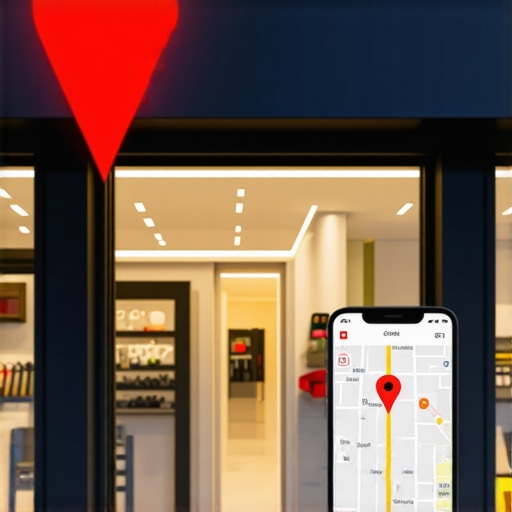
The smell of wet concrete always reminds me of a botched verification attempt. It was raining in Seattle when I realized that a digital storefront had more in common with a crime scene than a marketing asset. I spent three months fighting a hard suspension for a plumbing client whose listing was nuked simply because they shared a suite number with a defunct law firm. Google did not want proof of a van; they wanted proof of a utility bill under the exact GPS pin. This is the reality of the hyper-local layer. It is a spatial database where your business is a proximity beacon, and right now, your beacon is flickering. When your search traffic vanishes, it is rarely a coincidence. It is a calculated removal by an algorithm that prioritizes the physics of location over the quality of your service. I see the glitches in the storefront data every day. A missing comma in a suite number or a mismatched phone number in a secondary verification tier is enough to kill your organic trust score.
The ghost in the GPS coordinates
Moving a business location triggers a massive proximity signal reset. To recover local rankings after a city move, you must align NAP consistency across all local citations. Google Business Profile updates require physical proof to avoid algorithmic suppression and maintain Map Pack visibility. If you have recently changed your base of operations, you are likely feeling the impact of moving on local citations. The algorithm does not just look at your new address; it looks at the historical residue of your old one. If your legacy data still points to a different neighborhood, your proximity signal fails. You must engage in scrubbing your history to remove those black hat leftovers that confuse the search engine. This is not just about updating a website. It is about every hidden directory that still lists your old suite number as active.
“Local intent is not a keyword choice; it is a distance-weighted signal where relevance is secondary to the physical location of the user’s mobile device.” – Map Search Fundamental
Why your physical address is a liability
GMB suspensions often stem from address verification errors or service area overlaps. Recovering a suspended profile requires submitting a reinstatement request backed by utility bills and business licenses. Monitoring services help prevent future suspensions by flagging unauthorized edits to your Google listing. Suspensions happen in loops. You fix one error, and another triggers a day later. I have seen businesses get trapped in a cycle of stopping the suspension loop because they failed to understand the physical proof checklist required for verification. Google does not care about your brand; it cares about the sanctity of the map. If you share an office with another entity or use a virtual space, you are a red flag. You need the evidence for a successful reinstatement ready before the flag drops.
The three mile radius that determines your revenue
Google Map rankings depend on the user centroid and the business proximity. Local SEO services must address the proximity barrier to rank outside a neighborhood. Map grid tracking tools provide accurate data for service area businesses struggling with local search visibility. If you are a plumber or a roofer, your visibility is a polygon. If that polygon shrinks, your leads dry up. Often, fixing the missing in map pack error requires more than just keywords. It requires understanding why your maps strategy fails outside your zip code. Proximity is a mathematical weight. If a competitor is physically closer to the user, they win, unless your authority score is high enough to bend that radius. Use map grid tracking to see where your authority ends.
Poison in the review feed
Fake reviews and competitor attacks can cause ranking drops and profile suppression. GMB spam fighting involves audit strategies to remove fraudulent reviews. Maintaining local status after a review cleanse requires rebuilding map authority through authentic customer engagement. I once saw a cafe lose forty percent of its traffic because a competitor used a VPN to drop twenty 1-star reviews. We had to perform a practical strategy for removing fake reviews to save their reputation. When positive reviews are removed, your map spot vanishes. You must understand how to rebuild map authority after a wipeout.
“The relationship between the user’s GPS coordinates and the business’s verified pin is the primary filter for all local search results in the mobile era.” – Spatial Search Weekly
Structured data errors and the silent ranking killer
Schema errors prevent search engines from indexing local business data correctly. Structured data fixes ensure that opening hours and service areas are readable by AI. Top SEO toolkits identify hidden ranking blocks caused by JSON-LD mistakes. Most owners never look at their code. They wonder why their audit fails to show hidden blocks. It is often because the schema does not match the profile. If your audit misses critical errors, you are flying blind. You need a signal fix that addresses the code level.
Local Authority Reading List
- The beginner step by step for local ranking toolkits
- How to recover your map position after a competitor attack
- When your map ranking dies after a review filter update
- Why your local keywords aren’t translating into map clicks
- How to protect your google profile from competitor sabotage
Managing the multi location chaos
Multi-location brands require bulk profile audits to maintain brand consistency. Agency grade toolkits help manage multiple GMBs without suspension risks. Local SEO software identifies missing ranking opportunities across large cities. When you have ten locations, you have ten times the risk. A single ranking toolkit for multi-location brands is the only way to keep the data straight. You need a practical way to manage bulk audits so you do not miss a single suspension notice. Check your multi-location GMB toolkit to ensure every pin is healthy. The pin moved. The traffic died. But the data remains. You just have to know how to read it.