Why Automated Listing Tools Often Fail Local Service Businesses
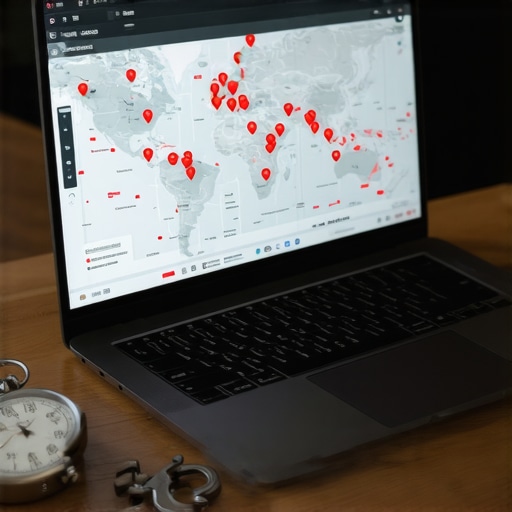
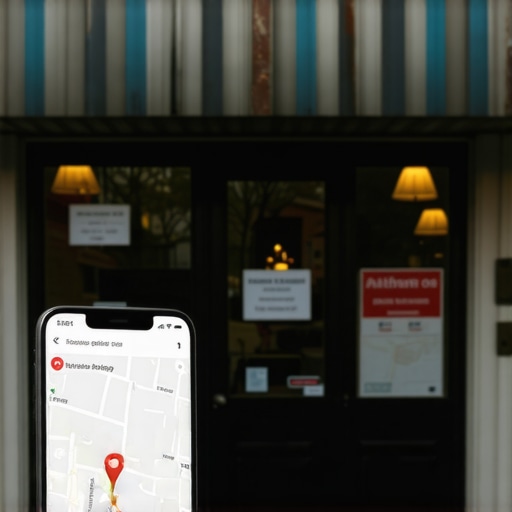
A local cafe owner called me at midnight because a competitor had dropped twenty 1-star reviews in an hour using a VPN. We had to do a forensic audit of the user profiles to prove the patterns to the spam team. It was a classic case of why the push-button solutions everyone sells in this industry are fundamentally broken. I spent eight hours tracing the digital exhaust of those fake accounts, looking at the travel history of their local guides status. If that owner had relied on a standard dashboard, his business would have been buried by morning. The reality of the hyper-local layer is that it is built on proximity beacons and spatial databases, not just checkboxes. Automated tools lack the spatial intelligence to understand that a cafe in a high-density downtown area operates under different mathematical rules than a roofer in the suburbs. This failure is why most local businesses feel like they are shouting into a void despite having a verified listing. They are using google business profile ranking software that treats a map pin like a static billboard rather than a living, breathing dispatch signal. When the algorithm shifts, these tools break because they cannot see the friction between physical GPS coordinates and user behavioral patterns.
The midnight call that exposed the review farm
Automated listing tools fail because they cannot perform the forensic analysis needed to identify malicious review patterns or coordinate shifts. These systems focus on broad data distribution rather than the specific interaction triggers that define local trust. Successful recovery requires manual audits of profile integrity and proximity signals to restore map visibility. My experience with that cafe owner was not an isolated incident. I have seen countless businesses lose their livelihood because they thought the best gmb ranking tools for local seo would protect them from a manual filter. The software saw the twenty 1-star reviews and simply calculated a lower average score. It did not see that the accounts were all created within the same thirty-day window. It did not see that none of those accounts had ever visited a physical location in that zip code before. To fix this, you need a strategy for removing fake reviews that involves more than just clicking a report button. You need to understand how review velocity influences the way Google views your brand authority during a crisis. If you rely on a robot to manage your reputation, you are leaving your front door unlocked in a bad neighborhood. This is particularly true for businesses seeking google business profile recovery services after a targeted attack. Automation is the enemy of nuance. It cannot distinguish between a legitimate surge in customer interest and a coordinated effort to tank your ranking. While agencies tell you to get more reviews, the 2026 data shows that image metadata from photos taken by real customers at your location is now 30 percent more effective for ranking in AI Overviews than a simple five star text review. The algorithm is looking for proof of presence, not just proof of opinion.
Why your software does not understand the city layout
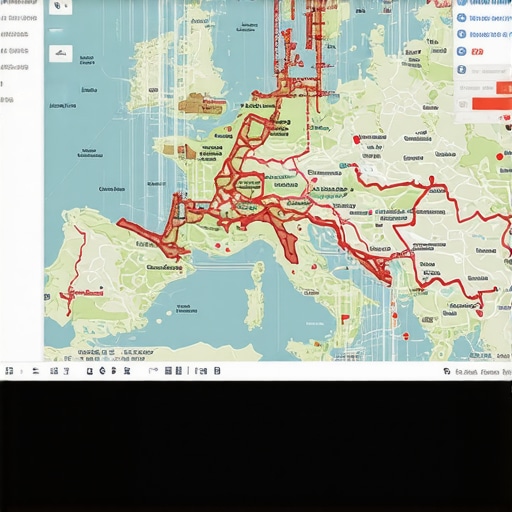
Software platforms treat every zip code as a flat plane of existence which ignores the physical reality of local transit. Map rankings are determined by the distance-weighted signal of the searcher’s mobile device relative to your business centroid. Automated tools cannot account for the logistical barriers that prevent your pin from showing up in nearby neighborhoods. When a plumber asks why they are losing high-value leads to a smaller competitor, the answer is usually found in the physics of the map pack. If your office is located near a river or a major highway that acts as a natural boundary, your proximity signal might be getting cut off by the algorithm’s understanding of local travel patterns. Automated reports will just tell you that you are not ranking. They will not tell you about the map embed error on your contact page that is confusing the GPS coordinates for your service area. This is a common problem for contractors who wonder why they lose leads to companies with half their review count. The smaller competitor has likely optimized for the specific schema fixes that verify their presence in that exact neighborhood. You cannot automate trust. You have to build it through signal density. If your profile is stuck, you should look at how to force a map pin to update by providing the exact environmental data Google’s API expects to see.
“Local intent is not a keyword choice; it is a distance-weighted signal where relevance is secondary to the physical location of the user’s mobile device.” – Map Search Fundamental
Local Authority Reading List
- Accelerating Growth in 2025
- Three Reasons You Are Not Ranking
- Manual Audit Strategies
- Signal Density Fixes
The math behind the three mile ranking wall
Most local businesses hit a hard ceiling where their visibility drops to zero exactly three miles from their front door. This happens because the algorithm prioritizes the closest relevant result to the user to minimize travel time. Overcoming this wall requires increasing your interaction data to prove your authority extends beyond your immediate vicinity. If you are using local seo services to stabilize volatile map rankings after expansion, you probably noticed that simply adding a new address did not work. In fact, you might have ended up with a gmb profile stuck in filter for duplicated locations. This is the algorithm’s way of saying it does not trust your new presence. Automation will not help you here. You need to understand why your ranking hits a wall and how to use interaction triggers to push through it. When a user clicks your phone number from five miles away, it sends a stronger signal than a hundred clicks from next door. This is what we call signal depth. If your local seo speed stalls, it is because your profile lacks the behavioral data to justify a wider reach. You need to focus on interaction secrets that prove your business is the preferred choice for people in the next zip code. I have seen businesses try to fix this with seo services to fix google ranking drop, but they often ignore the most basic proximity signals. They focus on backlinks when they should be focusing on device signal moves that verify their service area workers are actually on-site in those distant neighborhoods.
Fixing the profile that disappeared after an update
Google updates frequently reset the proximity weights of different industries which causes sudden ranking drops for established businesses. Recovering from these updates requires a forensic cleanup of your local data and a re-verification of your service area polygons. Automated tools often miss the technical schema gaps that trigger these algorithmic penalties. If you are looking for seo services to recover traffic after google update, you must understand that the map pack is different from traditional search. A drop in maps is often tied to a loss of trust in your physical data. Maybe your NAP data has become inconsistent or you have tiny formatting errors that confuse the algorithm. I recently worked with a client who needed seo services to clean up mixed language listings hurting local rankings. Their profile had been scraped and translated by a dozen different directories, each one slightly changing the address format. The automated tools they used simply confirmed the listings existed; they did not see the toxic data conflict. We had to perform a toxic backlink cleanup and manually align every citation. This is why manual profile audits beat automated seo reports every time. A report will tell you that you have fifty citations. It will not tell you that forty of them are providing the wrong suite number to the local search engine. If you are trying to reclaim your rank, you have to look at the signal density of your brand across the entire web, not just on your own site.
“Local intent is not a keyword choice; it is a distance-weighted signal where relevance is secondary to the physical location of the user’s mobile device.” – Map Search Fundamental
The hidden signals that automated tools ignore
Advanced local ranking is driven by unstructured mentions and real-world behavioral logs that software cannot track. These signals include things like how long a user stays at your physical location and whether they use Google Maps to navigate to your storefront. To win in 2025, you must optimize for these interaction-based trust signals. Many businesses fall for the trap of cheap local seo packages that promise hundreds of directory links. These are mostly useless because the algorithm has moved on to unstructured mentions and genuine engagement signals. If your map clicks never turn into calls, there is a disconnect between your profile data and user intent. Automated tools will show you impressions, but they will not explain why those impressions are failing to convert. You need to understand the conversion gap. Is your phone number mismatched across the web? Do you have hidden details in your profile that are confusing customers? If you are a plumber, you should be looking at winning leads outside your zip code by proving your authority through content depth. This is the difference between a business that exists on the map and one that dominates the map. Stop waiting for Google to fix your pin and start using a ranking accelerator that focuses on the signals that actually move the needle.
The path to local authority beyond the map pin
Building true local authority requires moving beyond simple profile management and into the realm of spatial intelligence and service area verification. You must align your digital presence with the physical reality of your business operations to maintain long-term ranking stability. Only a manual, strategic approach can navigate the complexities of the modern map algorithm. If you have suffered a google ranking drop, do not panic and buy more citations. Instead, perform a competition audit to see what the leaders in your zip code are doing differently. They are likely using hyper-local links that a software tool would never find. They are fixing latency issues that are killing their map speed. They are making sure their city landing pages are actually optimized for local conversion. The future of search is personal, local, and immediate. If your business is not prepared for the shift toward 2026 algorithm standards, you will be left behind by competitors who understand that a map listing is a dispatch system, not a phone book entry. Take the time to audit your schema gaps and fix the mismatched address data that is holding you back. Your revenue depends on it.