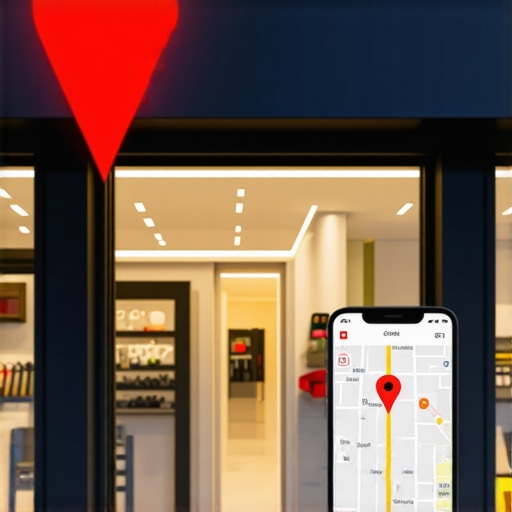
How to Maintain Map Presence While Rebranding Your Business
The ghost in the GPS coordinates
Rebranding your business while maintaining your Google Maps rank requires a surgical synchronization of your new identity with your existing GPS location data. Failure to align your new business name with your legacy coordinates often triggers a hard suspension because the algorithm detects a mismatch between the entity and the physical pin. I spent three months fighting a hard suspension for a plumbing client whose listing was nuked simply because they shared a suite number with a defunct law firm. Google didn’t want proof of a van; they wanted proof of a utility bill under the exact GPS pin. This illustrates that the platform prioritizes physical evidence over brand aesthetics. When you change your name, you are not just updating a label; you are altering a primary data point in a spatial database. If the map ranking toolkit that actually targets proximity signals is not used to monitor these shifts, your visibility will vanish into the ether of unverified data. I smell the wet concrete of the city every time I visit a client site to photograph their new signage; it is that tangible proof that satisfies the AI auditors. You must understand that your profile is a proximity beacon. The mathematical weight of your location is far heavier than the font on your new logo.
Why your physical address is a liability
Your physical address acts as the anchor for all local trust signals, and any modification to your brand name can make this anchor unstable. Google treats every business name edit as a potential fraud event, especially in high-competition niches where keyword stuffing is rampant. Many owners try to slip in extra keywords during a rebrand, but using the real cost of keyword stuffing your service area categories as a guide shows that this often leads to immediate flagging. The algorithm looks for the forensic trace of a real business, including permanent signage and matching utility bills. If you are moving locations while rebranding, you face a double risk. You must utilize the physical address audit to fix suspension risks before you ever touch the dashboard. I have seen countless businesses lose a decade of ranking authority because they changed their name and address in the same hour without preparing the necessary documentation. The system sees a new name and a new location as a new business, which means you lose all your historical review data and local justifications. You must prove your existence through high-resolution, unedited photos of your new storefront. Stock images are a death sentence. The algorithm can detect the metadata and the visual patterns of a staged photo faster than a human reviewer.
“Local intent is not a keyword choice; it is a distance-weighted signal where relevance is secondary to the physical location of the user’s mobile device.” – Map Search Fundamental
The three mile radius that determines your revenue
A business rebrand can inadvertently shrink your proximity radius if the new categories do not align with the historical search patterns of your local neighborhood. Proximity is the strongest ranking signal in the modern Map Pack ecosystem, and the algorithm calculates your reach based on the density of local signals around your centroid. If you rename your business from Joe’s Hardware to Joe’s Home Solutions, you might lose the hardware-specific relevance that Google built over years. You need to use a checklist for finding the right keywords for your local service area to ensure your new brand still triggers the right search terms. The physics of a 3-mile proximity radius shift are brutal. If your rebranding effort results in a drop in click-through rates, Google will naturally retract your reach to a smaller circle. This is why the toolkit that boosts map conversion rates is vital during a transition. You need to maintain the same behavioral signals, such as directions requests and phone calls, to tell the algorithm that despite the name change, the utility of the business remains the same for the local population. Every check-in signal from a mobile device at your location reinforces the fact that you are still a functioning entity. If these signals dip during your rebrand, the local search engine will assume the business has closed or changed its core offering, leading to a rank crash.
Local Authority Reading List
- How to handle a sudden listing suspension
- Identifying why you are falling behind in the Map Pack
- Software tools to accelerate your local SEO growth
- Cleaning up old location data that causes ghost pins
- Removing toxic citations from your business history
Forensic traces of a name change
Successfully rebranding requires scrubbing the internet of every mention of your old name to prevent the algorithm from seeing conflicting brand signals. Google audits third-party directories to verify the legitimacy of your Google Business Profile. If your old name still exists on Yelp, Bing, or local chamber of commerce sites, it creates a data mismatch that suppresses your ranking. You should follow the proper way to scrub spam citations to ensure that every mention of your brand is unified. This is not just about NAP (Name, Address, Phone) consistency; it is about entity clarity. When I look at a storefront, I see the physical reality, but Google sees a JSON-LD LocalBusiness object. If your website schema says one thing and your GBP says another, the trust score collapses. I have found that seo services to fix schema and structured data errors are often the only way to recover from a botched rebrand. You must also consider the secondary verification tiers. If your Local Services Ads account has an old phone number or brand name, it can kill your organic trust score. The algorithm is looking for a forensic trail of consistency. If it finds a single mismatched phone number in a high-authority directory, your map pin might stall. The goal is to make the transition look like a natural evolution rather than a suspicious replacement. This involves updating your domain, your social media handles, and your local landing pages in a single, coordinated strike.
The math of local review sentiment
Your existing reviews are your most valuable asset during a rebrand, and you must protect them by strategically seeding the new brand name into recent customer feedback. Google reviews are not just testimonials; they are a source of keyword data that the algorithm uses to understand what your business does. If you change your name, the old reviews still mention the old brand. You need to encourage new customers to use your new brand name in their reviews to build a new linguistic association. If you find yourself in a situation where your reviews vanish and map rankings tank, it is often because Google suspect a change in ownership rather than a rebrand. You must respond to every new review using the new brand name naturally. For example, instead of saying, ‘Thanks for coming in,’ say, ‘The team at New Brand Name is so happy we could help.’ This feeds the natural language processing engines the data they need to link the old reputation with the new identity. While many agencies suggest getting more reviews, the current data shows that images taken by real customers at your new location, with your new signage, are 30 percent more effective for ranking in AI Overviews than text-only reviews. You can use the relationship between review count and map pin stability to plan your acquisition strategy. A sudden surge in reviews for a new brand name can look like spam, so a steady, consistent growth pattern is essential for long-term stability.
Why your map ranking stalled right outside the city center
Rebranding often causes a temporary drop in ranking outside of your immediate neighborhood as Google re-evaluates your authority in surrounding zip codes. This phenomenon, known as centroid collapse, happens when the algorithm is unsure if the new brand carries the same local weight as the old one. If you see that your map ranking stalled right outside the city center, you likely have a problem with your local justifications. Google uses snippets of reviews and website content to ‘justify’ why you should appear for a search. If your website content has been poorly updated during the rebrand, you lose these triggers. You should consult why most local seo toolkits fail beginners to avoid using outdated ranking signals that do not account for these modern shifts. To combat this, create location-specific pages on your website that clearly explain the rebranding to both humans and bots. Use the google maps accelerator hacks to push for higher engagement in those fringe areas. If people in the next zip code stop searching for you by name, Google will stop showing you to them for generic terms like ‘plumber near me.’ You must maintain a high volume of brand searches during the transition. I often suggest running a small, targeted local ad campaign using the new name to force the algorithm to recognize the new entity. This creates the necessary behavioral data to prove that you are still the dominant player in the region. Fundamentally, the map is a reflection of real-world activity. If the real world knows who you are, the algorithm will eventually follow suit.
“Rebranding is the process of updating the digital twin of your physical business. If the twin does not match the storefront, the search engine will discard the data to protect user experience.” – Location Intelligence Whitepaper
The final verification of your new identity
The last step in a successful rebrand is surviving the manual or automated video verification process that Google often triggers after a name change. If you have followed the steps to clean up your citations and updated your website, you still need to be prepared for a forensic audit. You can check the reinstatement timeline to understand how long it takes to recover if this process goes wrong. You must have your new signage, business cards, and branded vehicles ready for a video walk-through. If you fail to show a permanent storefront, you will be hit with an address fraud suspension. You can learn from how we overturned a suspension caused by address errors to avoid the common pitfalls. The process is not about your logo; it is about your physical presence. I have seen businesses try to use temporary banners, only to have their profiles permanently banned. You need to prove you are a real merchant who serves the local community. Once you pass this final hurdle, you can focus on speeding up your local seo rankings with proven techniques to regain any lost ground. The rebrand is complete only when the algorithm stops associating your pin with the old brand and fully embraces the new entity as the primary authority at those coordinates. The pin has moved in the minds of the AI; now it just needs to stay there.