5 Interaction Triggers That Force Your Map Pin Higher
5 Interaction Triggers That Force Your Map Pin Higher (2026 Guide)
The era of “set it and forget it” local SEO is officially dead. If you are still relying on a basic NAP (Name, Address, Phone number) consistency strategy and a handful of directory citations to move your map pin, you are fighting a losing battle. In the 2026 local search landscape, the Google algorithm has undergone a radical shift. We have moved beyond static data into the realm of behavioral signals. Google no longer just asks, “Where is this business?” It now asks, “How do people interact with this business in the real world?”
The secret to modern google business profile seo lies in “Interaction Triggers.” These are specific, measurable user actions that signal to Google’s AI that your business is not just a placeholder on a map, but a high-utility destination. Recent data suggests a massive divergence in how rankings are calculated: Proximity now only accounts for roughly 15% of the weight, and Relevance sits at 25%. The remaining 60% – the lion’s share – is dominated by Prominence, a metric now almost entirely fueled by real-time user interaction logs. If your profile lacks these triggers, you become a “Ghost Pin” – a verified business that remains invisible in the local pack because no one is actually engaging with it. To break through, you must force the algorithm’s hand by triggering specific behavioral responses.
Why Your Map Pin Is Stuck (The Shift to Behavioral SEO)
Many business owners come to me frustrated because they have “perfect” SEO on paper but remain stuck at position #4 or #7 – just outside the coveted Local Pack. The reason is simple: Google has solved the “spam” problem of citations. Anyone can buy 200 citations for $50, making them a weak differentiator. Instead, Google now prioritizes Dynamic Signals over Static Signals.
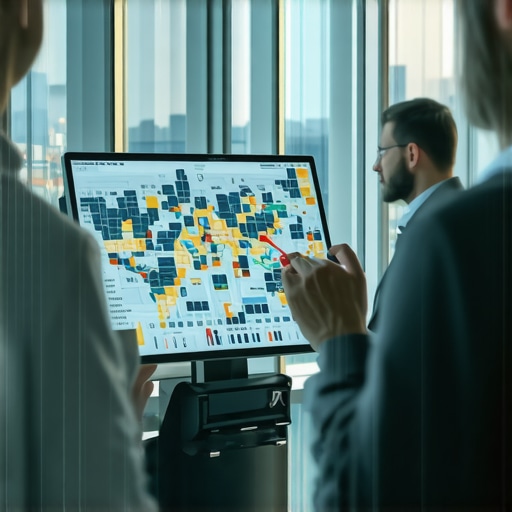
Static signals are your address, your category, and your website’s backlink profile. Dynamic signals are the “heartbeat” of your profile: how many people clicked “Call” today? How many requested driving directions from a zip code five miles away? How many users lingered on your photos for more than 10 seconds? These interaction logs provide Google with unfalsifiable proof of your business’s popularity. If your competitors are getting 50 direction requests a week and you are getting five, Google will demote you regardless of how many keywords you stuff into your business description.
This shift is part of the broader 2026 algorithm update, where Google seeks to eliminate “Ghost Pins.” These are profiles that look optimized but have zero real-world utility. If you find yourself in this position, you need to understand [Why Your Map Pin Is Stuck Behind Competitors and How We Fixed It]. To move the needle, we must focus on the five triggers that prove your prominence to the algorithm.
Trigger #1: Searcher Intent & CTR Pathing
The first trigger that forces a ranking boost is Click-Through Rate (CTR) Pathing. Google doesn’t just track if someone clicked your profile; it tracks the entire journey. In 2026, the algorithm differentiates between a “bounce” (someone clicking your profile and immediately hitting the back button) and a “successful path” (someone clicking your profile and then performing a secondary action like viewing a menu or reading a specific review).
To rank higher on google maps, your profile must be designed to capture and hold attention. This starts with visual hierarchy. High-quality cover photos and recent “Owner Updates” increase the initial CTR. When a user searches for a term like “emergency plumber” and chooses your profile over others, Google notes this as a vote of confidence. If that user then spends 45 seconds scrolling through your project photos, you’ve triggered a “Dwell Time” signal.
You can monitor these behavioral shifts using a google maps rank tracker to see how your positions fluctuate in relation to your traffic spikes. To optimize for this trigger, ensure your most impressive visual assets are front and center. Use high-contrast images that stand out in the mobile interface, as mobile users represent over 80% of local search intent. The goal is to create a path of least resistance from the search query to a meaningful interaction on your profile.
Trigger #2: Driving Direction Density & “Mesh” Verification
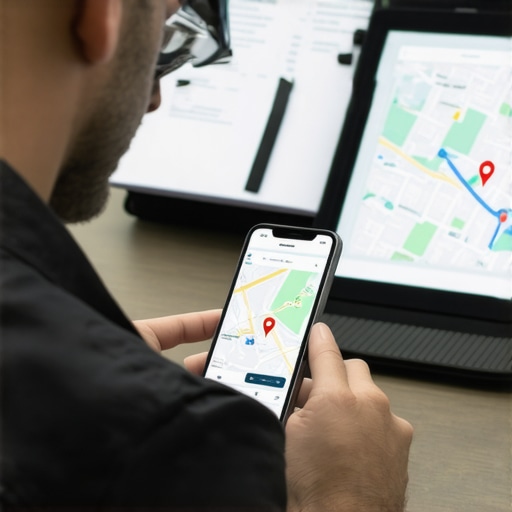
Driving directions remain the single most powerful interaction trigger in the google business profile seo playbook. However, the 2026 “Mesh Update” has changed how these are weighted. Google now uses “Mesh Data” and “Bluetooth Beacons” to verify that a direction request actually resulted in a physical visit.
In the past, some black-hat SEOs would spoof direction requests. Today, Google cross-references the GPS data from the user’s device and pings nearby Bluetooth-enabled devices (like smart signage or other shoppers’ phones) to confirm the visit. This is known as Physical Interaction Verification. When Google sees a high density of users requesting directions from various starting points and successfully arriving at your coordinates, it “hard-codes” your business as a local authority.
This creates a proximity-defying effect. If people are willing to drive past three competitors to get to you, Google will expand your “ranking radius,” allowing you to show up in searches much further away than your physical location would normally allow. If you are struggling with a narrow ranking bubble, you may need to [Fix Your Local SEO Speed Using 2026 Beacon Signal Data] to ensure you are capturing these high-intent signals correctly. Driving direction density is the ultimate proof of brand demand.
Trigger #3: Review Velocity & Response Latency
While everyone knows reviews are important, most businesses fail to understand the technical nuances of google business profile reviews in the current algorithm. It is no longer about the total number of reviews; it is about Velocity and Latency.
- Review Velocity: This is the speed at which you acquire new reviews. A profile that gets 10 reviews in one day and then none for three months looks suspicious. A profile that consistently receives 2-3 reviews a week signals a healthy, active business.
- Response Latency: This is how quickly you respond to those reviews. Google’s 2026 patents suggest that businesses responding within 24 hours receive a “Responsiveness Boost.” This signals to the algorithm that the business is active and cares about the customer experience.
To maximize this trigger, you should implement google business profile optimization by training your staff to ask for reviews that mention specific services. A review that says “Best HVAC repair in Chicago” is infinitely more valuable than one that just says “Great service.” You can use tools like google business profile optimization software to automate the request process and ensure your velocity remains consistent. Remember, the algorithm is looking for organic, steady growth, not artificial spikes.
Trigger #4: High-Engagement Profile Posting
Google Business Profile is no longer a static listing; it is a social feed. Google uses “Interaction Logs” from your posts to determine how “fresh” your business is. If you haven’t posted an update in three weeks, Google assumes your information might be stale.
Frequent updates – specifically “Offer” posts and “What’s New” posts – create micro-interactions. When a user clicks “Learn More” on a post or expands a photo in an update, it sends a signal to the local map pack seo algorithm that your profile is providing current value. These interactions are logged and compared against your competitors.
We have seen cases where a profile was stuck at the bottom of page one, and simply increasing the posting frequency to 3x per week with high-res images jumped them into the top 3 within 30 days. This is exactly [How We Used Interaction Logs to Jumpstart a Stalled Google Business Profile]. Don’t treat posts as ads; treat them as engagement hooks designed to keep the user on your profile for as long as possible. The more time they spend interacting with your content, the higher your prominence score climbs.
Trigger #5: Direct Messaging & Click-to-Call Volume
The final trigger is the “Conversion Signal.” Google’s primary goal is to provide the user with a solution. If a user clicks the “Call” button or uses the “Message” feature on your GBP, Google has successfully completed its mission. These are the highest-weighted interactions because they represent a 1:1 conversion.
High click-to-call volume relative to your category average is a massive ranking catalyst. If your profile consistently converts searchers into callers, Google will prioritize your pin to ensure more users have a successful search experience. This is where using professional local seo tools becomes essential. You need to track these conversions meticulously to understand which keywords are driving actual revenue versus just “vanity” views.
Furthermore, enabling and quickly responding to direct messages can give you a competitive edge. Many businesses ignore the messaging feature because it’s “another thing to manage,” but in the eyes of the gmb ranking service algorithm, a business that communicates in real-time is a business that deserves to be at the top. This high-utility status is what separates the market leaders from the “Ghost Pins.”
How to Audit Your Interaction Gaps
Before you can “force” your ranking higher, you must identify where your interaction signals are failing. A standard local seo ranking factors audit should now include a behavioral gap analysis. Ask yourself the following questions:
- Is my review response latency under 24 hours?
- Am I posting at least three times a week with unique, non-stock imagery?
- Does my profile have a clear “primary action” (e.g., Book Now, Call, or Message)?
- Am I getting driving direction requests from outside my immediate 2-mile radius?
- Are you using a google maps ranking service to monitor how these interactions correlate with your daily rank movements?
If the answer to any of these is “no,” you have an interaction gap. Google’s algorithm is a machine learning model; it needs data to make decisions. If you don’t provide the data (interactions), the machine will look elsewhere. Use a google maps ranking service to benchmark your current performance and set targets for these specific triggers.
Conclusion: Stop Waiting, Start Triggering
Ranking on Google Maps in 2026 is no longer a passive activity. You cannot simply build citations and wait for the “SEO magic” to happen. You must be proactive in generating the behavioral signals that the algorithm craves. By focusing on CTR pathing, driving direction density, review velocity, profile engagement, and conversion volume, you are providing Google with the “Prominence” data it needs to justify moving your pin to the top.
The transition from rank google business profile as a technical task to a behavioral strategy is the biggest hurdle for most businesses today. Those who adapt will dominate their local markets for years to come. If you’re ready to take the next step, I recommend exploring the [Maps Ranking Boost Blueprint: Outperform Competitors in 2025] to see a step-by-step breakdown of these tactics in action. Alternatively, you can visit SEO Viper Tools to access the software needed to rank google business profile listings with precision and automation. Stop waiting for the algorithm to notice you – force it to rank you.
About the Author: I’m Shahid Anwar, a Local SEO & Google Business Profile specialist. I help local and multi-location businesses turn Google Maps and local search visibility into a predictable revenue engine by leveraging advanced behavioral signals and interaction-based ranking strategies.