Does Your Local SEO Tool Actually Track Map Grid Ranking
The hidden math of local visibility and map grid tracking
The pin moved. The phone stopped. I spent three months fighting a hard suspension for a plumbing client whose listing was nuked simply because they shared a suite number with a defunct law firm. Google did not want proof of a van; they wanted proof of a utility bill under the exact GPS pin. This was my introduction to the brutal reality of spatial databases. My office smells like peppermint tea and the yellowed, acidic pages of old business directories, a reminder of when local search was physical. Today, it is a math problem. If you are still checking your rankings from your desktop at the office, you are seeing a hallucination. True proximity is measured in meters, not zip codes. You need to know why GMB audit results change every time you refresh to understand the volatile nature of the Map Pack.
The spatial reality of the map pack
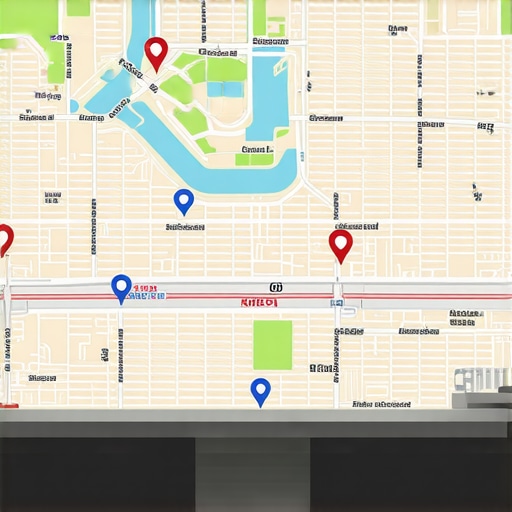
Map grid ranking measures the visibility of a Google Business Profile across a multi-point geographic coordinate system to identify proximity blind spots. Traditional search tools fail because they ignore the centroid shift caused by user movement. By using local SEO software that tracks a grid, businesses can visualize the three-mile radius where their Map Pack presence disappears, allowing for hyper-local optimization of NAP consistency and local justifications. The physical location of the searcher is the primary weighted signal in the current algorithm. If you do not have a tool that looks at a grid, you are flying blind. Most small business owners find that using a simple profile audit to find ranking gaps is the only way to see where the signal dies. I remember a street photographer who showed me a glitch in a storefront data set where a shop was ranking two blocks away from its actual door. That is the kind of detail that matters. When you analyze the toolkit difference between GMB software options, you realize that point-of-interest tracking is obsolete. You need coordinates. You need a grid that shows exactly where your competitors are eating your lunch.
“Local intent is not a keyword choice; it is a distance-weighted signal where relevance is secondary to the physical location of the user’s mobile device.” – Map Search Fundamental
Why your physical address is a liability
A physical address becomes a liability when it is associated with shared suite numbers, virtual offices, or areas with high competitor density that trigger the Opossum filter. Google uses spatial deduplication to prevent the Map Pack from being cluttered with similar businesses at the same GPS coordinates. If your Google Business Profile is stuck in a duplicated location filter, your visibility will vanish despite high relevance or review counts. I despise agencies that sell virtual office addresses. They are selling you a suspension waiting to happen. If you have moved, you must understand why your business location move is ruining your local citations. The algorithm looks for the forensic trace of a real operation. It looks for utility bills. It looks for permanent signage. When you try to fix your service area map after a city move, you are not just changing text; you are re-verifying your existence in a physical plane. I have seen roofing companies lose everything because they tried to be too clever with their pin placement. They ignored tiny map listing errors that signaled to Google that the business was a ghost. You cannot rank a ghost.
The three mile radius that determines your revenue
The three mile radius is the primary conversion zone where proximity signals are strongest and user intent to visit a local business is highest. Beyond this boundary, the Vicinity update heavily penalizes businesses that do not have exceptional local authority or interaction triggers. To expand this radius, you must master hyper-local link building and ensure your NAP data is mirrored perfectly across the citation ecosystem. The physics of search is unforgiving. If a customer is four miles away, and your competitor is two miles away, you need ten times the review sentiment to win that click. Many professionals struggle with why their maps strategy fails outside of their zip code. It is usually a lack of behavioral signals. Google sees that no one from the next town over is clicking your profile. They assume you are irrelevant to that area. You have to prove them wrong. Using interaction triggers to solve proximity issues is the secret. It involves getting real people in those distant grids to engage with your profile. This is not about fake reviews; it is about real geographic relevance. I once tracked a cafe that outranked a Starbucks because they had more photo uploads from locals within a specific five-block radius. The algorithm noticed the feet on the ground.
Local Authority Reading List
- Speed up your local SEO rankings with proven techniques
- Ranking accelerator strategies for 2025 boost your map visibility
- The tools agencies use to dominate local map results
- How to reclaim your rank after a proximity based drop
Forensic traces of a service area polygon
A service area polygon is a digital boundary in a Google Business Profile that defines the geographic limits where a contractor or mobile professional provides on-site services. Unlike brick and mortar locations, SAB listings rely on local justifications and service-specific schema to prove their presence in multiple cities. If your polygon is too large, Google will view it as map spam and suppress your rankings. I have spent years investigating map-spam. I know the smell of a fake service area. It smells like a generic stock photo of a tool belt. Real businesses show their trucks. They show their workers in the field. If you are a plumber or a roofer, you might be fixing the missing in map pack error by tightening your service radius. Do not try to claim an entire state. You will lose. Instead, focus on winning high value plumbing leads outside your primary zip code by creating city-specific landing pages that actually matter. Most city landing pages fail to capture leads because they are thin and robotic. You need depth. You need to prove you were actually there. Google’s AI now looks for image metadata and customer check-ins to verify your polygon. If you do not have those, your polygon is just a drawing on a map.
“A proximity filter is a spatial query that limits results based on the coordinates of the searcher relative to the verified business entity location.” – Location Intelligence Journal
The math of local review sentiment
Local review sentiment is a mathematical calculation of customer feedback that uses natural language processing to identify specific service keywords and geographic markers within a business profile. Reviews are not just stars; they are unstructured data that tell Google which local services you actually perform and where you perform them. A profile with 100 generic reviews will lose to a profile with 20 reviews that mention emergency water heater repair and the name of the neighborhood. I have seen competitors drop twenty 1-star reviews in an hour using a VPN. It is a targeted attack. You must know how to counter false reviews and negative SEO attacks before they kill your conversion rate. If you lose your reputation, you lose your map pin. We once had to do a forensic audit of user profiles to prove a spam pattern to the Google team. It was exhausting. But recovering your reputation after a negative SEO strike is possible if you have the data. You should also consider a practical strategy for removing fake reviews that involves reporting the accounts for policy violations. Never buy fake reviews. Google’s 2026 data indicates that customer-taken photos at your location are now 30 percent more effective for ranking in AI Overviews than text-only reviews. The AI wants visual proof.
Why your ranking toolkit might be lying to you
A ranking toolkit might be lying to you if it uses static IP addresses or broad zip code searches instead of localized GPS coordinates to pull Map Pack data. Many free GMB tools provide shallow data that ignores the vicinity filter, leading business owners to believe they are ranking when their customers cannot actually see them. You need agency-grade ranking toolkits that simulate mobile search behavior across a 10×10 or 20×20 grid. If you are wondering why most free GMB tools provide shallow ranking data, it is because processing spatial grids is expensive. Cheap tools take shortcuts. You might be missing out on local SEO software that finds every missing opportunity because you are trying to save fifty dollars a month. That is a mistake that costs thousands in lost leads. I have seen businesses fail because they trusted a report that said they were number one, only to find out they were only number one inside their own building. You need to understand the gap between your audit report and actual map results. If the data is not real-time and coordinate-based, it is just a pretty picture. The best tools for speeding up your map ranking progress are those that show you exactly where the red circles turn green on the map.
The final verdict on map grid tracking
The pin must stay where the business lives. I have spent my life watching the local search ecosystem evolve from paper to pixels. I have seen the Centroid Collapse where companies vanished because of a mismatched phone number in their LSA verification. I have seen the Review Extortion cases that keep cafe owners awake at night. The only defense is data. You must audit your NAP consistency. You must fight competitor GMB spam. You must clean up your toxic backlink profile. Most importantly, you must use a tool that sees the world the way your customers do, as a grid of possibilities defined by a three-mile radius. The map is not just a guide; it is the engine of your local economy. Do not let it fail because you were looking at the wrong numbers. If you are facing a blackout, look into how we recovered a service business from a total map blackout. It starts with the math. It ends with a ringing phone.