
Why Most City Landing Pages Fail to Capture Leads from Nearby Zip Codes
Why Most City Landing Pages Fail to Capture Leads from Nearby Zip Codes
You’ve seen the pattern before: a local business owner or marketing agency invests thousands of dollars into building out a robust set of “service area” pages. They create a page for City A, City B, and City C. On paper, the strategy is sound. These pages are designed to catch the “near me” traffic and localized searches that drive high-intent leads. Yet, six months later, the analytics tell a different story. These pages are “Ghost City Pages” – they exist, they are indexed, but they are completely invisible to the people who matter most.
This is the “Conversion Gap.” It is the distance between having a web presence and having a lead-generating asset. In the current landscape of city page seo, traditional wisdom – which usually involves simply swapping out city names in a template – is not just ineffective; it’s a liability. Google’s algorithm has evolved to identify these low-effort attempts at capturing local market share, often flagging them as “thin content” that can drag down the authority of your entire domain.
The reality is that capturing leads from nearby zip codes requires more than a mention of a city name. It requires a sophisticated understanding of how Google’s proximity filters work and how to bridge the geographical gap between your physical office and your target service areas. If your landing pages aren’t generating calls, it’s likely because they fail to provide the localized signals that modern search engines demand. In this guide, we will break down the technical and strategic reasons for these failures and how to implement a hyperlocal strategy that actually moves the needle.
For more on the foundational errors that plague local businesses, check out The City Landing Page Mistake That’s Ghosting Your Local Traffic.
Section 2: Solving the Proximity Paradox
One of the most frustrating hurdles for service-based businesses is the “Three-Mile Mark” wall. You might rank #1 for your primary keywords when the searcher is standing in your office parking lot, but as soon as they drive three miles away into a neighboring zip code, your business disappears from the Map Pack entirely. This is the Proximity Paradox.
Google’s local search algorithm is built on three core pillars: Proximity, Relevance, and Prominence. While you cannot change your physical distance from the user (proximity) without opening a new office, you can dramatically increase your relevance and prominence for specific outlying areas. This is where most city pages fail; they try to rank for a broad city name while ignoring the micro-locations – the zip codes and neighborhoods – that make up that city.
Hyperlocal targeting is the solution. Instead of just targeting “Los Angeles,” a savvy marketer uses local seo tools to identify the specific zip codes where their ideal customers live. By creating content that references local landmarks, specific neighborhood names (like Silver Lake or Echo Park), and even local traffic patterns, you signal to Google that your relevance extends beyond your physical front door.
To understand why your reach is currently limited, read our deep dive on Why Your Map Ranking Hits a Wall at the Three-Mile Mark. Breaking through this wall requires a shift from broad “city-level” thinking to “neighborhood-level” execution.
Section 3: The Technical Anchor: NAP, Schema, and Map Embeds
Even the best content will fail if the underlying technical foundation is cracked. To capture leads in nearby zip codes, your city page must act as a “Technical Anchor” for that specific location. This involves three critical components: NAP consistency, advanced Schema markup, and strategic map embeds.
First, every city page must have a crawlable NAP (Name, Address, Phone) block. For service area businesses (SABs) without a physical office in every city, this doesn’t mean faking an address. It means clearly stating the service area and ensuring the phone number and business name match your Google Business Profile (GBP) exactly. Discrepancies here create “trust friction” for Google’s crawlers.
Second, the role of LocalBusiness JSON-LD cannot be overstated. Specifically, the areaServed property is your best friend. This property allows you to explicitly tell Google, “Even though my office is in Zip Code 10001, I officially serve Zip Codes 10002, 10003, and 10004.” This data should be injected into the header of your city-specific landing pages using a professional google maps ranking service to ensure the code is error-free.
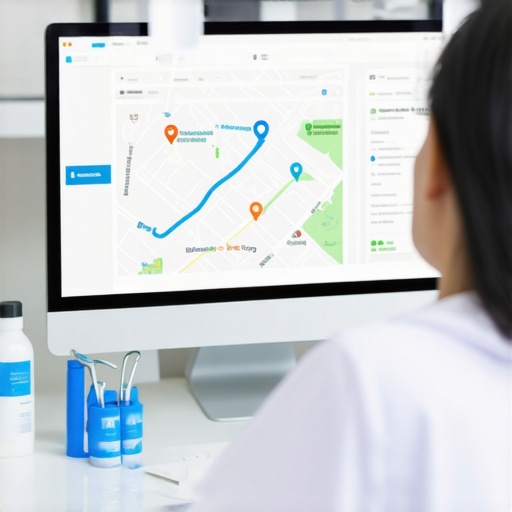
Third, be careful with map embeds. A common mistake is embedding a map of your office location on every city page. If the page is for “City B,” but the map is pointing to your office in “City A,” you are sending conflicting proximity signals. Instead, embed a map that highlights the service area or a specific neighborhood within the target city. This aligns the visual data with the textual data.
For a step-by-step guide on these technical nuances, see The Specific Schema Fixes That Help Google Trust Your Service Area.
Section 4: Content That Converts: Beyond the Keyword
In 2026, writing for “keywords” is a losing game. You must write for “entities” and “intent.” Google’s AI models now understand the relationship between a service, a location, and the user’s likely needs. To rank higher on google maps and convert those impressions into clicks, your content must feel native to the target zip code.
Consider a roofing contractor trying to rank in an affluent suburb 10 miles away. A failing page would say: “We offer roof repair in [Suburb Name]. Call us today.” A winning page would say: “Providing hail damage restoration for the Victorian-style homes in [Neighborhood Name]. We’ve helped homeowners near [Local Landmark] navigate insurance claims for over a decade.”
High-impact moves for content include:
- Zip Code Integration: Explicitly mention 3-5 target zip codes in the first 200 words and within the Meta Description.
- Local Testimonials: Use reviews from customers specifically located in that city or zip code.
- Hyperlocal Imagery: Use original photos of your team working in that specific area, with geo-coordinates (EXIF data) intact.
When you combine these elements, you aren’t just a “roofer”; you are the “roofer who understands the specific needs of [Suburb Name].” This level of specificity is how you win How to Win High-Value Plumbing Leads Outside Your Primary Zip Code.
Section 5: Accelerating the Signal: Interaction and Velocity
The final piece of the puzzle is what we call “Ranking Acceleration.” In the modern local search ecosystem, static signals (like keywords and citations) are being superseded by behavioral signals. Google looks at interaction logs, review velocity, and user path density to determine who belongs in the Map Pack.
If users in a specific zip code are frequently searching for your brand name, clicking on your city page, and then clicking the “Call” button, Google receives a powerful “Interaction Signal.” This tells the algorithm that despite your physical distance, you are the most relevant result for that micro-location. Using google business profile optimization techniques to drive these interactions – such as geo-targeted social media ads or local email campaigns – can “warm up” a new city page much faster than SEO alone.
Review velocity is also key. If you are targeting a new city, you need a steady stream of reviews from customers in that city. Google’s ability to parse the text of reviews means that when a customer mentions “best plumber in [Target City],” it acts as a localized backlink of the highest order. For more on this, read 3 Signal Tactics to Increase Local Search Speed and Outrank Nearby Listings.
Conclusion: Turning Impressions into Calls
The failure of most city landing pages isn’t due to a lack of effort, but a lack of precision. In 2026, the “Ghost City Page” is a symptom of outdated tactics. By moving away from cookie-cutter content and embracing hyperlocal technical signals – like zip-code-specific schema, unique local narratives, and interaction velocity – you can bridge the proximity gap and dominate the Map Pack in every area you serve.
Stop settling for “invisible” pages. It’s time to audit your current strategy and implement the ranking acceleration techniques that turn searchers into customers. If you’re ready to see where your pages are falling short, start with How to Use a Simple Profile Audit to Find Your Ranking Gaps and take the first step toward local dominance.