Why Your Dental Practice Is Still Missing from Local Map Results
Why Your Dental Practice Is Still Missing from Local Map Results
Imagine this: a potential patient is standing just two blocks from your dental practice. They have a sudden toothache or a sudden realization that they are overdue for a cleaning. They pull out their smartphone and search for a “dentist near me.” In a logical world, your clinic – being the closest physical location – should appear at the very top of the Google Map Pack. However, as you scroll through the results, you see a competitor three miles away, another clinic from the next town over, and perhaps a corporate dental group that doesn’t even have a full-time practitioner at that branch. Your practice is nowhere to be found. This is what we call “Invisible Practice Syndrome.”
In the current search landscape, proximity is no longer the king of local search. According to Semrush 2025 data, Google processes over 9.5 million searches per minute. For dentists, a significant portion of these queries are local-intent searches. If you aren’t appearing in those top three map spots, you are effectively invisible to the most motivated patients in your zip code. Achieving high-level google business profile seo requires moving beyond basic contact information and diving deep into the technical signals that Google’s algorithm now demands.
The Proximity Myth: Why “Being Nearby” Isn’t Enough for Google Business Profile SEO
For years, the prevailing wisdom in local SEO was that if you were physically close to the searcher, you would rank. While proximity remains one of the three core pillars of local search – alongside Relevance and Prominence – its weight has shifted. Google’s primary goal is to provide the “best” answer, not just the “closest” one. If a competitor further away has a more robust digital presence, higher engagement rates, and better-optimized technical signals, Google will prioritize them over a closer, less-optimized practice.
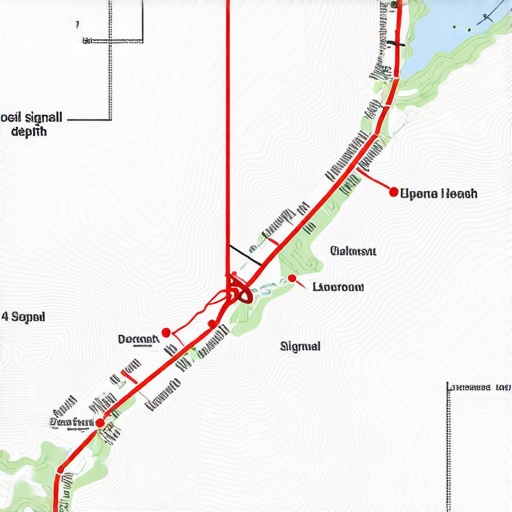
This discrepancy often leads to frustration among office managers who have spent years building a local reputation. You might find yourself asking, Why Your Address Update Hasn’t Fixed Your Map Placement Yet. The answer lies in “Signal Density.” Signal density is the frequency and quality of data points Google receives about your business from across the web. If your competitor has a higher density of localized signals – such as local news mentions, consistent NAP (Name, Address, Phone) data, and high-velocity review activity – they effectively “shrink” the distance in the eyes of the algorithm. To compete, you must rank google business profile assets by proving to Google that your practice is the most prominent and relevant authority in the area, regardless of the literal mileage.
To truly master google business profile seo, you must understand that Google is looking for a “trusted node.” A trusted node is a business location that has been verified through multiple independent sources. If your digital footprint is thin, Google views your physical location as a risk. They would rather show a proven entity three miles away than a “ghost” entity two blocks away.
The 2026 Algorithm Shift: Node Verification and the Keyword Stuffing Crackdown
The local SEO landscape underwent a seismic shift with the **March 2026 Core Update**. This update specifically targeted U.S. small businesses that were attempting to game the system through aggressive keyword stuffing in business titles. For a long time, dental practices would change their name on Google to “Best Dentist Downtown [City Name] – Emergency Dental & Braces” even if their legal name was simply “Smith Family Dentistry.” The 2026 update put an end to this, resulting in massive profile suspensions for those who didn’t comply with the “Real World Representation” rule.
Beyond the crackdown on names, the update introduced “Node Verification.” This is a process where Google’s AI cross-references your Google Business Profile (GBP) data with third-party “nodes” – such as state licensing boards, utility company records, and local chamber of commerce directories. If your practice claims to be at a certain address but there is no corresponding utility bill or medical license registered at that specific suite, your ranking will be suppressed. This is why many practitioners are turning to professional google business profile seo services at seovipertools.com to ensure their technical data aligns with these new AI-driven verification standards.
As Chad Levin, Consultant, notes: “In the 2026 search landscape, a verified address is just the entry fee. To actually win the Map Pack, you need signal depth – consistent, high-velocity interactions that prove to Google you are the most relevant answer for that specific zip code.” This means that simply having a verified green checkmark in your dashboard is no longer a guarantee of visibility. You must align with the 7 Google Business Profile Tips for Surviving the 2026 Algorithm Shift to maintain your edge.
5 Dead Zones in Your Profile Killing Your Visibility
If your practice has dropped off the map, it is likely due to one of these five “Dead Zones.” These are areas of the Google Business Profile that are either neglected or incorrectly configured, leading to a breakdown in communication between your practice and Google’s ranking engine.
- 1. Incorrect Primary Category: This is the single most common error. Many practices select “Dentist” as their primary category and leave it at that. However, if the majority of local searches in your area are for “Cosmetic Dentist” or “Orthodontist,” and you offer those services but haven’t categorized them correctly, you are missing out on high-intent traffic. Google uses the primary category to determine the “bucket” you belong in; if you are in the wrong bucket, you won’t appear for specific high-value queries.
- 2. Missing Service Menus: Google’s AI now scrapes your service menu to match queries. If a patient searches for “Invisalign near me” and you haven’t explicitly listed Invisalign as a service with a detailed description in your GBP, Google is less likely to show your practice. Every procedure you perform should be a line item in your profile.
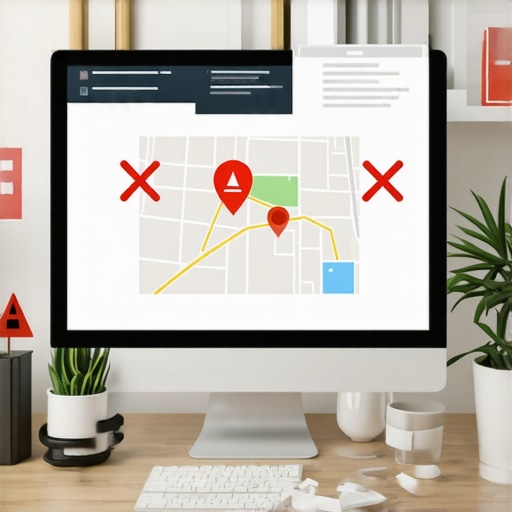
- 3. The Map Embed Error: Many dental websites use a broken or improperly configured Google Map embed on their “Contact Us” page. If the latitude and longitude coordinates in your website’s Schema markup don’t perfectly match the coordinates of your GBP pin, it creates a “proximity conflict.” You should read about The Map Embed Error That Destroys Your Proximity Relevance Signals to see if your site is suffering from this technical glitch.
- 4. Lack of Unstructured Mentions: Google looks for mentions of your practice on local blogs, news sites, and neighborhood associations. These “unstructured citations” carry more weight in 2026 than generic directory listings like YellowPages. If the only place your name appears is on your own site and your GBP, Google views you as a low-authority entity.
- 5. Signal Lag: When you make an update to your profile, it doesn’t always propagate immediately. There is a “Signal Lag” where Google’s various data centers reconcile your changes. If you are constantly changing your information, you reset this lag period, keeping your profile in a state of perpetual “re-verification” which kills rankings.
To identify these dead zones quickly, many experts recommend using a google maps seo strategy that includes a comprehensive audit of your digital footprint. Without a clear diagnostic, you are essentially throwing darts in the dark.
The Review Paradox: Why More Reviews Don’t Always Mean Better Rankings
One of the biggest misconceptions in local SEO is that the business with the most reviews wins. While a high volume of 5-star reviews is excellent for conversion, it is not the primary ranking factor it once was. This is known as the Review Paradox. You might see a competitor with 50 reviews outranking you, even if you have 500. This happens because Google now prioritizes **Review Velocity** and **Keyword Diversity** within those reviews.
Review Velocity refers to how frequently you receive new reviews. A practice that gets 5 reviews every week is seen as more “active” and relevant than a practice that got 500 reviews three years ago but hasn’t received one in a month. Furthermore, Google’s Natural Language Processing (NLP) AI reads the content of the reviews. If your reviews say “Great dentist!”, they provide little topical relevance. However, if a review says, “Dr. Smith provided the best dental implants in Chicago and the root canal was painless,” those keywords act as a ranking boost for those specific services. This explains The Truth About Why Your Competitors Dominate Google Maps With Fewer Reviews.
To maximize your review impact, you should encourage patients to mention specific treatments. This creates a rich “keyword cloud” associated with your profile, which helps you rank higher on google maps for a wider variety of search terms. It is no longer about the quantity of the stars, but the quality and frequency of the conversation surrounding your practice.
AI Search vs. Local Map Pack: The New Visibility Gap
With the integration of Search Generative Experience (SGE) and Gemini into Google Search, a new “Visibility Gap” has emerged. Some dental practices appear in the traditional Map Pack but are completely omitted from the AI-generated summaries at the top of the page. This is because AI answers require “Authority Signals” that go beyond a standard citation.
The AI looks for consensus. It asks: “What is the general sentiment about this practice across the web?” If your practice has a high ranking in the Map Pack due to proximity but has no mentions in local news, no active social media presence, and no high-authority backlinks, the AI will likely skip you in favor of a practice with a more “authoritative” digital narrative. Using google maps seo tools from seovipertools.com can help you track these authority signals and ensure you are being picked up by both the traditional algorithm and the new AI search engines.
To bridge this gap, your google business profile optimization must include a content strategy. Regularly posting updates to your GBP (Google Posts) about community involvement, new technology in your office, or dental health tips provides the “freshness” that AI models crave. This content helps establish your “Expertise, Authoritativeness, and Trustworthiness” (E-A-T), which are the primary metrics for AI-driven search results.
Diagnostic Checklist: How to Rank Your Google Business Profile Again
If you are ready to stop being invisible and start dominating your local market, follow this diagnostic recovery plan. This checklist is designed to address the technical and strategic gaps that lead to “Invisible Practice Syndrome.”
- Audit Your Categories: Ensure your primary category is the most specific one possible. Use secondary categories to cover all other services (e.g., Primary: Cosmetic Dentist; Secondary: Dentist, Dental Clinic, Teeth Whitening Service).
- Check for “Ghost Pins”: Use a google business profile audit tool to see if there are duplicate listings or “ghost pins” at your address. Duplicates confuse Google and split your ranking power. You can find these tools at seovipertools.com.
- Verify NAP Consistency: Ensure your Name, Address, and Phone number are identical across your website, GBP, Facebook, Yelp, and Healthgrades. Even a discrepancy as small as “Suite 100” vs. “#100” can cause a ranking drop.
- Optimize Your Images: Don’t just upload random photos. Geotag your images and use descriptive filenames (e.g., “dental-implants-chicago-office.jpg”) before uploading them to your profile.
- Implement Local Schema: Ensure your website uses LocalBusiness Schema markup that links directly to your Google Business Profile URL. This creates a hard-coded link between your site and your map listing.
By systematically addressing these points, you provide Google with the clarity it needs to trust your location and rank your practice appropriately. Recovering from a ranking drop is a technical process, but it is one that yields the highest ROI of any marketing effort for a dental clinic.
Conclusion: Stop Waiting on Google to Find You
The days of “set it and forget it” for local SEO are long gone. Local search is an active, ongoing race where the finish line is constantly moving due to algorithm shifts and competitor activity. If your dental practice is missing from the map, it isn’t a fluke – it’s a signal that your digital presence is out of sync with Google’s current requirements. Stop the “pin stall” and take control of your visibility. Whether you choose to do it yourself or employ a professional google maps ranking service, the time to act is now. Every day you are missing from the Map Pack is a day your competitors are stealing your patients.