Why Local Customers See Your Map Pin But Never Call
Why Local Customers See Your Map Pin But Never Call (And How to Fix It)
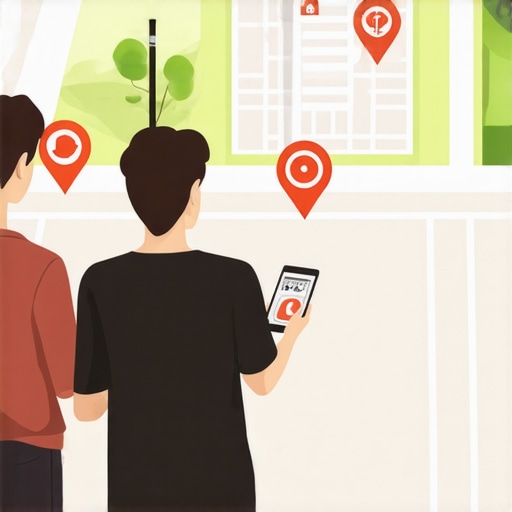
You’ve done the work. You’ve obsessed over your rankings, tracked your Map Pack position daily, and finally, you’re seeing that glorious pin in the top three. Your dashboard shows thousands of impressions, yet the phone remains silent. This is the “Ghost Pin” phenomenon – a state where your business is visible but functionally invisible to the bottom line. While most agencies focus solely on google business profile seo to get you seen, they often ignore the psychological and technical hurdles that prevent a searcher from actually clicking that “Call” button. Visibility is only the invitation; conversion is the party. If you’re ranking but not banking, you’re likely falling into the “Impression Trap,” where vanity metrics replace actual revenue.
The Visibility vs. Conversion Gap: Why Rankings Don’t Always Equal Revenue
In the world of Local SEO, we often treat ranking #1 as the finish line. In reality, it’s just the starting block. A high-ranking profile with a low Click-Through Rate (CTR) is a signal to Google that your business might not be the best answer for that specific query, which eventually leads to a ranking decay. This “Visibility vs. Conversion Gap” is where most small businesses lose their marketing ROI.
The data is staggering: research indicates that 51% of small businesses haven’t even claimed their Google Business Profile, and of those that have, 41% have conflicting or incorrect NAP (Name, Address, Phone) data scattered across the web. When Google’s algorithm detects these inconsistencies, it loses “trust” in your data. But even if your data is perfect, your profile might still fail to convert. Why? Because searchers are more discerning than ever. They aren’t just looking for the closest business; they are looking for the most trustworthy one. If your profile looks like a digital ghost town, users will skip right over you to the #3 or #4 spot.
Understand that Why Your Google Maps Impressions Aren’t Turning into Customer Calls is often a result of neglecting the user experience within the Google ecosystem. You aren’t just competing on proximity; you’re competing on the immediate visual and social proof you provide in the split second a user scrolls past your name.
The “Call Button” Friction: How Google’s UI Changes Are Killing Your Leads
Google is constantly tinkering with its User Interface (UI). Sometimes, these changes are designed to keep users on Google longer rather than sending them to your phone line or website. For instance, in certain mobile views or for specific service categories, Google may hide the direct “Call” button behind a “View Profile” or “Directions” requirement. This added layer of friction can decimate your lead volume.
Furthermore, technical insights into GBP metrics reveal a frustrating truth: direction-related calls – where a user clicks “Directions” and then calls from the navigation screen – can account for 5% to 15% of your total call volume. However, these are often not “new lead” calls. They are frequently existing customers who are lost in industrial parks or trying to find your suite in a multi-tenant building. If you are relying on a google maps ranking service that only reports on “Total Interactions,” you might be paying for “lost person” support rather than actual lead generation.
To overcome this UI friction, your profile must be so compelling that the user is willing to take that extra click. You need to dominate the “Zero-Click Search” landscape by providing all the answers – pricing, availability, and trust signals – directly within the Map Pack interface before they even think about looking at a competitor.
3 Conversion Killers Hiding in Your Google Business Profile
If your pin is visible but the leads are flat, one of these three silent killers is likely at work within your profile.
H3: Lack of “Social Proof” Velocity
Most business owners think that having 100 reviews is enough. It’s not. Google – and your customers – care more about velocity and recency than total volume. A business with 500 reviews, the last of which was posted six months ago, looks like it might have gone out of business. Conversely, a competitor with 50 reviews but five new ones this week looks like a thriving, “hot” business. This is the “Hidden Review Signal.” Google rewards active engagement. If your review acquisition has stalled, your conversion rate will follow suit.
H3: Visual Trust Deficit
Human beings are visual creatures. Google’s own data shows that profiles with professional, high-quality photos receive 42% more requests for directions and 35% more clicks through to their websites than those with amateur or missing imagery. If your profile is populated with grainy cell phone shots of your office lobby or, worse, just a Google Street View of your parking lot, you are suffering from a Visual Trust Deficit. You need “Atmosphere” photos, “Team” photos, and “Action” photos to bridge the gap between a digital pin and a real-world service.
H3: The Category Mismatch
This is a technical error that leads to “unqualified impressions.” If you are a Personal Injury Lawyer but your primary category is set to “Legal Services,” you might rank for general searches, but you won’t convert the high-intent searchers looking for an “accident attorney.” Using the wrong primary category casts too wide a net, bringing in “lookers” rather than “bookers.” You must align your primary and secondary categories with the specific high-intent keywords your actual customers use.
For more on how to outmaneuver the competition, read about The Truth About Why Your Competitors Dominate Google Maps With Fewer Reviews.
The 28-Day Optimization Blueprint for the Top 1%
Average businesses settle for a “6-month slow burn” for their Local SEO results. They tweak a title here, add a photo there, and hope for the best. The top 1% of earners – the elite contractors, law firms, and medical practices – use a 28-day sprint to force their profile to the top and keep it there. By using advanced local seo tools, you can compress months of progress into four weeks of high-impact activity.
- Week 1: Audit & NAP Consistency. Identify every mention of your business online. Scour the web for old addresses or disconnected phone numbers. If Google sees two different phone numbers for your brand, it won’t show either one with confidence.
- Week 2: Content & Geo-tagged Photos. Upload 20+ high-resolution photos. Use metadata to “tag” these photos with your business coordinates. This reinforces your geographic relevance to Google’s AI.
- Week 3: Signal Generation. This is about more than just reviews. It’s about “Check-ins,” “Q&A” engagement, and “Google Updates.” You want to show Google that your profile is a living, breathing entity.
- Week 4: Review Acceleration. Implement an automated system to request reviews from every customer. Focus on getting reviewers to mention specific services and locations within their text to boost your keyword relevance.
Beyond the Pin: Technical Signals That Force a Call
True google business profile optimization goes deeper than just filling out a form. It’s about manipulating “Interaction Triggers” and “Signal Density.” Google tracks how long a user stays on your profile (Dwell Time). If a user clicks your profile, reads three reviews, looks at five photos, and then calls, Google sees that as a “High-Value Interaction.”
To force more calls, you need to increase your “Signal Density” by populating your “Products” and “Services” tabs with keyword-rich descriptions. Don’t just list “Plumbing.” List “Emergency 24/7 Pipe Repair in [City Name].” This tells Google’s algorithm exactly which intent-based queries you should satisfy. Furthermore, ensure you are utilizing the 5 Interaction Triggers That Force Your Map Pin Higher to maximize your local authority. If you want to stay ahead of the curve, check out our guide on How to Accelerate GBP Ranking: Expert SEO Tips for 2025.
Conclusion: Turning Impressions into Inbound Leads
Ranking in the Local Pack is a significant achievement, but it’s a hollow victory if it doesn’t result in more revenue. If you want to rank google business profile assets effectively, you must move beyond the “set it and forget it” mentality. Stop settling for “ghost” traffic and vanity impressions. Every day that your profile sits unoptimized is a day your competitors are stealing your local market share.
The solution is simple but requires precision: perform a comprehensive google business profile audit, fix your visual trust signals, and accelerate your review velocity. When you align your technical SEO with human psychology, your map pin stops being just a dot on a screen and starts being a 24/7 lead generation machine. Don’t just be seen – be chosen.