Why Your Multi-Location Business Needs a Custom Local Stack
Why Your Multi-Location Business Needs a Custom Local Stack
I spent three months fighting a hard suspension for a plumbing client whose listing was nuked simply because they shared a suite number with a defunct law firm. Google did not want proof of a van; they wanted proof of a utility bill under the exact GPS pin, a video walk-through showing the entrance, and a matching tax license. This is the microscopic reality of the local algorithm today. If you manage fifty or five hundred locations, you are not just managing profiles; you are managing a spatial database where a single mismatched phone number can trigger a chain reaction of filters that hide your business from the customers standing three blocks away. Multi-location success requires a custom stack because the standard corporate SEO approach ignores the physics of proximity.
The spatial math of proximity beacons
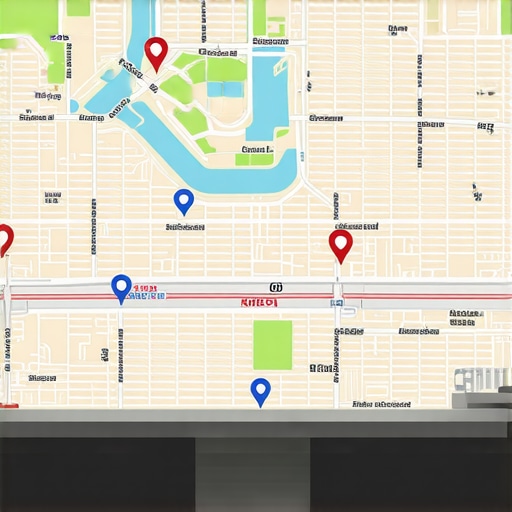
A custom local stack for multi-location businesses ensures each storefront operates as a unique proximity beacon rather than a mirrored copy of the corporate office. Google treats every GPS coordinate as a distinct entity with its own authority score, meaning your Chicago branch cannot rely on the backlink strength of your New York headquarters to win the Map Pack. You must establish local salience through specific JSON-LD attributes and behavioral signals that tell the algorithm your business is the most relevant answer for a user at a specific street corner. This involves more than just NAP consistency; it requires deep integration of point of sale data and local justification triggers that prove your inventory exists at that specific latitude and longitude.
The algorithm relies on the physical location of the mobile device to determine what appears in the 3-pack. While you might rank number one organically, you could be invisible on the map if your profile lacks the necessary local signals. This is why many companies find that organic authority does not always lead to map success in competitive urban environments. You need a toolkit that tracks these shifts at the neighborhood level. Using the ranking toolkit that actually understands local proximity allows you to see how your visibility fades as you move away from the centroid of the city.
“Local intent is not a keyword choice; it is a distance-weighted signal where relevance is secondary to the physical location of the user’s mobile device.” – Map Search Fundamental
The ghost in the GPS coordinates
Hidden data conflicts and historical remnants from previous tenants can create a ghost effect that suppresses your current business ranking. When you move into a new retail space, the digital footprint of the previous occupant often lingers in the underlying map database. If a defunct business once occupied your suite and had its own set of citation errors, those errors can bleed into your profile’s trust score. This is why old locations are haunting your current google maps performance and preventing you from breaking into the top tier of results. A custom stack allows you to audit the forensic history of your address before you even sign a lease.
Cleaning this data is a technical process that requires more than just updating a dashboard. You must actively engage in scrubbing historic citation spam that may have been generated years ago by a different agency. If your business name was ever keyword-stuffed, you might need the strategy for restoring rank after a name correction to avoid a permanent dip in impressions. Google’s AI is suspicious of sudden changes; therefore, every edit must be handled with surgical precision.
Local Authority Reading List
- How to use a local seo audit to find hidden errors
- The tools you need to monitor your gmb category health
- Escaping the duplicate location filter a recovery guide
- The toolkit every local agency needs for map visibility
- Improving local search visibility with a backlink audit
Why your physical address is a liability
An unoptimized physical address becomes a liability when it shares proximity with competitors or sits in a shared office space. The algorithm uses a filter often called the “Possum” effect to hide businesses that are too close to each other or share similar categories. If your multi-location business uses shared suites or coworking spaces without a custom verification strategy, you will likely find yourself filtered out of the results. You need the fix for the profile stuck issue for shared office addresses to ensure Google recognizes your individual entity as unique. This is especially true for service-based pros who do not have a traditional storefront.
For these professionals, the impression recovery strategy for mobile service pros involves defining service area polygons that do not overlap in a way that triggers a spam flag. If you remove your address to hide it from the public, you may see a drop in traffic; however, fixing your impressions after removing your physical address is possible with the right set of behavioral signals and local backlinks. The goal is to prove to the AI that your presence is real despite the lack of a permanent sign on a door.
The three mile radius that determines your revenue
Your revenue is tied directly to a three mile radius where your business profile is most likely to appear for high-intent searches. Once a user moves beyond this invisible boundary, the proximity weight shifts to the next nearest competitor. A custom local stack uses tools for finding profitable nearby search terms to expand this radius by increasing your relevance and prominence scores. This is not about getting more reviews; it is about getting better reviews that mention specific services and locations, which creates a stronger topical bond between your profile and the city.
If you notice a sudden drop, you might be dealing with why your local pack strategy is failing the proximity test. Often, this is caused by inconsistent data elsewhere on the web. You must learn how to clean up inconsistent listings across the web to restore the trust signal. Google compares your profile against thousands of third-party directories; if it finds a different phone number or an old suite number, it loses confidence in your location and shrinks your ranking radius to protect the user experience.
“Relevance is the alignment of a business’s digital attributes with the user’s specific problem, but proximity is the physical gatekeeper that decides if those attributes ever get seen.” – Local Search Intelligence Report
Recovering from the algorithm collapse
Recovering from a traffic drop after a Google update requires a technical audit of your backlink health and profile completeness. When the algorithm shifts, it often targets profiles that look over-optimized or have suspicious backlink profiles. For local businesses, this usually means an influx of low-quality directory links that no longer pass authority. You need the backlink audit that restores local search authority to identify and remove the toxic links that are weighing you down. Even in local search, you must disavow toxic links to keep your map pin healthy.
If your profile was suspended entirely, the process is even more rigorous. You will need steps to recover after your map profile was suspended, which includes a full data scrub. Often, a suspension is the result of why keyword stuffing your gmb name is a high risk gamble. If you have been caught, how to clean up your business name without losing rankings becomes your primary mission. The recovery path is slow; however, using the audit process to reverse a google maps penalty ensures you don’t repeat the same mistakes that triggered the filter in the first place.
The multi-location manager toolkit
A manager overseeing hundreds of locations needs a specialized software stack that can handle high-volume audits and real-time category monitoring. Relying on manual updates is a recipe for failure. You need the agency software for high volume map pack audits to catch errors before they lead to a drop in calls. Monitoring the health of your categories is essential because Google frequently updates the available options. A category shift can cause ranking volatility that disrupts your lead flow across an entire region.
Success at scale also requires how to manage local seo for 100 locations efficiently without sacrificing the unique local flavor of each pin. This involves using a toolkit for monitoring thousands of local keywords to see which terms are triggering your map pin in different markets. By understanding which keywords are triggering your map pin, you can tailor your local content to match the intent of specific neighborhoods. This is the difference between a generic corporate presence and a dominant local force.