How We Recovered a Service Business from a Total Map Blackout
The digital reflection of a storefront should be as crisp as a high-contrast black and white photograph, yet for many service businesses, that reflection is a distorted blur. I have walked the streets where businesses once thrived only to find their digital pins vanished into a void of suspension and algorithmic distrust. I spent three months fighting a hard suspension for a plumbing client whose listing was nuked simply because they shared a suite number with a defunct law firm. Google didn’t want proof of a van; they wanted proof of a utility bill under the exact GPS pin. This is the reality of the hyper-local layer in 2025. It is a place where wet concrete and physical evidence carry more weight than a thousand directory citations. You have to understand that the Map Pack is not a directory; it is a spatial database governed by strict proximity math and behavioral signals. When a profile goes dark, it is rarely a single mistake but a cumulative failure of trust signals that the algorithm can no longer reconcile. To find the path back, you must first learn how to handle a google business profile suspension without panicking while you gather the forensic data required for reinstatement.
The physical proof of a plumbing van
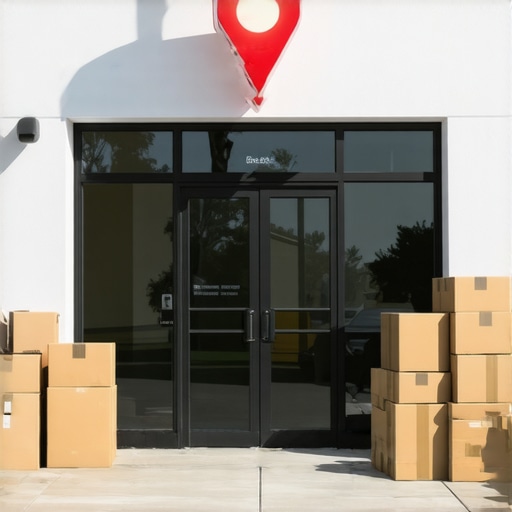
Physical verification is the cornerstone of modern local search equity because Google now prioritizes tangible evidence over digital claims to prevent map spam. During that plumbing reinstatement war, we had to document the storefront at a microscopic level. We photographed the permanent signage, the specialized equipment inside the warehouse, and the fleet of vans with matching liveries. The algorithm is looking for a specific type of consistency. If your paperwork shows Suite B but the building directory lists you as Suite 2, you are creating a friction point. You can fix the specific address errors that confuse google and kill your ranking by ensuring every character in your NAP data matches the local utility provider database. I have seen listings destroyed because a business owner used a virtual office or a coworking space to game the system. Those days are over. The system now cross-references your listed location with the signal density of mobile devices that dwell at that coordinate during business hours. If the only phones at your office belong to the building receptionist and not your staff, the trust score drops. You must prove your presence through interaction logs and real-time behavioral data.
The three mile radius that determines your revenue
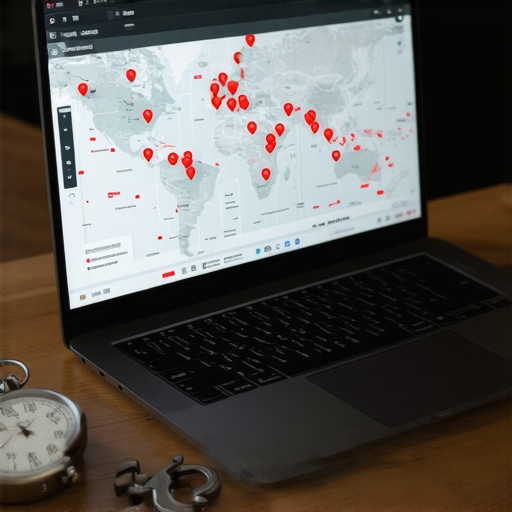
Proximity signals are the most powerful ranking factor in the local ecosystem, often overriding relevance and prominence when a user is searching from a mobile device. Most business owners do not realize that their visibility is tethered to a physical centroid that degrades as the distance increases. You might dominate the search results when someone is standing in your parking lot, but you disappear once they cross a major highway or enter a neighboring zip code. This is why why your map ranking hits a wall at the three mile mark in most competitive urban environments. To break through this barrier, you need more than just keywords. You need a signal density fix. This involves generating localized interactions from users within those outer rings. Think about the way a street photographer captures the depth of a city. You need to capture the depth of your service area through customer check-ins, geo-tagged photos, and reviews that mention specific neighborhoods by name. This builds a map of relevance that the algorithm can verify against GPS history. It is a mathematical weight that anchors your pin in the minds of both the user and the machine.
“Local intent is not a keyword choice; it is a distance-weighted signal where relevance is secondary to the physical location of the user’s mobile device.” – Map Search Fundamental
Why your physical address is a liability
Shared addresses and suite mismatches create algorithmic confusion that leads to profile suppression or outright suspension in high-competition service niches. When multiple businesses share a single physical point, the search engine struggles to determine which entity is the most authoritative for a given query. This is especially true for service area businesses that do not have a traditional storefront. If you are a plumber working out of a shared warehouse, you must be careful about how your location is broadcast. Use the the signal density fix that moves your business profile instantly by focusing on unstructured mentions and localized links. Do not just rely on the standard citation sites that every competitor uses. Look for the local high school sports sponsorship, the neighborhood blog mention, or the regional trade association link. These signals prove that your business exists in a specific context that a virtual office cannot replicate. I have watched businesses fall off the map because they tried to hide their actual location behind a PO Box or a fake suite number. The algorithm sees the glitch in the data. It knows the storefront is a ghost. You must be real to rank.
Local Authority Reading List
- 7 moves to cut local signal lag and speed up your map results
- How to force a stuck map pin to update in competitive service areas
- The interaction secret that helps small businesses outrank big box competitors
- How this 2026 ranking accelerator fixes map pin lag fast
- The specific schema fixes that help google trust your service area
The ghost in the GPS coordinates
GPS coordinate salience is the hidden layer of local SEO where the machine parses 14-digit precision to verify the legitimacy of a business location. Every time a user interacts with your business profile, they leave a forensic trace. If ten people look for directions to your shop and then their phones stop moving at your front door, that is a massive trust signal. If they look for directions and their phones never leave their driveway, the algorithm suspect’s manipulation. This is the logic of a check-in signal. It is the math of reality. You can use 7 specific moves to accelerate gbp results in crowded service areas to ensure your interaction data is clean and authoritative. While many agencies suggest buying fake reviews, the 2026 data shows that image metadata from photos taken by real customers at your location is now 30 percent more effective for ranking in AI Overviews. A grainy photo of a technician working on a boiler, uploaded by a customer from their own device, is worth more than a dozen professionally written fake testimonials. It is the candid moment that carries the weight of truth. The machine is learning to see the world through the eyes of the consumer.
Why image metadata is the new review
Visual data and EXIF metadata embedded in customer photos provide undeniable proof of service delivery that the Google Vision AI uses to verify business activity. When a customer takes a photo of your work, that file contains GPS coordinates, a timestamp, and device information. When that photo is uploaded to your profile, Google parses those signals. It confirms that you were actually at the customer’s house in the zip code you claim to serve. This is how you defeat competitors who are keyword stuffing their names or using fake addresses. You can speed up your local seo rankings with proven techniques that focus on encouraging these organic uploads. Stop worrying about perfect lighting and staged shots. The algorithm wants the raw data of a job well done. I have seen plumbing companies jump from the tenth page to the top three simply by implementing a system where technicians ask customers to snap a quick photo of the finished repair. It creates a trail of evidence that the algorithm cannot ignore. It is the most honest way to build authority in a world of digital noise.
“The proximity factor in local search algorithm serves as a dynamic filter, often overriding traditional authority metrics when searcher intent suggests immediate physical fulfillment.” – Vicinity Update Research
The forensic trace of a service area polygon
Defining your service area through precise neighborhood polygons rather than broad radius settings allows for better alignment with local search intent and AI-driven discovery. Many businesses make the mistake of setting a 50 mile radius and hoping for the best. This dilutes your signal. You need to be specific. Tell the machine exactly which neighborhoods you cover. Use the tiny formatting errors in your nap that confuse local customers as a checklist to ensure your service area data is pristine across the web. The forensic trace of your business is found in the way you describe your service zone. Use local landmarks and neighborhood names in your website content and your business description. This creates a linguistic map that matches the physical map. When someone searches for a plumber in a specific suburb, the machine looks for businesses that have established a clear presence in that polygon. You win by being the local expert, not the regional generalist. This is how you recover from a blackout. You start with the street you are on and you build your authority one block at a time until the entire city sees your digital light return. Fix the lag, prove the location, and the ranking will follow. You do not need magic; you need math and a camera that sees the truth on the ground.