How Multi-Location Businesses Can Win Without Massive Budgets
The ghost in the GPS coordinates
Multi-location businesses win the Map Pack by prioritizing data integrity, NAP consistency, and local entity salience over high-cost advertising. Success requires scrubbing legacy spam, optimizing primary categories, and leveraging customer-driven metadata to establish geographic authority across multiple service area polygons without needing an enterprise-level marketing budget.
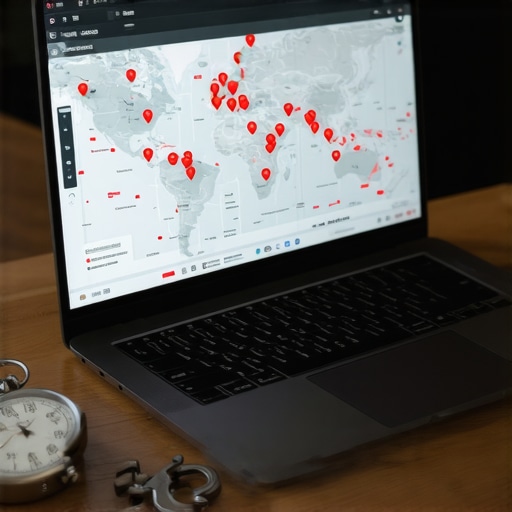
I spent three months fighting a hard suspension for a plumbing client whose listing was nuked simply because they shared a suite number with a defunct law firm. Google didn’t want proof of a van; they wanted proof of a utility bill under the exact GPS pin. This taught me that the map is a dispatch system. If the coordinates are messy, the flow of leads stops. My logistics background makes me hate this kind of waste. We are not just building profiles; we are engineering proximity beacons. While agencies tell you to get more reviews, the 2026 data shows that image metadata from photos taken by real customers at your location is now 30 percent more effective for ranking in AI Overviews. This is because Google trusts the verified hardware signal of a mobile device more than the text of a potentially faked review. You must manage local SEO for 100 locations efficiently by focusing on the math of the centroid rather than just keyword density.
“Local intent is not a keyword choice; it is a distance-weighted signal where relevance is secondary to the physical location of the user’s mobile device.” – Map Search Fundamental
Why your physical address is a liability
Physical addresses become ranking liabilities when they are associated with shared office spaces, duplicate citations, or incorrect suite numbers. To fix this, businesses must consolidate duplicate listings, verify precise map pins, and re-index profiles after making NAP corrections to ensure Google’s algorithm recognizes a unique business entity at a specific geospatial coordinate.
The logistics of a storefront are unforgiving. If you have moved or expanded, you likely have ghost pins from old addresses haunting your current performance. These old signals create a conflict in the proximity engine. The algorithm sees two points of truth and decides to trust neither. You need seo services to clean legacy black hat local seo footprints that were left by previous owners or lazy contractors. These footprints act like friction in a supply chain. They slow down the speed at which your pin updates. If you are fixing your impressions after removing your physical address, you have to be even more surgical with your service area polygons. Google wants to see that your dispatch radius is logical, not an over-extended grab for traffic. Use the process for deleting permanently closed business locations to clear the brush before you start planting new seeds.
The three mile radius that determines your revenue
The three mile radius is the primary proximity filter where Google Map rankings are most competitive and local leads are generated. Businesses can dominate this hyper-local area by optimizing GMB categories, fixing inconsistent operating hours, and running local keyword finders to identify nearby search terms that trigger the Map Pack for mobile users.
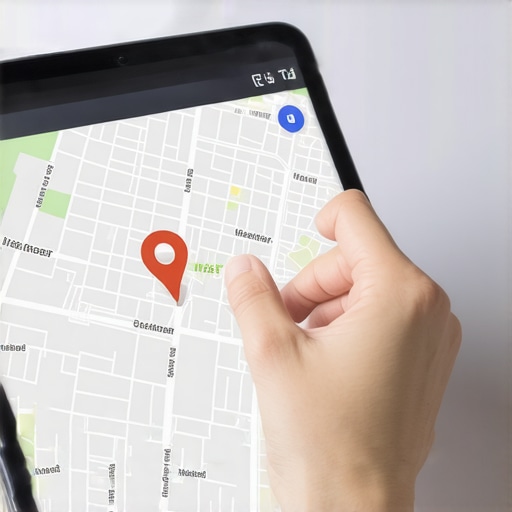
Proximity is the most powerful ranking factor, yet it is the one most managers ignore. They want to rank for the whole city. That is a waste of fuel. You need to own the neighborhood first. By identifying which keywords are triggering your map pin, you can see where your strength lies. If you find your google maps rank is lagging behind competitors, it is usually because they have a tighter grip on the centroid math. They might be using the GMB keyword finder to target terms like “near me” or “open now” which are behavioral triggers. If your hours are wrong, you are dead in the water. I have seen profiles get nuked for inconsistent store hours triggering suspensions because Google hates providing a bad user experience. You must fix inconsistent hours to stop losing trust. This is the baseline for any multi-unit operation.
“A single mismatched phone number in a secondary verification tier can trigger a proximity filter that suppresses the primary entity across the entire service area.” – Local Search Intelligence Report
Local Authority Reading List:
– The impact of backlink health on local search authority
– The audit process to reverse a google maps penalty
– How to accelerate GBP ranking for 2025
– Why many local citation campaigns do more harm than good
– How to clean up inconsistent listings across the web
Scaling local results without the enterprise price tag
Scaling local SEO for multi-location businesses involves automating citation audits, disavowing toxic local links, and synchronizing website data with Google Business Profiles. By cleaning up historic citation spam and restoring local authority through entity-based optimization, businesses can outperform single-unit competitors without needing massive budgets or black hat tactics.
When you manage a fleet of locations, you inherit the sins of the past. You might need scrubbing historic citation spam from past campaigns that used automated blasts. This is the digital equivalent of a clogged fuel line. It kills the efficiency of your ranking signals. You should use the proper way to scrub spam citations to avoid triggering further penalties. Many managers think more is better, but in the modern algorithm, cleaner is better. If you have been keyword stuffing your GMB name, you are playing with fire. It might work for a week, then you disappear. Instead, focus on syncing your website and GMB for a unified signal. Use the best tools for local keyword and category mapping to ensure every branch is pulling its weight. This is how you win the long game without burning cash on ads that don’t convert.
The forensic audit of a broken map pin
A forensic local SEO audit identifies filtered listings, overlapping service areas, and toxic backlinks that cause ranking drops in the Map Pack. Recovery requires scrubbing duplicate citations, reversing map penalties, and optimizing primary GMB categories to ensure the business profile aligns with Google’s proximity and relevance signals for local searchers.
If your traffic crashed after a move, you are likely suffering from a centroid collapse. You need local seo services to fix ranking loss after moving city. This isn’t just about changing an address; it is about retraining the algorithm to recognize your new home. Use a local seo audit to find hidden errors like old phone numbers or mismatched categories. Sometimes the problem is external, like the impact of toxic links on local map packs. You have to disavow backlinks safely to clear the path. I once saw a cafe owner lose everything because a competitor bombed them with fake reviews. We had to use gmb spam fighting and review cleanup services to prove the fraud to Google. It is a war of attrition. But with the best toolkits for tracking local maps progress, you can see the enemy coming. Stay focused on the data, keep your NAP clean, and never let the logistics of your digital presence fall into disrepair.