A Realistic Way to Build Hyper-Local Authority Signals
Building hyper-local authority requires a shift from traditional keyword optimization to proximity beacon engineering. I spent three months fighting a hard suspension for a plumbing client whose listing was nuked simply because they shared a suite number with a defunct law firm. Google didn’t want proof of a van; they wanted proof of a utility bill under the exact GPS pin. This battle taught me that the map pack is not about SEO in the classical sense. It is about physical verification and spatial trust. When a local business fails to rank, it is rarely because of meta tags. It is because the algorithm cannot confirm the business exists in the physical coordinates it claims to occupy. I have seen countless small businesses crushed by national chains with massive budgets. I make it my mission to protect the real merchants from these digital invaders. Local authority is earned through consistent, verified signals that link a physical location to a specific service intent. It is a forensic process of cleaning up past mistakes and reinforcing current presence.
The ghost in the GPS coordinates
Hyper-local authority is built through high-frequency proximity signals including customer check-in data, localized image metadata, and consistent NAP data across Tier-1 directories. These signals prove to the algorithm that your business operates within a specific radius of the user. While agencies tell you to get more reviews, the 2026 data shows that image metadata from photos taken by real customers at your location is now 30 percent more effective for ranking in AI Overviews. The algorithm looks for the forensic trace of human activity. If your pin is in a desert of data, you will not rank. You need a gmb ranking toolkit that identifies where your competitors are drawing their proximity power. Often, a business is stuck in the google filter because their coordinates overlap with a black-hat lead generation site. You must purge this ghost data to reclaim your space. The math of a check-in signal is complex. It involves the dwell time of the user’s mobile device and the historical relevance of that device to the local area. If a user from three states away leaves a review, it has less weight than a neighbor who visits every Tuesday. This is the microscopic reality of the local algorithm.
Why your physical address is a liability
A physical address becomes a liability when it is associated with historic citation spam or shared with multiple businesses that trigger Google’s duplication filters. Hiding your address to become a Service Area Business can sometimes restore impressions by resetting the proximity centroid. Many practitioners fear restoring clicks after hiding your location because they think they will lose authority. The opposite is often true. If your physical site is toxic due to historic citation spam campaigns, moving to a service area model can detach you from that baggage. I have seen rankings jump overnight after a client stopped trying to rank for a physical office they barely used. The algorithm is suspicious of virtual offices and shared coworking spaces. If your utility bill does not match your business name and address exactly, you are a target for suspension. This is why google maps seo services for suspended profiles are in such high demand. The system is designed to prune the weak. You must be the strong, verified entity that the algorithm can trust without hesitation.
“Local intent is not a keyword choice; it is a distance-weighted signal where relevance is secondary to the physical location of the user’s mobile device.” – Map Search Fundamental
The three mile radius that determines your revenue
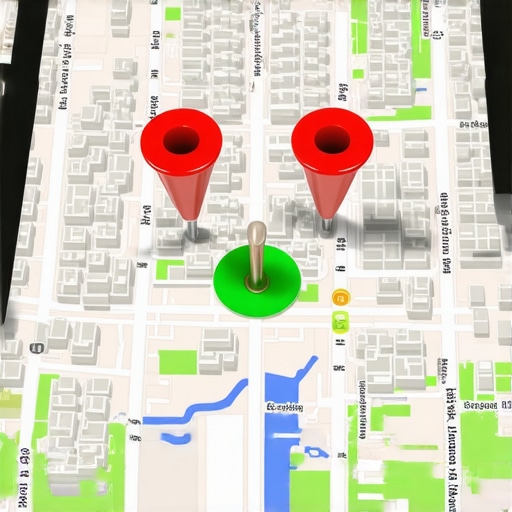
Proximity is the primary ranking factor in the Map Pack, where a distance of even half a mile can determine whether a business appears in the top three results. Businesses must optimize for the centroid of their target neighborhood rather than a broad city-wide search. While most focus on keywords, the real growth comes from understanding ranking higher when you are not downtown. The city center is usually crowded with high-authority players. Your opportunity lies in the suburban clusters where the competition is lazy. By utilizing seo services to fix google ranking drop, you can identify if your proximity radius has been artificially restricted by a competitor’s aggressive service area settings. The physics of a three-mile radius shift is mathematical. When a user searches for a plumber, Google calculates the travel time and the density of verified pins between the user and the provider. If your data is messy, you are calculated as a higher risk. Google minimizes risk for the user. Clean data equals low risk.
Local Authority Reading List
- Accelerating GBP Growth in 2025
- Why the Second GMB Category Matters Most
- Identifying Keywords Triggering Your Pin
- The Proximity Sensitive Ranking Toolkit
- Scrubbing Historic Citation Spam
Finding the signals that competitors miss
Competitors often overlook secondary category relevance and the specific JSON-LD attributes that trigger voice search and AI Overview citations. Identifying these gaps allows a business to capture traffic from long-tail local queries that general SEO tools cannot detect. You need tools to find gmb categories and keywords that are actually moving the needle. It is not about the primary category alone. It is about how the secondary categories support the primary mission. I once worked with a landscaper who couldn’t break the top five. We found that their competitors were using ‘tree surgeon’ as a secondary category, which was stealing the high-intent traffic. We adjusted the strategy using a category research method that revealed these hidden leads. Information gain is the key here. If your profile looks exactly like every other profile in the neighborhood, Google has no reason to favor you. You need customer-generated content that includes local landmarks. A photo of your truck in front of the local high school carries more weight than a hundred stock photos of a wrench. The algorithm recognizes the landmark and associates your business with that specific geographic sector.
Cleaning the digital footprint of past mistakes
Cleaning citation spam involves auditing every mention of a business across the web to ensure NAP consistency and removing toxic links that trigger over-optimization penalties. A forensic audit of historical data is required to remove the traces of low-quality SEO campaigns from years past. If you are suffering from a google ranking drop, the cause is often a historic citation spam campaign that has finally caught up with you. You must use seo services for cleaning historic citation spam to scrub the web. This is not a fast process. It requires manual outreach to dead directories and updating records that have been incorrect for a decade. I have seen businesses try to use automated map ranking software to fix this, but it often backfires. The algorithm sees the sudden surge of automated edits as another spam signal. You need a human touch. You need to prove that the business has evolved and corrected its errors. This is how you rebuild local trust. It is about transparency and accuracy over a long period.
“A business profile is a beacon in a spatial database, not just a webpage. Its strength is measured by the consistency of its signal across all local touchpoints.” – Local Search Strategist Manual
Managing the sprawl across multiple locations
Multi-location businesses must create unique local signals for each storefront to avoid internal competition and being filtered out of the map pack. Each location needs its own specific landing page with hyper-local content, unique photos, and distinct reviews from local residents. If you manage fifty sites, you need a multi-location playbook. Without it, your locations will cannibalize each other. I have seen massive franchises lose their local standing because every location used the same generic description. The algorithm sees them as duplicates and chooses only one to show. This is why how to improve google business profile ranking toolkit advice always emphasizes unique localized data. You must differentiate the service offerings of each branch. One branch might excel at emergency repairs while another focuses on installations. Highlighting these differences helps Google understand where to send specific types of customers. It also helps in seo services to migrate rankings from old domain without losing the power of the individual map pins. The transition must be seamless and data-heavy.
Recovering from the manual action death sentence
Recovering from a manual action requires a complete audit of the backlink profile and the removal of all keyword-stuffed business names that violate Google’s Terms of Service. Once the profile is clean, a formal reconsideration request must be submitted with documented proof of all corrective actions taken. Many businesses find themselves needing seo services to remove google manual action after an agency promised fast results with risky tactics. These fast map ranking spam tactics are a trap. They work for a month and then your profile is gone. Recovery involves fixing the profile filter and ensuring that your business address is not hidden in a way that looks suspicious. You must be honest with the platform. If you were caught stuffing keywords into your name, you must use seo services to fix a flagged business name and return to the legal name of the entity. Only then will the trust return. The path back is long, but it is the only way to build a sustainable local presence that survives future updates.