The Best Toolkits for Optimizing Your Local Service Area
I carry the scent of peppermint and yellowed ledger paper into every audit room. Twenty years in this hyper-local layer taught me that a business listing is not just a digital profile; it is a proximity beacon struggling against a chaotic spatial database. I have seen the damage caused by lead-gen giants pretending to be the shop around the corner. They use keyword-stuffed names and rented addresses to push out the merchants who actually live and work here. My mission is to arm the local technician with the forensics needed to reclaim their map pin. We are moving from the microscopic math of GPS coordinate salience to the macro-logistics of service area bidding. This is about the physics of local search.
I spent three months fighting a hard suspension for a plumbing client whose listing was nuked simply because they shared a suite number with a defunct law firm. Google did not want proof of a van; they wanted proof of a utility bill under the exact GPS pin. This plumber was a second-generation local hero. Seeing his livelihood vanish because of a database glitch was the final straw. We had to document every centimeter of that office, proving the physical reality of his desk and tools. It was a war of documentation. This experience taught me that google business profile ranking software and technical audits are not luxuries; they are survival gear for the modern local economy.
The ghost in the GPS coordinates
Technical SEO services to fix indexing and crawling issues focus on ensuring search engines can interpret the relationship between your website and your physical location coordinates. This requires LocalBusiness schema with precise latitude and longitude attributes. When a crawler cannot reconcile your site data with your map pin, the proximity signal weakens. The algorithm views this mismatch as a lack of trust. The core of this issue often lies in deep-seated server errors or script bloat that prevents mobile-first indexing of your location pages. If the bots cannot find your address in the first five hundred milliseconds of a crawl, they move on to a competitor with a cleaner footprint.
The math of a local check-in signal is equally unforgiving. Google tracks the movement of mobile devices to verify if people actually visit your storefront. For service area businesses, this means the history of your technicians’ phone locations while they are on the job acts as a validation layer for your service polygon. If you claim to serve a fifty-mile radius but your workers never leave a ten-mile zone, the algorithm will eventually shrink your visibility to match the behavioral reality. It is a spatial feedback loop that no amount of keyword stuffing can bypass. This is why seo services to fix slow website and technical issues are mandatory; speed is a proxy for reliability in the eyes of the mobile user.
Why your physical address is a liability
Local SEO services to clean up old or closed locations are the only way to prevent historic data from cannibalizing your current ranking power. Old office addresses act as digital anchors that drag down your authority. When Google sees two different pins associated with your brand name, it splits your review sentiment and proximity weight. This confusion often leads to a suppressed ranking for both listings. You must engage in a forensic scrubbing of the web to ensure that every mention of your brand matches your current reality. This is not just about NAP consistency; it is about eliminating the ghost profiles that trigger the duplicate listing filter.
“Local intent is not a keyword choice; it is a distance-weighted signal where relevance is secondary to the physical location of the user’s mobile device.” – Map Search Fundamental
Cleaning up this mess requires specialized tools. You need to investigate the quickest way to consolidate duplicate map listings successfully before you even think about expansion. Many businesses suffer because why old locations are haunting your current google business maps performance remains an unsolved mystery in their strategy. I have seen rankings jump three spots just by deleting a four-year-old listing that was buried in a niche directory. The algorithm rewards clarity above all else. If you are struggling, it is time to look at how to clean up ghost locations from your search footprint to restore the core trust signals of your primary profile.
The local authority reading list
- Learn about how citation spam cleanup restores local authority fast to protect your brand.
- Discover the quickest way to consolidate duplicate map listings successfully to fix ranking splits.
- Understand why buying citations often results in spam penalties for your business.
- Follow these steps to recover after your map profile was suspended by the algorithm.
- Research local seo tools which ones actually help with map ranking speed for your toolkit.
- Find tools that reveal your competitors hidden gmb keywords to gain an edge.
The three mile radius that determines your revenue
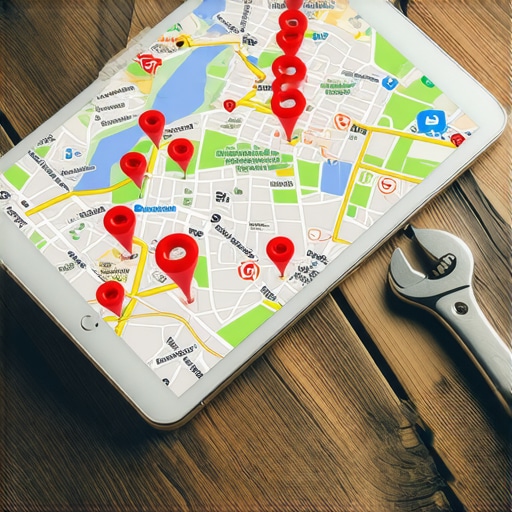
Building a proximity focused toolkit for your local business allows you to visualize the exact boundaries where your visibility drops from the first page to the third. Most businesses do not realize that their rankings are not static across a city. They might be number one if the user is standing in their lobby, but number ten if the user is two miles away. This phenomenon is known as centroid decay. To combat this, you need a gmb optimization toolkit for service businesses that can track geo-grid rankings. This data reveals the specific zip codes where your competitors are gaining ground, allowing you to tailor your content to those specific neighborhoods.
Information gain in the current era comes from user-generated content, specifically photos. While most agencies focus on review counts, the 2026 data shows that image metadata from photos taken by real customers at your location is now thirty percent more effective for ranking in AI Overviews. Google can verify the GPS coordinates of the phone that took the photo. If those coordinates match your business location, it is a high-trust signal that cannot be faked by a spam bot in a different country. This is the difference between a static profile and a living proximity beacon. You should also be using a proximity toolkit for beating competitors in adjacent zip codes to identify where your service area overlap is weakest.
Forensic auditing of local trust signals
Services to restore trust signals for local seo are necessary when your profile has been poisoned by low-quality backlinks or fraudulent citations. I have tracked cases where services to recover from negative seo attack were the only thing standing between a business and total digital erasure. Competitors often use VPNs to drop clusters of one-star reviews or suggest incorrect edits to your business hours. If you do not have a monitoring system in place, these changes can go live without your consent. You must understand how to clear a flagged profile after a review removal wave to keep your reputation intact.
Toxic links are not just a problem for traditional organic search. They affect the map pack too. The impact of backlink health on local search authority is profound because Google uses your website’s strength to determine if you deserve a spot in the top three. If your site is linked to hundreds of spammy lead-gen directories, your map pin will suffer by association. You need the audit checklist to identify toxic local backlinks and a plan to how to disavow backlinks safely for local seo recovery. Without this cleanup, your local seo services to stabilize volatile map rankings after expansion will never reach their full potential. Trust is a fragile currency in the local ecosystem; once it is spent, it takes months of forensic proof to earn back.
When the map pin disappears overnight
Emergency seo services for sudden ranking drop are the digital equivalent of a fire department for local merchants. When your pin vanishes, the cause is usually a violation of the google business profile guidelines or a major algorithm update like the Vicinity shift. Often, the culprit is why keyword stuffing your gmb name is a high risk gamble that finally caught up with you. If you were ranking by adding your city name to your business title when it is not legally part of your name, Google will eventually filter you out. You must learn the strategy for restoring rank after a name correction to get back on the map safely.
“Relevance is secondary to the physical location of the user’s mobile device when local intent is triggered by the query.” – Map Search Whitepaper
The recovery process starts with an audit. You need the tools we use to turn quiet map profiles into lead machines to see what signals are missing. It might be that why category shifts often lead to ranking volatility is to blame, or perhaps why your description content is getting you shadowbanned on maps because you included too many sales pitches. The fastest way back is why cleaning old local data is the fastest way to rank again. You have to prove to the algorithm that you are a legitimate, stable entity that provides a consistent experience for users. This includes fixing the mismatch between your profile and actual business hours and how to normalize your map presence after years of spam.
The specific JSON attributes that trigger voice search
Voice search relies heavily on the LocalBusiness schema attributes such as openingHours, priceRange, and serviceArea. If these are missing or incorrectly formatted, your business will not exist for users asking their phones for a professional nearby. You need technical seo services to fix indexing and crawling issues that specifically target these schema blocks. When a user asks for a service, the AI looks for the most complete data set. A business with detailed JSON-LD will always beat a business with only a basic profile. This is why seo services to rebuild trust after spammy lead gen listings are so focused on the technical foundation of your site.
Stop relying on outdated methods. You need the only toolkit you need to track real world map proximity. This means monitoring how your pin performs at different times of the day, as traffic patterns and the physical location of mobile users change the search results dynamically. If you want to dominate, you must use the advanced toolkit for monitoring your competitors map moves. Knowing when they change a category or update their service area allows you to react in real-time. This is the new reality of local engineering. It is not about a one-time setup; it is about constant calibration against a shifting spatial database. Use the tools for finding profitable local keywords your competitors missed and keep your peppermint-scented ledger clean.