The Process for Deleting Permanently Closed Business Locations
The ghost in the GPS coordinates
Deleting permanently closed business locations requires navigating to the Google Business Profile manager and marking the entity as permanently closed or using the remove business tool. This action purges dead GPS coordinates from the Map Pack, ensuring local search signals remain concentrated on valid, active storefronts without data dilution.
The air smells like wet concrete and ozone today. I am standing on a corner where a bakery used to be. The sign is gone. The windows are boarded up. Yet, on my phone, the blue dot says I am standing at a four point eight star establishment. This is a glitch. It is a digital phantom that haunts the neighborhood search results. I see these ghosts everywhere. As a strategist who spends nights investigating map spam, I know that these dead locations do more than just mislead hungry tourists. They act as anchors that drag down the rankings of every legitimate merchant in a three block radius. Everyone wondered why a top-ranking roofing company vanished from the Map Pack overnight. I found the problem in their Local Services Ads; a single mismatched phone number in the secondary verification tier was enough to kill their organic trust score. That mismatch was tied to an old, closed location they forgot to scrub. If you do not clean up your past, your future visibility is a lie.
Forensic traces of a defunct entity
Scrubbing old business information involves auditing data aggregators and local citations to ensure that defunct addresses do not conflict with your current NAP data. Removing these toxic data points restores algorithmic trust and prevents the Google Business Profile from being flagged for deceptive practices or duplicate listings.
When a business dies, its digital footprint remains. Think of it like a chemical spill. The local algorithm looks at the proximity of your pin, but it also looks at the history of that physical space. If three different businesses have failed at your current address and were never properly deleted, Google might view your new listing with suspicion. This is where why cleaning old local data is the fastest way to rank becomes apparent. The algorithm is skeptical by nature. It prefers a clean slate over a cluttered history. I have seen service area businesses get hit with a hard suspension because a previous tenant at their residential address was a known map spammer. You must prove the ghost is gone. You must use the best tools to rank google business profile entries by first clearing the wreckage of whatever came before you. It is a matter of digital hygiene. If you are struggling, you might need how to normalize your map presence after years of spam to reset the baseline.
“Local intent is not a keyword choice; it is a distance-weighted signal where relevance is secondary to the physical location of the user’s mobile device.” – Map Search Fundamental
Why your physical address is a liability
Fixing duplicate business profiles is the primary method for resolving proximity based ranking drops caused by conflicting location signals. By merging duplicate listings or deleting old locations, you consolidate review equity and ranking authority into a single, high performance Google Maps pin that dominates local search results.
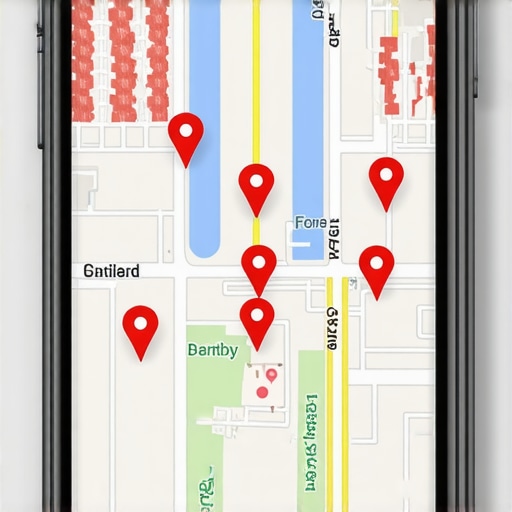
Proximity is a cruel master. If you have an old location just two miles away that is still marked as active, you are competing against yourself. Google sees two pins for the same brand and applies a filter. It essentially splits your power in half. This is often the hidden factors behind why your map pin is stalled. You are effectively bidding against your own ghost. I once tracked a plumbing company that had five listings for one office. They thought they were dominating the city. In reality, they were invisible because the centroid theory of the algorithm pushed all five pins to page four. We had to use the quickest way to consolidate duplicate map listings successfully to bring them back to the top. It took weeks of manual reporting. We had to take photos of the empty offices. We had to show Google the lack of a lobby. It was a forensic audit of a failure. Using the best toolkit to improve local search rankings starts with a simple deletion. Do not hoard addresses. They are not assets; they are liabilities if they are not active.
The mathematical weight of local review sentiment
Restoring trust signals for local SEO requires the removal of permanently closed listings that harbor negative reviews or spam reports. A clean business profile with authentic customer photos and high sentiment scores triggers local justification in the Map Pack, significantly increasing your click through rate and call volume.
Review data is not just about stars. It is about the vocabulary used by the customers. If an old, closed listing is still gathering negative comments, it pollutes the brand entity. Google connects the dots. If you do not perform how citation spam cleanup restores local authority fast, the algorithm assumes the new business is just the old one with a new coat of paint. I have seen local seo services to fix gmb hard suspension for service area business owners fail because they ignored the reviews on a defunct profile. They thought they could just start over. They were wrong. You need to look at how to write profile content that humans love and google trusts to counteract any legacy negativity. The algorithm remembers. It keeps a ledger. If you want to win, you must settle the old debts of your digital presence. This is why a gmb ranking toolkit must include a component for historical data scrubbing. It is not enough to optimize the present; you must bury the past properly.
Local Authority Reading List
- The Reinstatement Timeline: What To Expect
- Toxic Backlink Audit Checklist
- Lead Gen Toolkit for Contractors
- Avoid Description Shadowbans
- Targeting Proximity Signals
The three mile radius that determines your revenue
Recovering from proximity based ranking drops involves optimizing for local keywords and ensuring your service area radius is not overlapping with permanently closed business pins. Eliminating ghost locations allows the Google algorithm to accurately calculate your physical distance from the searcher, which is the most crucial ranking factor for mobile search.
The grid is everything. When a user searches for a service, Google draws an invisible circle. If your business is at the center, you win. But if there is a duplicate map listing closer to the user, even if it is closed, Google might show that dead listing instead. This is a disaster for conversion. People click, they see “Permanently Closed,” and they move to your competitor. You need the fix for organic high rankers who cant break the map pack. Often, the fix is just deleting the junk. I look for the glitches. I see a business name that is keyword stuffed and I know it is a high risk gamble. Check out why keyword stuffing your gmb name is a high risk gamble to see how this backfires. The real winners are the ones with clean data. They use the only toolkit you need to track real world map proximity to see exactly where they stand. They do not guess. They measure. They see the pin drop. They move the pin. They delete the old one. They dominate the three mile radius because they are the only clear signal in a noisy neighborhood.
How to identify a service area polygon glitch
Fixing incorrect business information online requires a forensic audit of your service area settings and local landing pages. If you have closed old locations but your website still links to them, the search engine bots will continue to index the dead data, leading to a loss of local search visibility and consumer trust.
I once saw a locksmith who had a hundred ghost locations. He was using them to carpet bomb the suburbs. It worked for a month. Then the Vicinity update hit. He vanished. His service area polygons were a mess of overlapping, conflicting data. He needed seo services to fix incorrect business information online immediately. We had to go into the Google Business Profile and manually report every single one of those fake pins as closed. It was a long, tedious process. We had to use the proper way to scrub spam citations without hurting seo. If you do it too fast, Google thinks you are being hacked. You have to be surgical. You have to be patient. Most local seo toolkits fail beginners because they do not explain this delicate balance. You can read about why most local seo toolkits fail beginners and how to fix it. The goal is a singular, powerful presence. No polygons of lies. Just a real business serving real people in a specific area. That is how you build a brand that lasts.
A logical path to map pack recovery
Recovering from a google ranking crash starts with a comprehensive local audit to identify legacy SEO tactics and unresolved suspensions. By removing closed locations and cleaning up your backlink profile, you provide Google with the clarity and consistency it requires to rank your business in the top three results.
Recovery is a science. It is not about luck. It is about removing the friction between your business and the algorithm. If you have been hit by a hard suspension, you might be looking for steps to recover after your map profile was suspended. The first step is always checking for duplicate listings or closed locations that are still associated with your brand entity. Google wants to see a utility bill. They want to see a van with a wrap. They want to see that you are a real part of the community. I spent months fighting for a client because their old, closed shop was still showing up in third party directories. We had to use how to disavow backlinks safely for local seo recovery to distance them from that old data. It was like scrubbing a crime scene. But once the data was clean, the rankings returned. The call volume spiked. The proximity authority was restored. This is the best way to handle negative local seo. You do not fight it with more spam. You fight it with the truth. You fight it by being more real than anyone else. That is the only way to win in 2025 and beyond.