Why Old Locations are Haunting Your Current Google Maps Performance
I spent three months fighting a hard suspension for a plumbing client whose listing was nuked simply because they shared a suite number with a defunct law firm. Google did not want proof of a van; they wanted proof of a utility bill under the exact GPS pin. The local database stores every historical coordinate like a digital fossil. When you move or expand a business, you are not just changing an address. You are fighting against years of spatial data that Google uses to determine your proximity trust. My background in logistics taught me that wasted movement is a crime, yet many businesses waste months of growth because their old storefront data is still screaming for attention in the background. This article will explain how to kill the ghosts of your past and stabilize your modern map presence.
The ghost in the GPS coordinates
Old locations haunt Google Maps performance because the algorithm retains historical proximity anchors that conflict with your current physical location coordinates. This spatial dissonance triggers a trust filter. When search engines see a legacy address on a high-authority directory, it creates a mismatch in the map pack. This often results in a proximity based ranking drop that feels impossible to fix without a deep forensic audit. You can find more about this in our guide on how to clean up ghost locations that are dragging down your ranking to stop these legacy signals from hurting your leads. The local algorithm is essentially a dispatch system. If the dispatch center sees two conflicting pins for the same entity, it lowers the visibility of both to avoid sending a user to a dead storefront.
“Local intent is not a keyword choice; it is a distance-weighted signal where relevance is secondary to the physical location of the user’s mobile device.” – Map Search Fundamental
Why your physical address is a liability
Physical addresses become liabilities when they are associated with multiple business entities or previous tenants who were banned for map spam violations. Google tracks the history of a suite number. If the previous tenant was a lead-gen shell company, your new legitimate business might be flagged by association. We use the physical address audit to identify these risks before they result in a hard suspension. You must prove your business is real with physical evidence. This includes photos of your signage and permanent office space. If you fail to do this, you might need seo services to recover from google penalty issues that stem from shared space conflicts. The system values the forensic trace of your utility bills and government documents over a simple website update. Any inconsistency here is a red flag that stops your map pin from moving into the top three positions.
Local Authority Reading List
- Tracking algorithm changes that hurt local rank
- The audit process to reverse a maps penalty
- How citation spam cleanup restores authority
- Toolkits that target proximity signals
The three mile radius that determines your revenue
Proximity signals dictate your visibility within a specific geometric radius where your business centroid is the most relevant answer for local users. As you move further from your office, your ranking naturally decays. This is the math of local search. If you are experiencing stalled map rankings outside the city center, it is likely because your proximity signals are not strong enough to overcome the distance decay. To combat this, you need a proximity toolkit for beating competitors in adjacent zip codes. This involves more than just keywords. It requires localized content that mentions specific neighborhoods and landmarks to build relevance. When you use local seo services to recover from proximity based ranking drop, the focus shifts to hyper-local behavioral triggers like customer check-ins and geo-tagged photo uploads from your service area workers. This data tells the algorithm that your business is active across the entire polygon, not just at the central pin.
“Proximity is the strongest ranking signal in the local pack, often overriding organic authority when the searcher is within a tight geometric radius of the business centroid.” – Vicinity Algorithm Whitepaper
Forensic traces of an abandoned storefront
Abandoned storefront data creates a digital shadow that prevents your new business profile from reaching its full potential in the local ecosystem. Old citations on forgotten directories like YellowPages or local business bureaus act as anchors. If these anchors still point to your old location, Google cannot verify your new location with 100 percent certainty. This is why duplicate citations are killing your search speed and efficiency. You must engage in a process of scrubbing legacy spam to ensure only your current address exists online. If your listing was recently moved, you may need local seo services to stabilize volatile map rankings after expansion. This ensures that the transition between locations is handled without a loss in traffic. The logistics of a move require a clean break from the past, otherwise, Google will merge your profiles or shadowban your new one. Use successful ways to consolidate duplicate listings to avoid this fate.
The math behind proximity based ranking drops
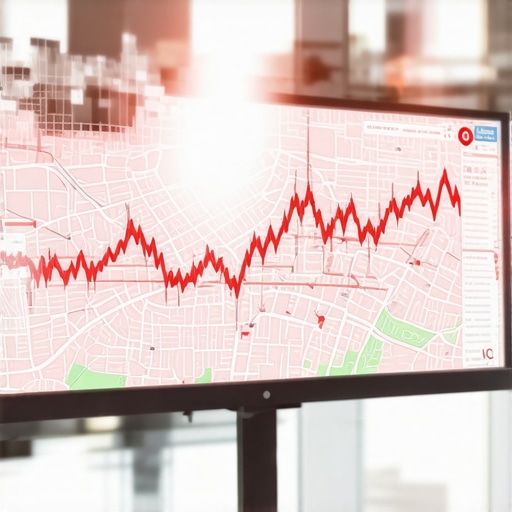
Mathematical decay of local authority occurs when your business profile fails to provide fresh behavioral signals like reviews, photos, and post updates within its target area. If your competitor is getting more clicks and calls from a specific neighborhood, their pin will expand while yours shrinks. We use best local seo tools for google business profile to monitor these shifts daily. If you find your rankings are missing, you should look into local seo services to fix missing map pack rankings immediately. Ranking is not a static achievement. It is a constant battle of signals. Our google maps ranking toolkit helps businesses stay ahead by focusing on the triggers that Google actually cares about. This includes the frequency of customer interactions and the consistency of your store hours. When you ignore these, you face the risk of profile suspensions or sudden ranking crashes. Use diagnostic moves for flatlined rankings to find out where your logistics are failing. You need a system that treats your map listing like a dispatch hub for maximum efficiency.