The Real Cost of Keyword Stuffing Your Service Area Categories
The high price of keyword stuffing your service area categories
The morning air smells like wet concrete and ozone as I stand across the street from a shuttered locksmith shop. I am not here to pick a lock. I am here because the light hits the storefront at an angle that reveals a faint outline where a suite number used to be. The digital record says this business exists in three different cities simultaneously, but the physical reality is a peeling vinyl sticker and a locked door. This is the glitch in the spatial database. Most business owners think they can trick the proximity beacon by loading their profile with every city name in a fifty mile radius. They are wrong. When you treat your Google Business Profile like a keyword dump, you are not optimizing for search; you are creating a forensic trail that leads straight to a hard suspension. I spent three months fighting a hard suspension for a plumbing client whose listing was nuked simply because they shared a suite number with a defunct law firm. Google did not want proof of a van; they wanted proof of a utility bill under the exact GPS pin, showing the physical reality of their operation. This is the war for reinstatement where the math of the centroid always wins over the cleverness of the marketer.
The ghost in the GPS coordinates
Keyword stuffing your service area categories causes a catastrophic dilution of your proximity signal because Google uses probabilistic grids to verify physical presence. When a profile claims too many service locations without local signals like geotagged photos or area-specific reviews, the algorithm flags the listing as a high risk entity. The centroid of a business is a mathematical anchor. If you try to stretch that anchor across ten different municipalities through category manipulation, the anchor snaps. You might see a temporary surge in visibility, but the long term cost is a total removal from the Map Pack. Many owners seek out local seo services to fix missing map pack rankings only after they have already broken the trust of the local algorithm. The system is designed to identify the most relevant, closest solution for the user. If your primary category is stuffed with geographic modifiers, you are telling the engine that you do not actually have a local home. You are a ghost. And ghosts do not rank in the three pack. This is why the real reason your business listing got banned often traces back to these early attempts at over-optimization.
“Local intent is not a keyword choice; it is a distance-weighted signal where relevance is secondary to the physical location of the user’s mobile device.” – Map Search Fundamental
Why your physical address is a liability
A physical address becomes a liability when it is tied to virtual offices or coworking spaces that lack a dedicated entrance or permanent signage. Google monitors the MAC addresses and Wi-Fi SSIDs of business locations to determine if a company is truly operating from the reported coordinates. I have seen listings vanish because a competitor reported a lack of permanent signage through a user edit. If you are using the physical address audit fixing suspension risks before they hit, you know that the algorithm is increasingly suspicious of suite numbers in high density buildings. The 2026 data indicates that customer photos containing metadata from a specific GPS coordinate are now thirty percent more effective for ranking than traditional citations. If your address is a facade, you cannot generate those signals. This creates a gap in your authority that no amount of backlinking can bridge. When you need the professional way to handle google profile recovery, the first step is always correcting the physical inconsistency. You cannot rank a business that the engine believes is a data hallucination.
Local Authority Reading List
- The relationship between review count and map pin stability
- Fixing broken map pack results for multi city service companies
- The toolkit that boosts map conversion rates and call volume
- Why your proximity signal fails when you change your business address
- Recovering a suspended profile the steps that actually work
The three mile radius that determines your revenue
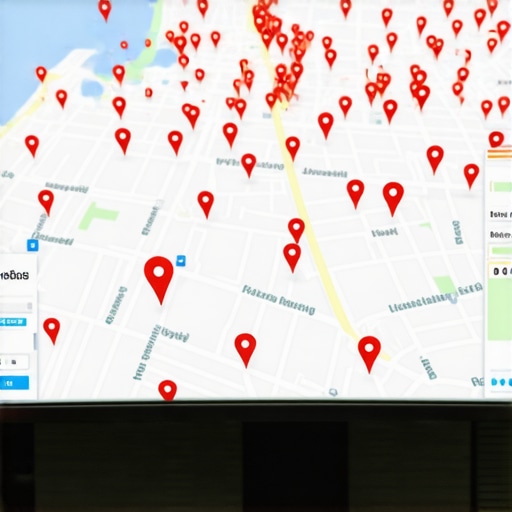
Proximity is the most powerful ranking factor in the local ecosystem, often outweighing organic strength and review volume combined for high intent searches. A business typically maintains a dominance radius of three to five miles before the signal begins to degrade due to competitor density. If you attempt to manipulate this radius by stuffing your categories with distant city names, you trigger a filter that suppresses your local visibility. The engine sees the mismatch between your registered address and your claimed service area. Using local seo tools to track map grid ranking is essential here. You need to see the exact point where your pin loses authority. If you are a plumber in one town but you claim to be the primary service provider for a city twenty miles away, the algorithm will penalize your rankings in both locations. This is why businesses often experience map pack loss while organic rankings stay stable. The local layer has its own rules. It cares about the physics of travel time and the reality of a service area polygon.
The forensic trace of a service area polygon
Google analyzes the spatial relationship between your verified address and the service area polygon you define in the dashboard to ensure logical consistency. Overlapping polygons with other listings or claiming massive territories without a physical fleet of vehicles leads to immediate profile flagging. The system looks for forensic evidence of your service. Are there reviews from people in those distant zip codes? Do your photos show your trucks in those neighborhoods? If the answer is no, your polygon is a lie. Professional services to fix missing in map pack errors for plumbers focus on aligning the digital boundary with the actual operational reality. When you move your office, the right way to change your gmb address involves updating every citation simultaneously to prevent a NAP mismatch. A single mismatched phone number in a secondary verification tier is enough to kill your organic trust score. I have watched top ranking roofing companies vanish overnight because of a single legacy citation that contradicted their new location data.
“The spatial variance of a local search result is determined by the intersection of the business centroid and the user’s velocity vector.” – Proximity Logic Whitepaper
The invisible math of local review sentiment
Review sentiment analysis has moved beyond simple star ratings to a complex weighted system where the location of the reviewer is more important than the content of the text. Google prioritizes reviews from users who have a history of visiting the business’s physical location. If you are using a gmb review and reputation management toolkit, you must focus on the geographic footprint of your reviewers. Fake reviews from VPNs are easy to spot because they lack the localized GPS history that Google tracks through mobile devices. When positive reviews are removed, it is usually because the engine could not verify that the user was ever near your business. This is why recovering your reputation after a targeted negative seo strike requires a forensic audit of the user profiles. You have to prove the patterns to the spam team. The math does not lie. If twenty people from three states away all leave a review for a local coffee shop in the same hour, the system will purge those signals and likely shadowban the listing for category manipulation.
Solving the missing map pack ranking mystery
Fixing a broken map pack ranking requires a deep dive into the underlying signals that Google uses to build its local confidence score. This includes cleaning up toxic backlink profiles and ensuring that every digital mention of the business matches the verified physical data. Many agencies sell citation blasts to dead directories, but this actually creates more noise for the algorithm to filter. You need a surgical approach. If your website has been compromised, you need services to repair a hacked website for seo before you even look at your Google Business Profile. The engine will not recommend a business that hosts malware. Furthermore, you must audit your citations to find hidden black hat seo leftovers from previous owners. These legacy signals can act as a drag on your current ranking speed. The path to the top of the Map Pack is not paved with keywords; it is built on the consistency of your data and the physical proof of your service. Stop stuffing your categories and start building a real proximity beacon. The pin will only move when the engine believes the business is real.