Buying Local SEO Tools: A Checklist for Serious Business Owners
The air in the dispatch office always smells of burnt coffee and the metallic tang of an aging laser printer. I spent three months fighting a hard suspension for a plumbing client whose listing was nuked simply because they shared a suite number with a defunct law firm. Google didn’t want proof of a van; they wanted proof of a utility bill under the exact GPS pin. They wanted a video walk-through showing the signage on the door, the tools in the rack, and the specific orientation of the building relative to the street. This is not marketing. This is forensic logistics. When you view a business listing as a proximity beacon in a complex spatial database, you realize how fragile your digital presence is. Most agencies sell you on the dream of visibility while ignoring the hard math of centroid shifts and local justification triggers. I have seen companies vanish from the map pack overnight because they used a VOIP phone number that tripped a verification loop. To survive in 2025, you must move beyond the superficial metrics of keyword density and start examining the structural integrity of your location data.
The ghost in the GPS coordinates
Google Maps rankings depend on the mathematical intersection of GPS coordinate salience and verified entity data. To master the map pack, you must realize that proximity is a physical distance-weighted signal that overrides traditional relevance when a mobile user is on the move. Local intent is a calculation of how far a person will realistically travel for a specific service. While many focus on content, the algorithm is calculating the friction of distance between the searcher and your front door. If your digital footprint lacks the specific markers of a physical entity, you will never bridge the gap between appearing on a screen and getting a phone call. I have watched businesses struggle because they thought a few citations would fix a proximity barrier that was actually caused by a mismatched latitudinal signal. You can find out more about fixing the proximity barrier to help your brand rank outside its immediate neighborhood. It is about proving to the machine that you occupy physical space and that your movement within that space is consistent. The system tracks the flow of workers and the duration of customer visits to verify that a business is real. If the GPS data from your service vans does not align with your service area polygon, you are sending a signal of distrust to the algorithm.
“Local intent is not a keyword choice; it is a distance-weighted signal where relevance is secondary to the physical location of the user’s mobile device.” – Map Search Fundamental
Why your physical address is a liability
Physical address verification is the most volatile component of Google Business Profile management. In the current ecosystem, your NAP consistency (Name, Address, Phone) acts as a trust anchor that Google constantly tries to disprove through third-party data scraping. If you have moved recently or share a building with other businesses, you are at risk of being filtered out. I once saw a top-tier roofing firm lose its entire map position because a secondary phone number from an old Yelp listing was picked up by a crawler and flagged as a duplicate. This kind of data rot is silent but lethal. You need to understand the specific address errors that confuse the engine and kill your visibility. The algorithm is aggressive. It looks for any reason to suppress a listing that it deems unreliable. This is why automated tools often fail; they cannot see the physical reality of a suite that has no exterior entrance. When choosing software, you need a solution that goes beyond basic updates. You need a system that can flag potential suppression before it leads to a hard suspension. If you are struggling with a listing that has already been taken down, you should look into a google business profile recovery service that specializes in manual reinstatement appeals. These processes require more than just filling out a form. They require a dossier of physical evidence that proves your right to exist in that specific zip code.
The three mile radius that determines your revenue
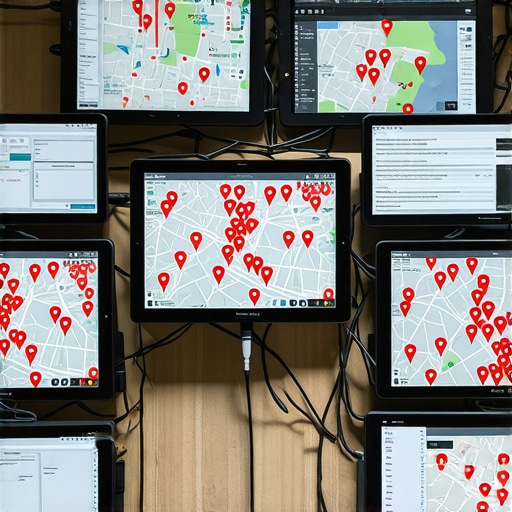
Proximity and behavioral zooming define how Google Business Profiles appear in the three mile radius around a searcher. Ranking first in your own office is easy; ranking three miles away in a high-value neighborhood is where the profit is made. Most business owners look at their ranking from their desktop and think they are winning, but the reality changes every few blocks. This is the logic of the grid. If your tools only show you a single average ranking, they are lying to you. You need to see the heat map. You need to see exactly where your visibility drops off and why. A competitor might be outranking you because their customers are uploading photos with embedded EXIF data that proves they are at that location. This is a massive ranking signal that people ignore. While agencies talk about backlinks, the 2026 data indicates that image metadata from real customers is vastly more effective for ranking in AI Overviews. You must learn how to reclaim your rank when your proximity signal starts to fade. It is a battle of density. The more verified interactions you have within a specific radius, the wider your influence grows. This is why a simple review request isn’t enough anymore. You need specific review requests that encourage users to mention the services and the city to build that local topical authority. Without those anchors, you are just another pin on a map that nobody sees.
Local Authority Reading List
- The Signal Audit: How to Discover Why Competitors Rank Higher
- The Profile Recovery Process Google Doesn’t Explain Clearly
- Why Cheap Local SEO Packages Always Fail to Move the Map Pin
- How We Recovered a Service Business from a Total Map Blackout
- The Right Way to Change Your GMB Address and Keep Your Rank
Forensic audit techniques for local leads
Forensic review auditing and sentiment analysis are the keys to identifying negative SEO attacks on your maps listing. If you see a sudden influx of one-star reviews from accounts with no history, you are being targeted. The old way of handling this was to report the review and hope for the best. The new way is to audit the user profile patterns to prove to Google that the traffic is fraudulent. You need to understand how to identify a negative SEO attack before it destroys your reputation score. Reputation management is no longer just about saying thank you. It is about technical defense. When a competitor drops fake reviews, they are trying to trigger a suspension or a ranking drop by making your profile look untrustworthy. I have seen businesses spend years building a brand only to have it wiped out in a weekend by a bot farm. You need a reputation management and review repair service that understands the forensic side of Google’s spam filters. This includes cleaning up bad links and fixing soft 404 issues that might be dragging down your local authority. Every signal matters. Every broken link is a leak in the boat. If your website is serving duplicate content or has technical errors, Google will not trust the location data associated with that domain.
“A business location is a proximity beacon; if the digital signature does not align with the physical GPS ping of the service fleet, the trust score collapses.” – Spatial Algorithm Review
The hidden dangers of cheap software
Cheap Local SEO tools often provide shallow ranking data that can lead business owners to make disastrous decisions. Many free toolkits use a single static IP address to check rankings, which does not reflect the experience of a mobile user moving through a city. If you rely on these reports, you are flying blind. You need to see how the gmb ranking toolkit vs other local seo tools perform in real-world scenarios. A professional tool should track grid rankings across different times of the day to account for business hours and traffic patterns. You should be cautious of the hidden dangers of buying cheap local seo tools because they often lack the depth required to see through Google’s filters. For example, some tools miss hidden keywords that are actually driving traffic to your competitors. A serious toolkit will find every missing ranking opportunity by analyzing the category selections and justification text in the map pack. If you are an agency managing multiple clients, the stakes are even higher. You need the most effective toolkit for managing multi-location brands to ensure consistency across the board. The difference between a basic audit and a strategic advantage is the ability to see the data that Google doesn’t explain clearly in its dashboard.
The interaction secret that helps small businesses
User interaction signals and local justification triggers allow small businesses to outrank massive national chains. When a user clicks your phone number, asks for directions, or spends time looking at your photos, Google receives a high-value signal of relevance. This is why engagement is more important than pure backlink quantity. You should focus on the interaction secret that focuses on making your profile more clickable. This includes using toolkits to increase local leads by optimizing every field in your profile. You need to know which signals matter most for your specific niche. For a plumber, it might be the speed of response and the number of calls. For a restaurant, it might be the volume of photo uploads. If you are not tracking these specific interaction triggers, you are leaving money on the table. Small shifts in your GMB category or the addition of a secondary category can change your visibility for thousands of searches. You can use tools to find gmb categories that your competitors are hiding. This is not about guessing; it is about using data to find the gaps in the market. Once you find those gaps, you can apply a maps ranking boost blueprint to systematically take over the local search results.
Final checklist for serious business owners
Serious business owners must implement a continuous audit cycle to protect their map pack rankings. The algorithm changes, competitors attack, and data drifts over time. You cannot set it and forget it. You need to audit your local presence without overwhelming your staff by using automated systems that flag errors in real-time. This includes checking for tiny formatting errors in your NAP and ensuring that your local keyword strategy matches the actual intent of the searchers. If you are seeing traffic but no calls, there is a conversion gap that needs to be addressed. Often, this is caused by a lack of social proof or a profile that looks neglected. Use the best tools for speeding up your progress and stay ahead of the curve. The map pack is the most valuable real estate on the internet for a local business. If you treat it like a static advertisement, you will fail. If you treat it like a living, breathing part of your logistics chain, you will dominate your city. Start with a 5-minute competition audit to see where you stand and then build your strategy from there. The pin on the map is your most important asset; protect it with the same intensity you use to protect your physical shop.