The Specific Way Map Embeds Can Distort Your Business Proximity Signals
The Specific Way Map Embeds Can Distort Your Business Proximity Signals
For years, the standard advice given to any local business owner or SEO professional has been simple: “Embed a Google Map on your contact page.” It is treated as a checkbox item, a minor technical flourish that signals to Google where you are located. However, as the algorithm governing google business profile seo has evolved, this “set it and forget it” approach has become a liability. In the current landscape, an improperly configured map embed doesn’t just fail to help; it can actually distort your proximity signals, creating “signal noise” that confuses Google’s crawlers and suppresses your rankings.
To understand why this happens, we must look at how Google evaluates local rankings. According to official Google documentation, local results are based primarily on three factors: Relevance, Distance (Proximity), and Prominence. While most people focus on relevance (keywords) and prominence (backlinks/citations), proximity is the silent killer. It is the most rigid of the three factors. If your map embed is sending conflicting data – what we in the industry call “signal distortion” – you are essentially telling Google you exist in two places at once, or worse, nowhere specific at all.
The Proximity Paradox: Why “Close” Isn’t Always Enough
In the world of local search, proximity is often the ultimate tie-breaker. You could have a website with ten times the authority of your competitor, but if that competitor is half a mile closer to the searcher’s “centroid” (the center of their search intent), they will likely outrank you in the Map Pack. This creates what many call the “3-mile wall.” Many service-based businesses find that they dominate their immediate neighborhood but Why Your Map Ranking Hits a Wall at the Three-Mile Mark becomes a frustrating reality they can’t seem to overcome.
The paradox lies in how Google calculates the “center.” It isn’t just about the physical address listed on your Google Business Profile (GBP); it’s about the density of signals confirming that location. When a smaller company outranks a giant, it is usually because their proximity signal is “cleaner.” They aren’t confusing the algorithm with multiple service areas, conflicting footer maps, or outdated CID (Client ID) numbers in their embed code. If you want to improve google maps rankings, you must first ensure that your digital footprint isn’t fighting against your physical location.
How Map Embeds Distort Proximity Signals
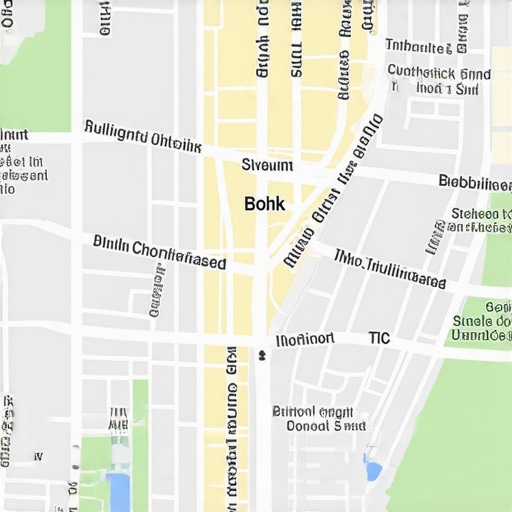
An embed is far more than a visual aid for your customers; it is a data bridge. When Google’s bots crawl your site, they don’t just see a picture of a map; they execute the script and follow the API calls. This is where the distortion begins. If you are using a generic map embed – or worse, an embed that points to a raw address rather than your specific Google Maps Place ID – you are creating “Signal Lag.”
Signal Lag occurs when there is a discrepancy between the data on your website and the data in the Google Maps database. This often results in “Ghost Pins,” where Google’s internal index of your location becomes decoupled from your live profile. This is The Map Embed Error That Destroys Your Proximity Relevance Signals. When this happens, Google may hesitate to show your business for high-intent searches because it cannot verify your exact “node” with 100% certainty.
Technical Tip: Accessibility and Crawler Readability
One often overlooked aspect of map embeds is WCAG (Web Content Accessibility Guidelines) compliance. By adding a descriptive title tag to your iframe (e.g., title="Google Map showing location of [Business Name] in [City]"), you aren’t just helping screen readers; you are providing an additional, crawlable text signal that reinforces your google business profile seo. Furthermore, you should check for Fix 2026 Ghost Pins: A Maps Ranking Boost Trick for Speed to ensure your site load times aren’t causing the map script to time out, which further dilutes the signal.
The Fiverr Trap: Mass Embedding and Signal Dilution
In a desperate bid to rank google business profile higher, many business owners turn to “bulk” services on platforms like Fiverr. These sellers often promise “2,500 Map Embeds” or “5,000 Local Citations” for a nominal fee. On the surface, this sounds like a powerful way to build prominence. In reality, it is a shortcut to “Map Pack Limbo.”
When you blast thousands of map embeds across low-quality, irrelevant websites, you create a “cluster update” nightmare. Google sees your business location being cited on a “PBN” (Private Blog Network) in a different country or on a page with zero local relevance. Instead of strengthening your proximity signal, you are diluting it. This mass embedding makes it appear as though your business is trying to “spoof” its location, triggering a proximity filter that can keep you stuck in Why Your Business Is Stuck in Map Pack Limbo and How to Force a Rank Boost for months. If you are looking for a legitimate google maps ranking service, you must focus on quality and signal density over raw volume.
The 2026 Algorithm Shift: User Path Density & Node Verification
As we look toward the future of google business profile optimization, the algorithm is shifting away from static signals toward behavioral signals. In 2026, we expect to see a much heavier emphasis on “User Path Density.” This means Google is no longer just looking at whether a map is embedded on your page; it is looking at how users interact with that map. Do they zoom in? Do they click for driving directions? Do they toggle between satellite and street view?
This is part of a broader move toward “Node Verification.” Google is cross-referencing the existence of your map embed with the real-time GPS data of users who visit your website and then subsequently visit your physical location. If your map embed is distorted or points to an incorrect “Place ID,” the path density remains low, and Google loses confidence in your proximity. This is why I recommend the Ranking Accelerator: My 2026 Setup for Faster Map Pins, which focuses on interactive embeds that encourage user engagement and intent-based clicks. Using advanced local seo tools to monitor these interactions is becoming a necessity for any competitive niche.
If you fail to adapt to these shifts, you may find that How This 2026 Ranking Accelerator Fixes Map Pin Lag Fast is the only way to recover your lost visibility. The goal is to create a “High-Density Signal” that leaves no doubt in the algorithm’s mind about where you are and who you serve.
How to Fix a Stalled Map Pin
If your rankings have plateaued or you suspect your map embed is causing distortion, you need to perform a technical audit. Here is a step-by-step process to realign your proximity signals and improve google maps rankings:
- Audit Your CID and Place ID: Ensure your embed code is using your specific “Place ID” rather than a text-based address search. A text search requires Google to “guess” the match every time the page loads, whereas a Place ID is a direct database reference.
- Implement Driving Directions Embeds: Instead of a static pin, embed a map that shows directions from a nearby landmark to your office. This increases “intent-based relevance” and provides Google with a clear path of travel to associate with your business.
- Check for NAP Consistency: Ensure the Name, Address, and Phone number (NAP) immediately surrounding the map embed matches your GBP exactly. Even minor discrepancies like “Street” vs. “St.” can contribute to signal lag. For more on this, see The Specific Address Errors That Confuse Google and Kill Your Ranking.
- Leverage Signal Density: Use the The Signal Density Fix That Moves Your Business Profile Instantly to ensure your website’s schema markup (LocalBusiness Schema) is perfectly synced with the coordinates in your map embed.
To truly rank higher on google maps, you should also utilize professional GBP ranking tools or google maps seo tools like SEO Viper. These tools allow you to track how your proximity “heat map” changes over time, giving you visual proof of whether your map embed adjustments are working or if you are still hitting that 3-mile wall. For more advanced strategies, check out How to Accelerate GBP Ranking: Expert SEO Tips for 2025.
Conclusion: Reclaiming Your Local Dominance
Proximity is a double-edged sword. When managed correctly, it is the most powerful weapon in your google business profile seo arsenal. When neglected, or when distorted by poor map embedding practices, it becomes an invisible ceiling that prevents your business from ever reaching its full potential. The days of “just embed a map” are over.
In the high-stakes world of local service businesses – where a single spot in the Map Pack can mean the difference between a record-breaking month and a struggling one – you cannot afford signal noise. Audit your embeds, fix your ghost pins, and stay ahead of the 2026 behavioral shifts. If you are serious about growth, invest in professional local seo tools and gmb seo tools that give you the data needed to make informed decisions. Don’t let a simple iframe be the reason your business remains invisible to the customers right in your backyard.
About the Author: Kevin Pauls is a Local SEO Consultant and Google Business Profile Product Expert. He specializes in helping agencies and service-based businesses eliminate signal distortion and accelerate their rankings through technical precision and data-driven strategy.